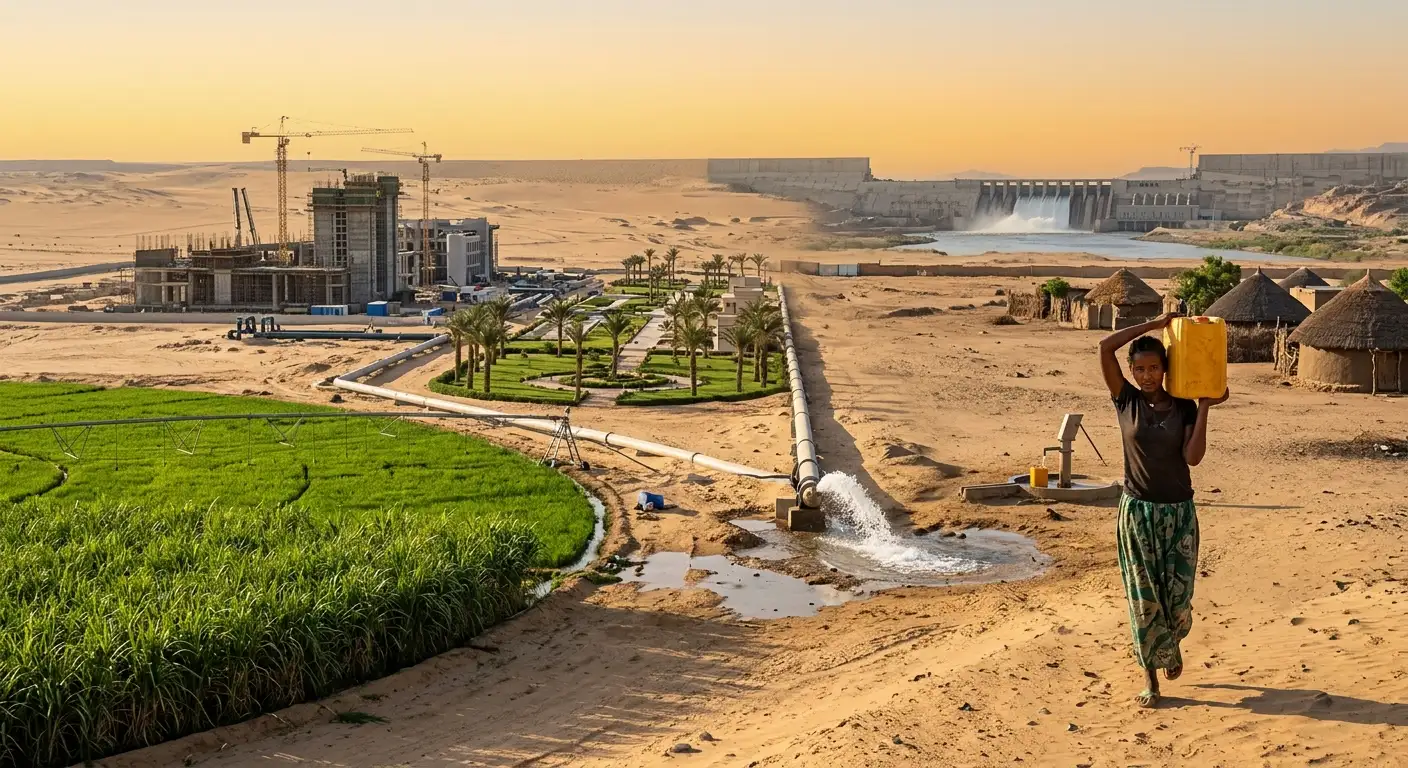

Ethiopia is aggressively modernizing its coffee sector to become the world's leading producer. Spurred by Prime Minister Abiy Ahmed’s call to back symbolic pride with concrete action, nationwide investments in modern irrigation and processing are turning the iconic crop into the definitive backbone of the national economy.
It is to be recalled that Prime Minister Abiy Ahmed (PhD) stressed that Ethiopia must not only be known as the birthplace of Coffee Arabica, but also hold the title of its largest producer country, emphasizing that being an "economic pillar" should be a matter of action rather than mere words.
Accordingly, Ethiopian coffee, long celebrated in song as the "pillar of the economy," is today tangibly supporting the national economy through foreign exchange earnings and extensive production improvement initiatives.
As a result of efforts undertaken to boost productivity, annual coffee output has been showing significant year-on-year growth. Modern coffee irrigation and machine-assisted picking have elevated coffee quality while easing the workload for farmers.
It was stated that Ethiopia earned over $3.1 billion from coffee exports in the 2018 fiscal year, an amount nearly matching the total $3.3 billion in revenue the country generated over the preceding 17 years combined.
Coffee producers and exporters note that maintaining quality and increasing productivity are key to becoming more competitive in the global market. Continuous improvements in Ethiopia's coffee development and quality have driven a sharp rise in market demand, particularly for specialty coffee.
Modernizing the coffee sector away from traditional methods through technology, quality enhancement, and irrigation development plays a vital role in realizing a prosperous Ethiopia for tomorrow.
Sustaining the coordinated efforts of exporters, farmers, and the government will inevitably ensure that Ethiopia is recognized in the global market not just as the origin of Coffee Arabica, but as its largest and most competitive producer.