By: Kassahun Chanie
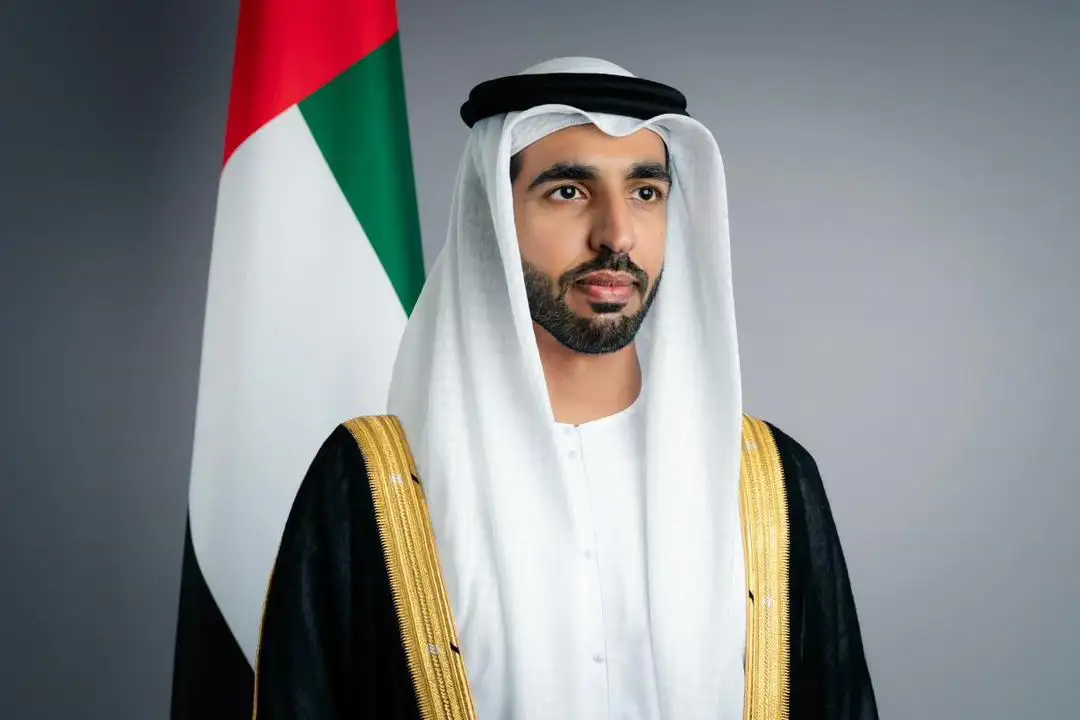
The United Arab Emirates (UAE) has cemented its position as Africa's leading investment partner, committing a staggering USD 110 billion in investments across the continent between 2019 and 2023, a figure that significantly outpaces any other single nation during that period. This substantial financial injection, with a remarkable USD 70 billion earmarked for energy, green, and renewable sectors, underscores the UAE's strategic vision to foster industrialization and economic diversification across Africa, as articulated by Sheikh Shakhboot bin Nahyan Al Nahyan, UAE Minister of State, Ministry of Foreign Affairs.
Speaking at the margins of the African Union Summit, Sheikh Shakhboot bin Nahyan Al Nahyan emphasized the enduring strength of UAE-Africa relations. "This is an opportunity for a candid exchange on where the UAE–Africa partnership stands today, what is driving it, where it is expanding, and how it aligns with Africa’s own priorities under Agenda 2063 and AfCFTA."
He further elaborated on the deep historical roots of this partnership, noting, "Our engagement with Africa is rooted in decades of trade, maritime links, and people-to-people connections across the Red Sea and Indian Ocean corridors. Today, that historic connectivity is reflected in a growing diplomatic footprint (19 embassies in Sub-Saharan Africa) with further expansion underway. At the same time, African diplomatic representation in the UAE continues to grow, reinforcing our country’s role as a hub for African trade, finance, and dialogue."
The substantial economic commitment is being channelled through ambitious initiatives aimed at transforming Africa's energy landscape. Under the Africa Green Investment Initiative, USD 4.5 billion has already been mobilized to accelerate clean energy development. This funding is supporting over 60 projects in preparation across solar, wind, geothermal, battery storage, and green hydrogen technologies. Leading this charge, Masdar’s USD 10 billion Africa program and the Etihad 7 initiative are set to expand access to electricity for up to 100 million people by 2035, directly addressing structural power deficits and boosting generation capacity.
"We firmly believe that energy access is the foundation of industrialisation and economic diversification. These projects are designed to expand generation capacity and reduce structural power deficits”, Sheikh Shakhboot bin Nahyan Al Nahyan remarked at the sidelines event, during the 39th African Union Summit.
Beyond the energy sector, the UAE is actively bolstering industrial growth through trade integration and enhanced logistics efficiency. Nine Comprehensive Economic Partnership Agreements (CEPA) have been concluded with African nations, including Nigeria, the Democratic Republic of Congo, Sierra Leone, Gabon, Angola, Kenya, Congo-Brazzaville, Mauritius, and the Central African Republic. These agreements transcend mere tariff reductions, encompassing vital areas such as services, digital trade, and investment protection. Their structure is specifically designed to complement the African Continental Free Trade Area (AfCFTA) by strengthening value chains and fostering cross-border competitiveness.
The logistical infrastructure is also receiving significant attention. DP World is continuing its expansion of operations at African ports, most notably with a USD 1 billion upgrade underway at Dar es Salaam Port in Tanzania. Similarly, AD Ports has commenced construction on a new terminal in Luanda, Angola, which will substantially increase the port's container capacity. These strategic investments are viewed as long-term trade-enabling assets, directly aligned with the continent's regional integration ambitions.
The UAE's commitment to Africa extends beyond economic investment to significant development and humanitarian aid. Over the past decade, nearly 40% of the UAE's total foreign assistance, amounting to approximately USD 20.9 billion, has been directed towards African countries, encompassing development, humanitarian, and charitable efforts.
Looking ahead, water and climate resilience have emerged as crucial priorities for future collaboration. The UAE is set to co-host the 2026 UN Water Conference with Senegal, from December 2nd to 4th, 2026. This will be a landmark event, marking the first time two Global South countries jointly lead such a significant global process, underscoring a shared dedication to accelerating progress on water security and sanitation, which are recognized as central development challenges across the African continent, according to the UAE Minister of State, Ministry of Foreign Affairs.