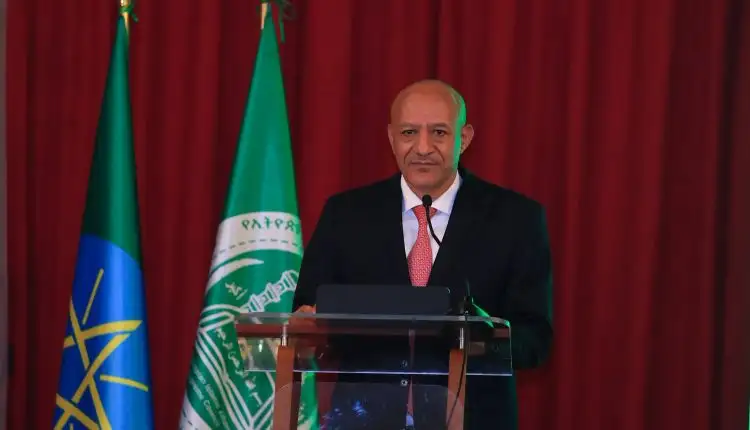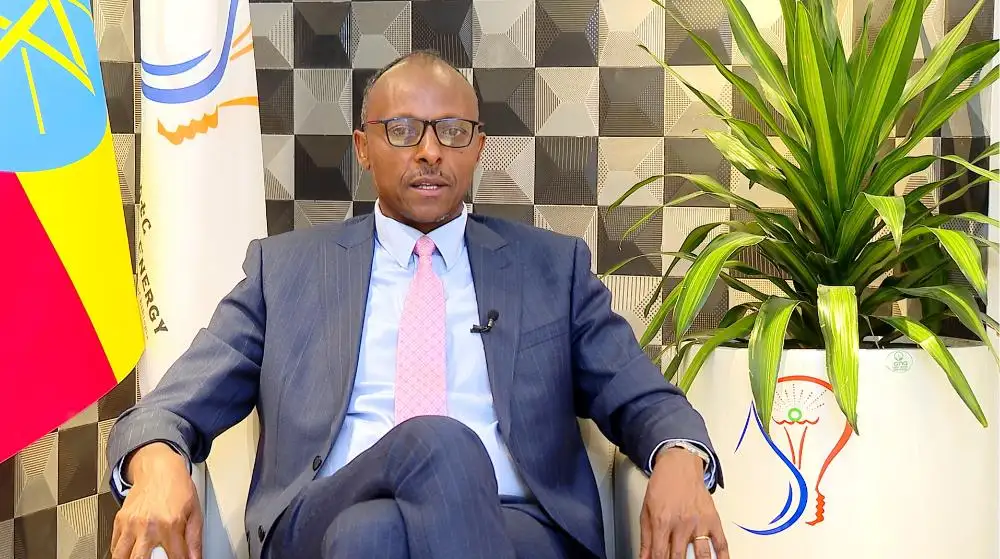
Egypt’s longstanding efforts to obstruct Ethiopia’s development projects on the Abay (Blue Nile) River and isolate the country from the Red Sea are no longer effective, Water and Energy Minister Habtamu Itefa said.
He urged Cairo to abandon its historical posture of opposition and instead reconsider its approach toward Ethiopia on both the Nile and maritime access.
For decades, Egypt sought to prevent Ethiopia from utilizing the Nile for development, despite Ethiopia contributing 86 percent of the river’s total flow. The successful construction and operationalization of the Grand Ethiopian Renaissance Dam (GERD) has ended that chapter, the Minister said.
“Ethiopia has been able to break that line of thinking by building the GERD. We have closed that chapter,” Habtamu stated.
Claims that the dam would reduce downstream water availability have not materialized. Flow to Egypt has remained steady, with water reaching the country after powering the GERD’s turbines. Additional environmental measures, including the planting of more than 56 billion tree seedlings under the Green Legacy Initiative in the Baro-Akobo and Abay river basins, have further strengthened the watershed and helped maintain water flow.
The dam also regulates floodwaters for neighboring Sudan, preventing the destructive seasonal flooding that previously threatened Sudanese infrastructure and lives.
Reflecting on past hydro-diplomacy, Habtamu noted that while Egypt frequently accuses Ethiopia of unilateral action, Cairo itself constructed major projects such as the Toshka and New Valley schemes without consulting upstream riparian states.
In contrast, Ethiopia is advancing regional energy cooperation. Kenya and Djibouti already receive electricity generated by the GERD, while Somalia and South Sudan are seeking expanded integration.
“Our vision is prosperity for all and poverty for none,” the Minister said, underscoring that cooperation remains the foundation of development. “The international community increasingly understands the realities on the ground, and Egypt would benefit far more from partnering with us than trying to maintain outdated monopolies.”
On Red Sea access, Habtamu linked Egypt’s past success in isolating Ethiopia to its support for Eritrea’s separation during the EPRDF-led government, noting the influence of then-UN Secretary-General Boutros Boutros-Ghali, an Egyptian. Previous Ethiopian administrations had avoided asserting maritime rights, but the current government has formally reactivated the national demand.
With a population of 130 million, a growing economy, and legitimate security needs, Ethiopia’s pursuit of seaport access is fully justified, he said.
“Historically, Ethiopia had access to the sea. It is a contradiction to claim Egypt has rights in the Red Sea while insisting Ethiopia must remain landlocked,” Habtamu stated.
He called on Egypt to end its lobbying against Ethiopia’s port aspirations and instead support arrangements that promote regional stability.
Source: Ethiopian News Agency (ENA)