By: Fistum Getachew
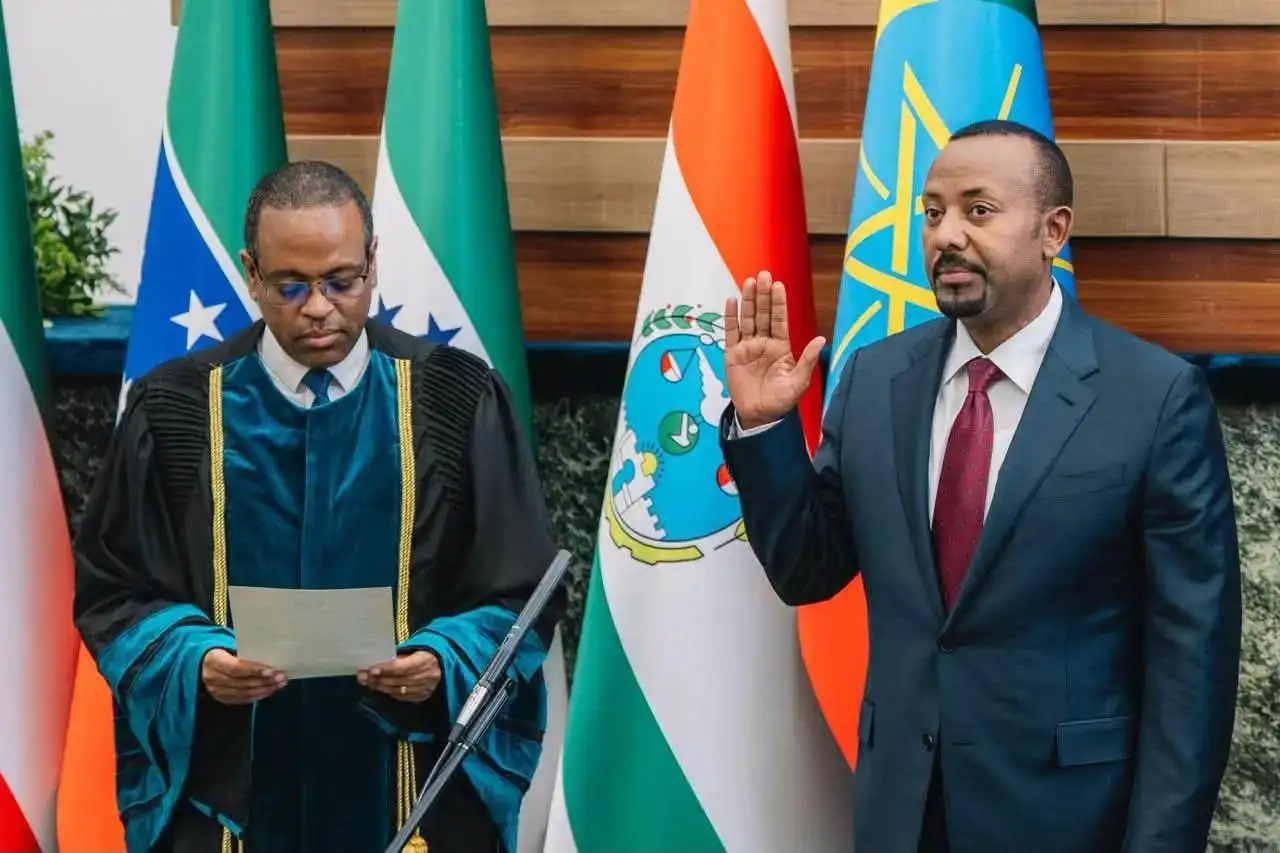
Ethiopia has re-elected Prime Minister Abiy Ahmed (PhD) to lead it for another five years. This was consecrated during the opening of the House of Peoples Representatives for the new season following the results of the 7th General Election on June 1, 2026. It is not a very familiar scene to observe the formation of an elected government in Ethiopia without controversies or disputes on the results and the opposition playing by the rules of the game.
The fact that more than 54 million voters took part in the last polls makes the results all the more significant and remarkable because it is a huge participation by itself, a huge democratic exercise that began and ended in peace. We can say that there was great acceptance of the process, dismissing certain enemy voices who tried to ridicule the process, and it should be taken as a good step up in the right direction in the political history of the country. In fact, it can be rated as one of the most significant chapters of the political book of the nation and put in record.
The current government, now widely known as ‘the Medemer State’ or ‘the Medemer Government,' is inspired by and based on the political ideology conceived, nurtured, and grown as well as promoted and disseminated by Prime Minister Abiy Ahmed (PhD) in his clear and elaborate explanations contained in four successive books. This political ‘ideology’ or thought has been repeatedly illustrated and explained by the premier himself in his speeches and statements as well as interviews with examples of concrete cases as a remedy to face the challenges the country is confronted with and overcome them.
It is known that the premier has taken all the time needed to make his points regarding this conception by referring to our age-old social capital we have inherited from our ancestors, calling it a proved and demonstrated remedy because he has observed it through his research and studies. According to the testimony of Deputy Prime Minister Temesgen Tiruneh, who proposed to the House that the Prosperity Party re-elect Premier Abiy to the post of Prime Minister for another term, Abiy has been observing and studying his country and wondering why it did not grow and become a ‘big country’ when there were apparently the resources and means to materialize it. Temesgen said Abiy was full of regrets because of the state of affairs in which the country was immersed and depressed by the repercussions of the conflict in the north.
As a member of the military, Abiy was also a part of the Ethiopian military mission to Rwanda under the auspices of the UN in the aftermath of the notorious genocide of 1994, and that incident created in him the question of what would be the guarantee that such a state of affairs may not be created in other African countries if differences between various ethnic groups and communities do not get ironed out in a peaceful and orderly manner before they go out of control. It was days when the premier served in the military service and Ethiopia had been involved in the fratricide clash with Eritrea over ‘a border issue.' Those were days when he had the opportunity to seriously and profoundly meditate over national and regional issues at length and go in search of solutions. Indeed, there is no doubt that the theory or concept of Medemer leads us to unity, and the force of unity gives us the ability to face today’s challenges in many walks of life, not only in the strictly political sphere. That was a bit of the background to the formation of the personality of the premier, according to the deputy premier that eventually led him to the position he is in now.
In the acceptance speech the re-elected premier made to the newly elected members of parliament and the nation as a whole, he reiterated the idea of Medemer and the commitment to apply it to the maximum extent to give the country the necessary impulse to grow towards progress and prosperity. The premier reiterated his vision of an Ethiopia that is not only growing to richness and wealth but also towards greatness in a part of the world it finds itself and is expected to operate as part of the sub-region and ultimately the continent at large.
The premier’s vision of Ethiopia is one of greatness and a dignified country that cannot be pushed away easily from defending its major interests or submitting to certain negative influences that underrate it as another ‘poor African country.' This is totally unacceptable for the premier, who demands that Ethiopia be judged not only by the size of its economy or growth but also by the level of industrialization, etc., that many foreign standard setters would like to do.
Ethiopia for him is not just another African state with all the usual stereotypes attributed to so-called developing countries in a few words worthy of little consideration. In most cases it is a kind of dismissal attached to many countries as of little relevance to the world, particularly to those who believe the world is only for those who are part of the UN Security Council or owners of the nuclear armament or have such a huge economy that no one can neglect their presence and relevance. However, there are also other parameters that must be taken into account before rating a country such as Ethiopia as one among so many with little relevance to the current world.
Ethiopia does deserve more consideration and more regard among nations of the world from the one it currently avails, for a number of reasons, and the premier has felt it a lot as diminutive and not worthy of a great nation such as Ethiopia with a long and glorious history that has been considered as one among a few that deserve consideration.
It is true that in purely economic terms Ethiopia can be rated among the poor and probably in need of support from many friendly countries, but it is also a country with massive potential capable of commanding great attention in the world as it continues to grow fast using all the resources at its disposal. It is widely believed that the country has been subjected to bad policies adopted and run by bad administrations, prisoners of many antiquated and debunked narratives that have contributed to dividing the country along several criteria, such as ethnic and religious lines, debilitating it and closing all doors of growth and prosperity.
Historically and even currently, Ethiopia has often been in the attention of several foreign forces and powers, which are trying to fish in troubled waters and have always tried to play one ethnic group against others, one interest group against others. There are countries that have never hidden their disdain or enmity towards Ethiopia and would not like to see it be a big reality growing to its full potential and commanding a significant presence in world affairs, more relevant and influential in regional geopolitical dynamics.
Premier Abiy has repeatedly and boldly stated his vision for ‘a great Ethiopia,' deserving a place that is commensurate to its historical, cultural, and diplomatic stature. For him there are several factors that play into the realization of the dream of Ethiopia as a major force to be reckoned with, especially when it comes to asserting its national interests, when it embarks on fighting for its sovereignty and sovereign rights and interests, such as typically exploiting its natural resources at the maximum level. The premier says Ethiopia has every right to use the water resources it avails, such as the Abay River. It also has the right to seek and obtain access to the Red Sea diplomatically and peacefully, where it once had free and sovereign access before certain controversial moves between leaders deprived it of this precious element.
Today one of the obstacles against its speedy growth is definitely its lack of access to the sea, and Abiy believes that with a negotiated means this vision could be fulfilled. Ethiopia’s growth in the sub-region can be considered a blessing to the entire sub-region and even more. It creates win-win conditions for the entire area and ultimately contributes to the collective growth of Africa as a whole. That is why even international bodies such as the UN do support Ethiopia’s quest for access to sea in a diplomatic and negotiated arrangement and agreement with adjacent nations and others, which might claim a stake in the 'settlement.' Among the pledges of the premier to be fulfilled during the coming years of his tenure is securing access to the sea for Ethiopia and driving it higher up in the echelons of growth and progress spearheaded by science, technology, and innovation, as well as artificial intelligence and the digital revolution.
The premier made emphatic statements about the potential Ethiopia has and why it did not manage to achieve what it would have been capable of. He mentioned the lack of proper administration of its potential and lack of vision on the part of its leaders. He mentioned the lack of belief and conviction and the lack of commitment and hard work in unison as among the reasons why Ethiopia finds itself among the ranks of underdeveloped countries when it has the necessary resources to change this scenario positively. That is why he called on all citizens, both at home and abroad, to pull the cart in the same direction based on the philosophy of Medemer and unity, abandoning narrow nationalistic ideas that do favors only to the enemies of the country who work day and night to destabilize it and keep it in the dark, miles behind others, which are well developed and advanced. Abiy said Ethiopia does not deserve the place it currently occupies in the international sphere and must work hard and reap the harvest of its efforts. He pledged that it will have the necessary guidance and leadership to reach new heights and that it will change its history.