By: Amen Biniyam
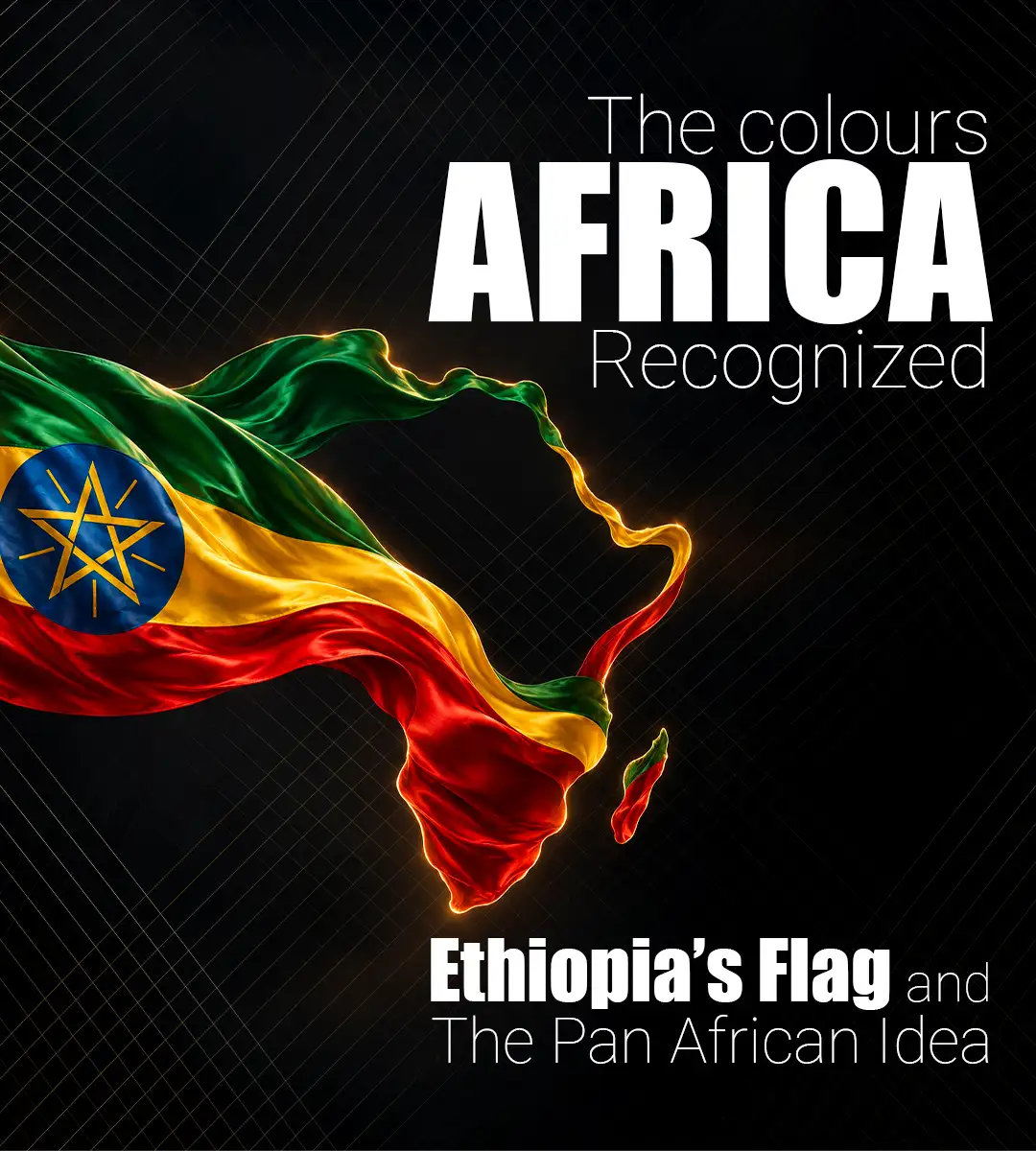
Look across the flags of Africa and a pattern appears: green, yellow and red show up again and again. These are the colours of Ethiopia’s flag and they are now found on the national flags of many African nations. How they became a shared language of African unity is a story that runs from the 17th century to the African Union’s halls in Addis Ababa.
A symbol older than the modern state
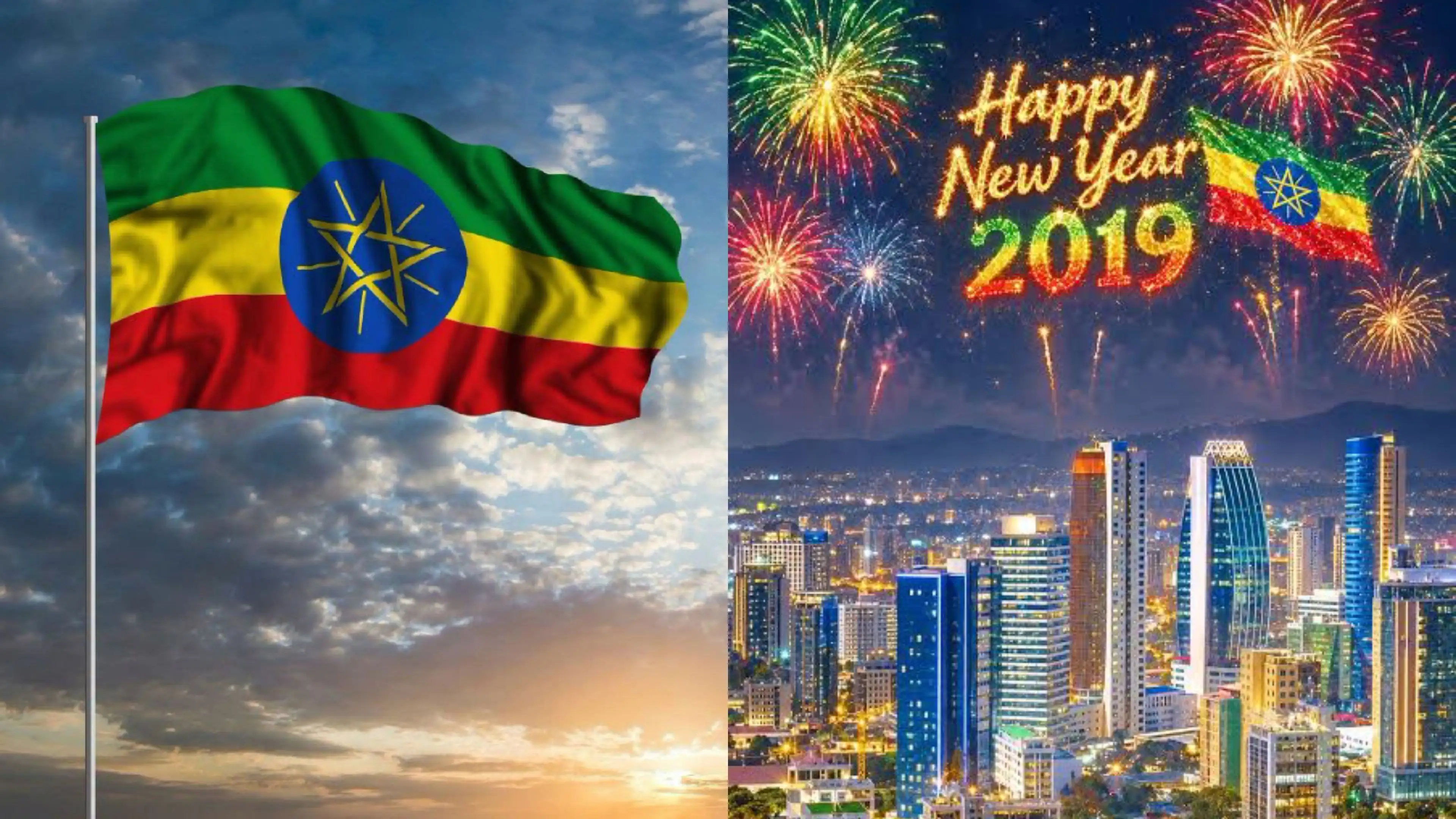
The combination of green, yellow and red held symbolic importance in Ethiopia since at least the early 17th century. The modern tricolour was adopted by Emperor Menelik II on 11 October 1897 and the present flag, with the national emblem at its centre, on 31 October 1996. Over that long history, the flag came to represent something larger than any single era.
Why the world took notice
A major reason was Adwa. On 1 March 1896, Ethiopian forces defeated an invading Italian army, which stopped Italy’s attempt to expand its colonial empire in the Horn of Africa. Europe had divided almost all of Africa by then, and only Ethiopia and Liberia remained independent. Ethiopia’s long record of avoiding colonial takeover is the reason its colours became linked to Pan-Africanism. South African History Online adds that the unity Ethiopians showed across political, religious and cultural lines is often cited as an example of what African unity can achieve.
From one flag to a continental language
Once African states began winning independence, the colours spread. Ghana was the first African state to adopt red, yellow and green at independence in 1957, in a flag designed by Theodosia Okoh. Its flag is described as the second in Africa, after Ethiopia’s, to use those colours. Guinea’s 1958 flag took its colours from Ghana’s. Ghana and Guinea then formed the Union of African States, whose flag kept the same colours and added black stars for the member nations, and Mali joined in 1961.
The city where African unity was built
The unity those flags pointed toward needed institutions, and Addis Ababa became their home. On 25 May 1963, 32 heads of independent African states met there to create the Organisation of African Unity, the continent’s first post-independence continental body, as an expression of the Pan-African vision of an Africa united, free and in control of its own destiny.
The road was not easy. One camp, led by Ghana’s Kwame Nkrumah, wanted a federation of all African states, while another favoured gradual cooperation. The dispute was resolved when Emperor Haile Selassie invited both groups to Addis Ababa, where the OAU and its headquarters were established. The charter was adopted on 25 May, a date now observed as Africa Day.
A capital for liberation movements
Addis Ababa also hosted Africans still fighting for their freedom. In early 1962, the Pan-African Freedom Movement for East, Central and Southern Africa invited the ANC to its conference in the city and Nelson Mandela addressed it as part of the ANC delegation. The Nelson Mandela Foundation confirms that Mandela later received military training from the Ethiopian Riot Battalion at Kolfe, outside Addis Ababa, before returning to South Africa in July 1962.
From the OAU to the African Union
In 2002 the African Union succeeded the OAU, launched in Durban, South Africa, with its headquarters in Addis Ababa. At the 60th anniversary of the OAU in 2023, the AU Chairperson said that between 1963 and 2002 the organisation achieved two major objectives: ending colonisation in Africa and ending apartheid in South Africa.
The aim now is development and integration. Agenda 2063, the AU’s long-term strategy, is built around that goal, and one of its flagship projects is the African Continental Free Trade Area, designed to create a single continental market for goods and services. It was officially launched at an AU summit in Niamey, Niger, in July 2019. This is the Pan-African idea in its current form, with African countries tied together by trade as well as by shared history.
A flag that keeps meaning more
National Flag Day marks a flag that has carried different meanings in different decades: independence in 1896, solidarity in the 1950s and 60s, and integration today. The central emblem, a golden star on a blue disc, stands for peace and for the unity and equality of Ethiopia’s peoples, and the same idea of unity as the source of strength runs through the whole Pan-African story.
One flag. A legacy of freedom. A continent united by hope.
References
“Flag of Ghana.” WorldAtlas. [https://www.worldatlas.com/flags/ghana](https://www.worldatlas.com/flags/ghana)
African Union. “An Integrated, Prosperous and Peaceful Africa” (24 May 2023). [https://au.int/sw/node/42797](https://au.int/sw/node/42797)
“May 25, 1963: Ghana becomes a charter member of the Organization of African Unity (OAU).” Edinburgh African Union Memorial Foundation. [https://www.eaumf.org/ejm-blog/2018/5/25/may-25-1963-ghana-becomes-a-charter-member-of-the-organization-of-african-unityoau](https://www.eaumf.org/ejm-blog/2018/5/25/may-25-1963-ghana-becomes-a-charter-member-of-the-organization-of-african-unityoau)
“African Union.” Encyclopaedia Britannica. [https://www.britannica.com/topic/African-Union](https://www.britannica.com/topic/African-Union)
“1960s Diaries of Nelson Mandela on his trip through Africa.” South African History Online. [https://www.sahistory.org.za/article/1960s-diaries-nelson-mandela-his-trip-through-africa](https://www.sahistory.org.za/article/1960s-diaries-nelson-mandela-his-trip-through-africa)
“Mandela Foundation denies he was trained by Mossad.” Jewish Telegraphic Agency, 22 December 2013 (quoting the Nelson Mandela Foundation statement). [https://jta.org/2013/12/22/israel/mandela-foundation-denies-he-was-trained-by-mossad](https://jta.org/2013/12/22/israel/mandela-foundation-denies-he-was-trained-by-mossad)
African Union Commission. “60th anniversary of the OAU/AU” (25 May 2023). [https://au.int/sw/node/42801](https://au.int/sw/node/42801)
UN Economic Commission for Africa. “AfCFTA State of play: What next after Niamey?” [https://archive.uneca.org/node/22501](https://archive.uneca.org/node/22501)
Williams, P. “AfCFTA: The dream of our founding fathers coming to life.” South African Government, 19 July 2019. [https://www.gov.za/blog/afcfta-dream-our-founding-fathers-coming-life](https://www.gov.za/blog/afcfta-dream-our-founding-fathers-coming-life)