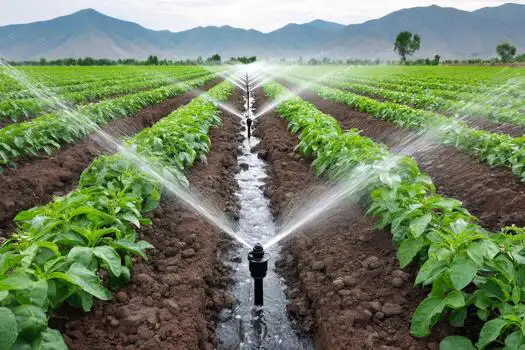
Ethiopia is making significant strides in its strategic journey to transform its centuries-old dependence on rainfall into an irrigation-based agricultural system. This shift, a core pillar of the Ten-Year Development Plan, aims to decouple the agricultural sector from climate reliance and ensure national food sovereignty.
In recent years, the construction of mega-irrigation projects and the expansion of small-scale irrigation have become fundamental to the goal of achieving food self-sufficiency. The revitalization of the Tendaho Irrigation Project, which holds a 60,000-hectare development capacity, and the October 2025 inauguration of the Welmel River Irrigation Project underscore the high priority given to this sector. Furthermore, the Megech Dam, expected to be completed by June 2026, is projected to benefit over 30,000 farmers.
The most notable success of this irrigation drive is seen in wheat productivity. During the 2024/25 production season alone, 128 million quintals of wheat were produced through irrigation. This achievement has enabled the country to save approximately $1 billion in foreign exchange previously spent on annual wheat imports.
Specific regional successes further highlight this progress. In Kelem Wollega, the now-operational Qeto Irrigation Project has tamed a historically feared river into a source of livelihood. Similarly, the Gode and Kelafo projects in the Somali Region are successfully transitioning communities from pastoralism to agro-pastoralism.
The impact is reflected in the lives of the people, with irrigation-user farmers seeing an average income increase of 54.88% alongside improved nutritional habits. Currently, the modernization of agriculture is accelerating through the integration of solar-powered pumps and cluster farming techniques with expanded irrigation networks.