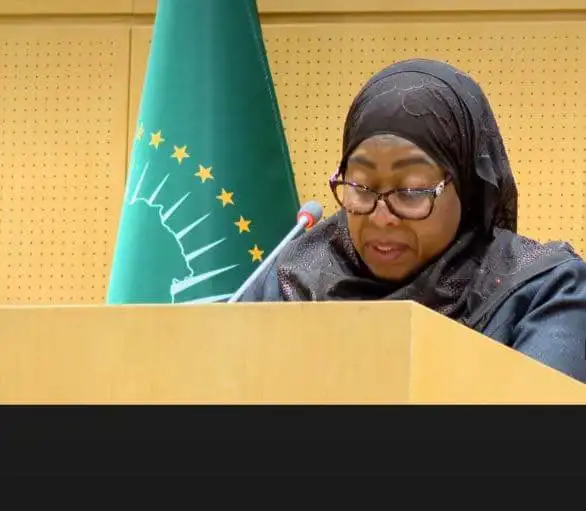
Tanzanian President Samia Suluhu Hassan urged African nations to take full ownership of the fight against malaria, calling for stronger domestic financing, institutional leadership, and accountability. Speaking at the launch of the Africa Malaria Progress Report 2025 during the 39th AU summit, she framed malaria as not only a major public health threat but also a measure of Africa’s commitment to self-reliance.
The report revealed that AU member states recorded 270.8 million malaria cases and nearly 600,000 deaths in 2024, accounting for 96% of global cases and 97% of global deaths. President Hassan challenged African nations to lead and fund their malaria response, affirming that the continent has the capacity and momentum to do so.
She highlighted Tanzania’s investments in research and innovation, including the Ifakara Health Institute and cutting-edge gene drive technologies, as examples of African science tackling African challenges.
President Duma Gideon Boko, Chair of the African Leaders Malaria Alliance, emphasized that declining global aid and funding shortfalls threaten malaria elimination, while Dr. Michael Adekunle Charles of the RBM Partnership to End Malaria noted that fully deploying existing and new tools could save over 13 million lives and add $140 billion to African economies over 15 years.

The summit concluded with a unified call for malaria to be recognized as a pillar of health sovereignty and economic development. Leaders urged member states and international partners to invest in tools, innovations, and data-driven strategies to achieve the AU Catalytic Framework targets to end AIDS, TB, and eliminate malaria by 2030.