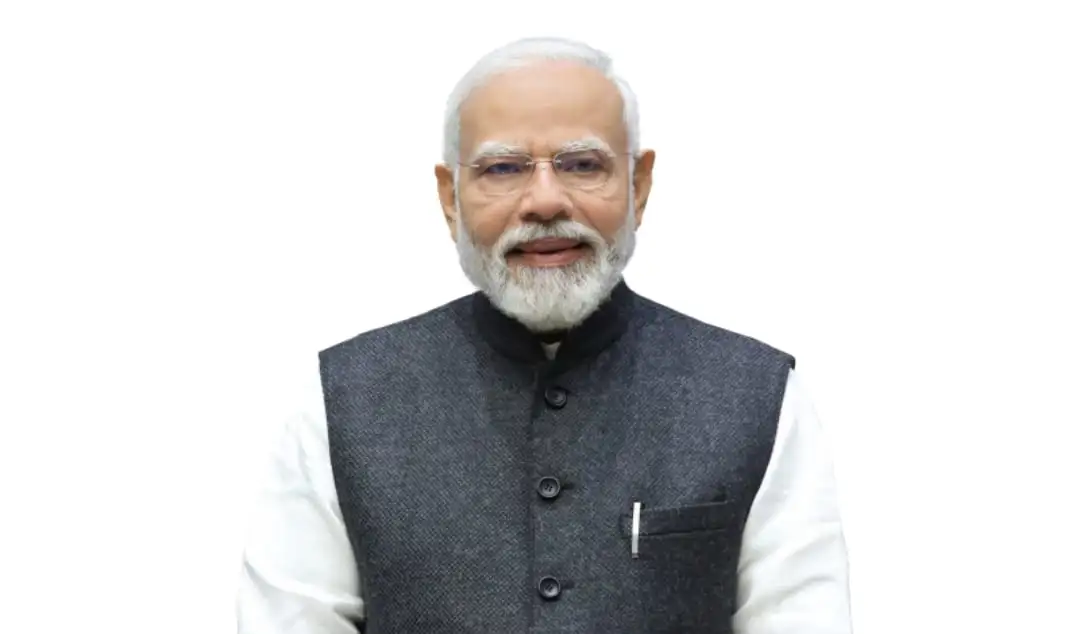
Prime Minister Narendra Modi has welcomed heads of state, government leaders, and innovators to the AI Impact Summit 2026. Speaking at the gathering in New Delhi, the Prime Minister expressed immense pride in India’s role as host, noting that the event drew representatives from over 100 nations. He described the summit as a vital moment in India’s development journey, marked by a democratised atmosphere where thousands of young people explored cutting-edge AI products, signaling the official takeoff of a national mass movement for AI innovation.
Prime Minister Modi placed Artificial Intelligence in the same league of transformative technological shifts as fire, writing, electricity, and the internet. However, he warned that unlike previous shifts that took decades, AI-driven changes unfold within weeks and impact the entire planet. He argued that while AI makes machines intelligent, its true value lies in being a force multiplier for human intent. Under the principle of ‘Sarvajana Hitaya, Sarvajana Sukhaya’ (Welfare for All, Happiness of All), the Prime Minister emphasised that technology must serve people rather than the other way around, placing human well-being at the heart of the global conversation.
The Prime Minister cited India’s success with digital public infrastructure, such as UPI and COVID vaccination, as proof that technology can be inclusive. He highlighted current AI applications already empowering the Global South, including ‘Sarlaben,’ a digital assistant helping 3.6 million dairy farmers through the AMUL cooperative, and the Bharat VISTAAR platform, which provides multilingual agricultural data. Insisting that humans must never become mere data points, PM Modi introduced the MANAV framework for human-centric AI governance. This framework is built on five pillars: Moral and ethical systems, Accountable governance, National sovereignty over data, Accessible and inclusive platforms to prevent monopolies, and Valid, legitimate systems that adhere to verifiable laws.
Turning to the risks of the digital age, the Prime Minister noted that trust is the foundation of AI’s future. He warned that democratic societies face significant threats from deepfakes and disinformation. To combat this, he urged the global community to adopt shared standards for watermarking and source verification, comparing the need for digital authenticity labels to nutrition labels on food. He confirmed that India has already moved to legally require clear labelling for synthetically generated content and called for AI safeguards that protect children through responsible, family-guided engagement.
Looking toward the future, PM Modi dismissed fears of technological displacement, stating that we are entering an era where humans and intelligent systems will co-create and co-evolve. He predicted the emergence of entirely new professions and expressed confidence that India’s youth—supported by some of the world’s largest skilling programmes—will drive this new age. To support this ecosystem, the Prime Minister detailed the progress of the India AI Mission, which has already deployed thousands of GPUs to ensure even the smallest startups can access world-class computing power at affordable rates.
The Prime Minister concluded by highlighting a national AI Repository designed to democratise access to datasets and models, focusing on the complete value chain from semiconductors to applied research. Inviting the world to leverage India’s diversity, democracy, and demographic dynamism, he issued a global call to action: "Design and develop in India. Deliver to the world. Deliver to humanity."