
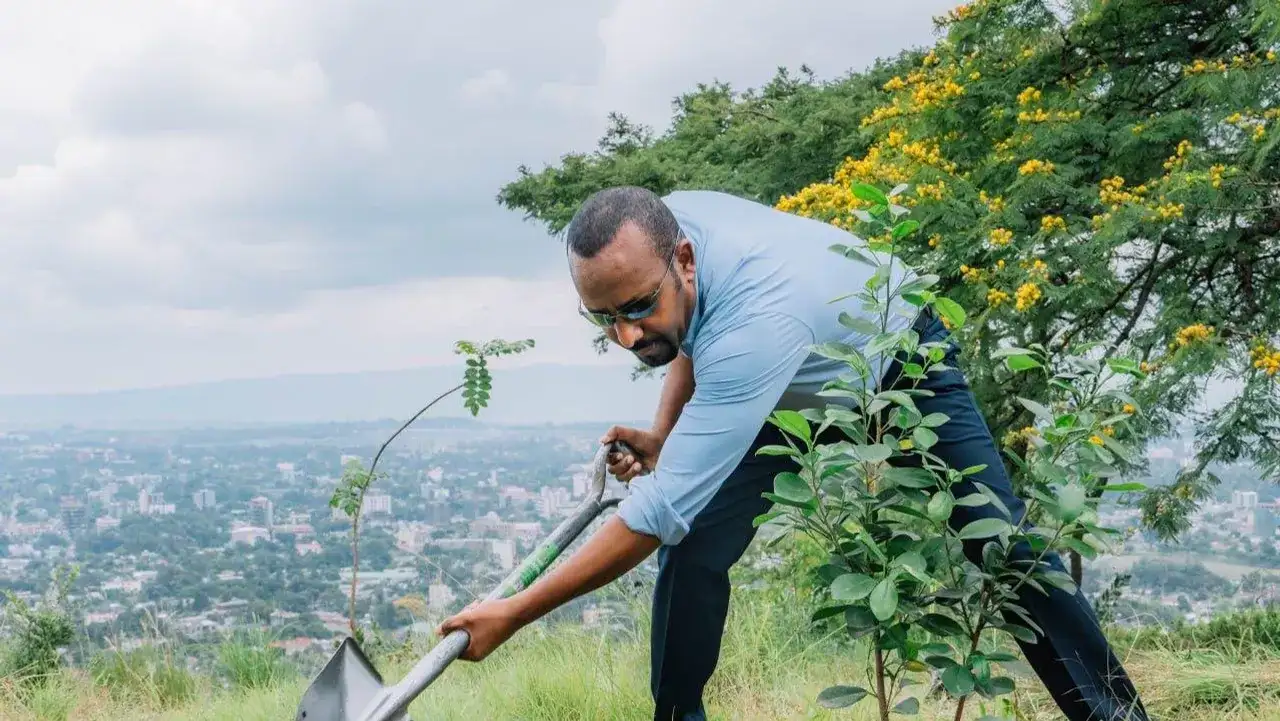
Ethiopia’s landscape is undergoing a radical transformation as the "Green Legacy" initiative, launched in 2019 by Prime Minister Abiy Ahmed, reaches a staggering milestone of 48 billion seedlings planted. What started as an ambitious response to environmental degradation has matured into a nationwide cornerstone of social and economic policy, shifting the country’s trajectory from ecological vulnerability toward a sustainable green economy.
The impact on the national landscape is backed by striking data. In just seven years, Ethiopia’s forest coverage has surged from 17.2% to 24%, a recovery that has fundamentally altered the local ecosystem. By reclothing degraded highlands, the initiative has successfully slowed soil erosion and bolstered groundwater levels, leading to the remarkable revival of long-dried natural springs. These millions of trees are now functioning as a massive carbon sink, reducing air pollution and contributing to what many local observers describe as a noticeable stabilization of seasonal rainfall patterns.
The program has also become a critical pillar of food security. By strategically planting edible species alongside forest trees, the initiative is feeding the nation while fueling trade. Massive plantations of papaya, avocado, mango, and apple trees are allowing both rural farmers and urban dwellers to meet their nutritional needs and generate surplus income. This agricultural pivot has already reached the global stage; a surge in high-quality avocado production has enabled Ethiopia to begin exporting fruit to Europe and the Middle East, securing vital foreign currency reserves.
Beyond the fields, the initiative serves as a major engine for the labor market, creating annual employment for thousands of citizens, particularly women and youth. With more than 120,000 nurseries established across the country, the project provides a steady stream of permanent and temporary jobs in seedling cultivation and long-term care. In the capital and regional hubs, the "Green Legacy" is physically reshaping the cityscapes through high-profile projects like "Dine for Sheger," where new parks act as "green lungs" that mitigate urban heat and provide residents with essential recreational spaces.
On a diplomatic level, Ethiopia is now exporting its environmental expertise to its neighbors, sharing resources with Djibouti, South Sudan, and Kenya to bolster regional climate resilience. This cooperation highlights Ethiopia’s emerging leadership in Africa’s broader climate response. Yet, perhaps the most enduring result is the cultural shift it has triggered. The philosophy of "planting tomorrow, today" has permeated the national consciousness, turning tree planting into a shared civic duty for the next generation. Ultimately, the government views the Green Legacy not as a mere environmental project, but as the foundational architecture for a modern, resilient Ethiopia.