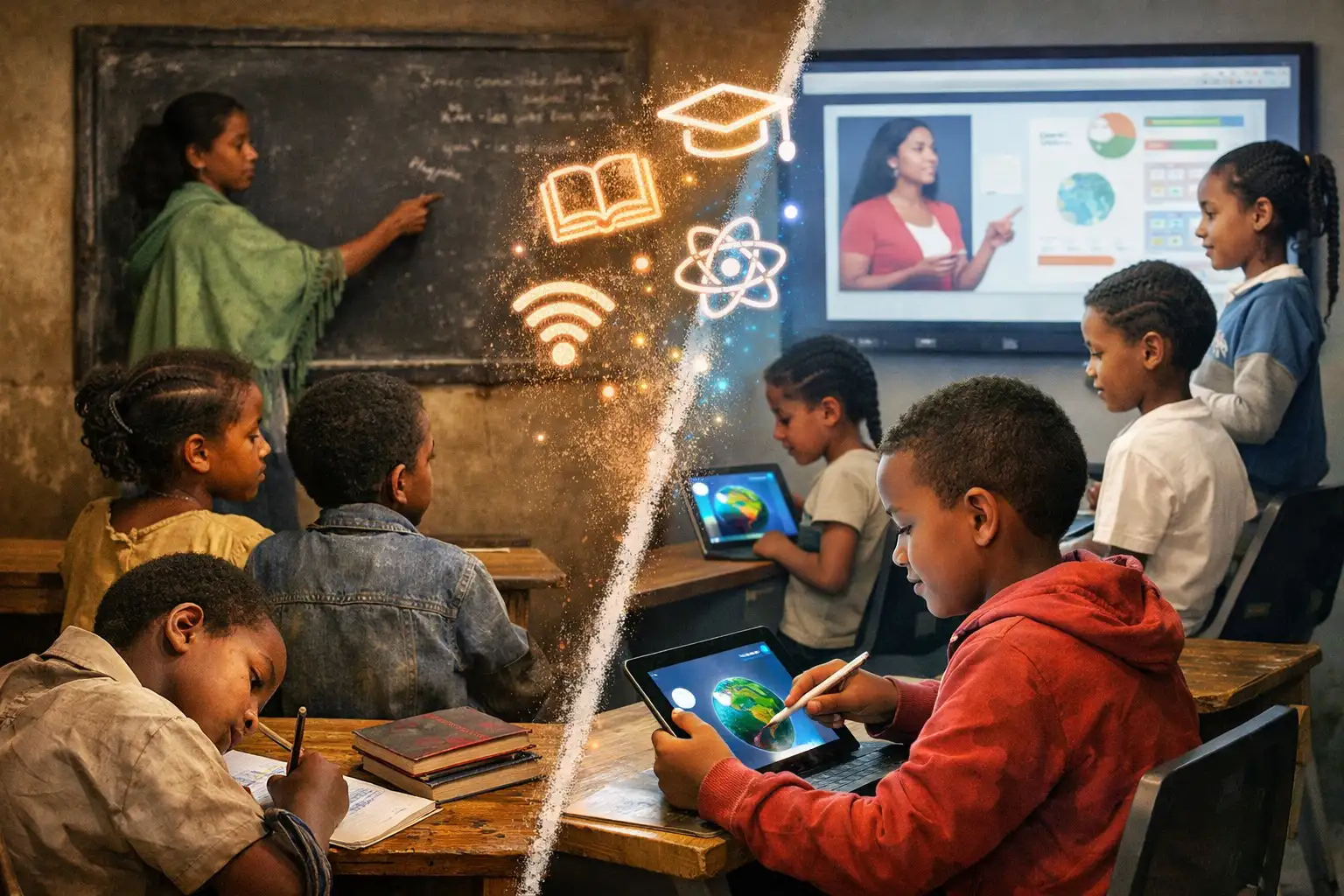
Digital education has emerged as a cornerstone of Ethiopia’s national vision, serving as the fundamental bedrock for building a prosperous future. In recent years, the sector has seen a surge in strategic importance as the government positions technology and digital frameworks as primary tools to enhance educational quality and bridge the gap in accessibility. As Ethiopia navigates its path toward a comprehensive digital transformation, a primary focus has been placed on reducing the traditional reliance on paper while ensuring that high-standard instruction reaches every citizen, regardless of their location.
The impact of this shift extends far beyond the mere adoption of gadgets; it represents a fundamental revolution in the pedagogical landscape. By dismantling geographical barriers, e-learning platforms now offer a lifeline to students in remote regions and those balancing employment with their studies. This digital infrastructure allows for the democratization of resources, where a single high-quality lecture from a premier university can be shared via video or digital text to students across the country, ensuring an equitable distribution of knowledge.
Furthermore, the integration of technology allows for a more tailored educational experience. Students are no longer bound by a one-size-fits-all pace but can instead review materials and practice concepts according to their individual comprehension levels. This is further bolstered by the application of Artificial Intelligence, which identifies specific areas where a student may be struggling and provides targeted exercises to bridge those gaps. The quality of learning is also being elevated through interactive content, where complex scientific theories are made tangible through 3D simulations and virtual laboratories. These digital environments allow students to conduct sophisticated chemistry and physics experiments on a computer, bypassing the need for expensive physical equipment.
Beyond the classroom, digitalization is streamlining the administrative backbone of the Ethiopian education system. Computer-based assessments are facilitating near-instant feedback for students while promoting transparency and saving vast amounts of physical resources. By digitizing student records and credentials, the country is effectively cutting through the bureaucratic red tape that has historically hindered academic mobility. Ultimately, this digital immersion prepares the next generation for the modern workforce, ensuring that by the time students graduate, they are already fluent in the technological languages that define the global economy.