Although Ethiopia stands as an ancient nation steeped in a rich and lengthy history, its modern political journey has frequently been marred by dangerous structural fractures that begin with harsh rhetoric and culminate in violent conflict. While this tragic pattern has repeatedly tested the population's core values of peace and coexistence, Ethiopians have continually weathered these storms through a profound internal social capital. The secret to this resilience lies in a deeply established cultural practice of resolving disputes through dialogue, forgiveness, and restitution. History demonstrates that national dialogue is not alien to the country; rather, deeply embedded indigenous frameworks of reconciliation have long played an irreplaceable role in anchoring the nation's social fabric.
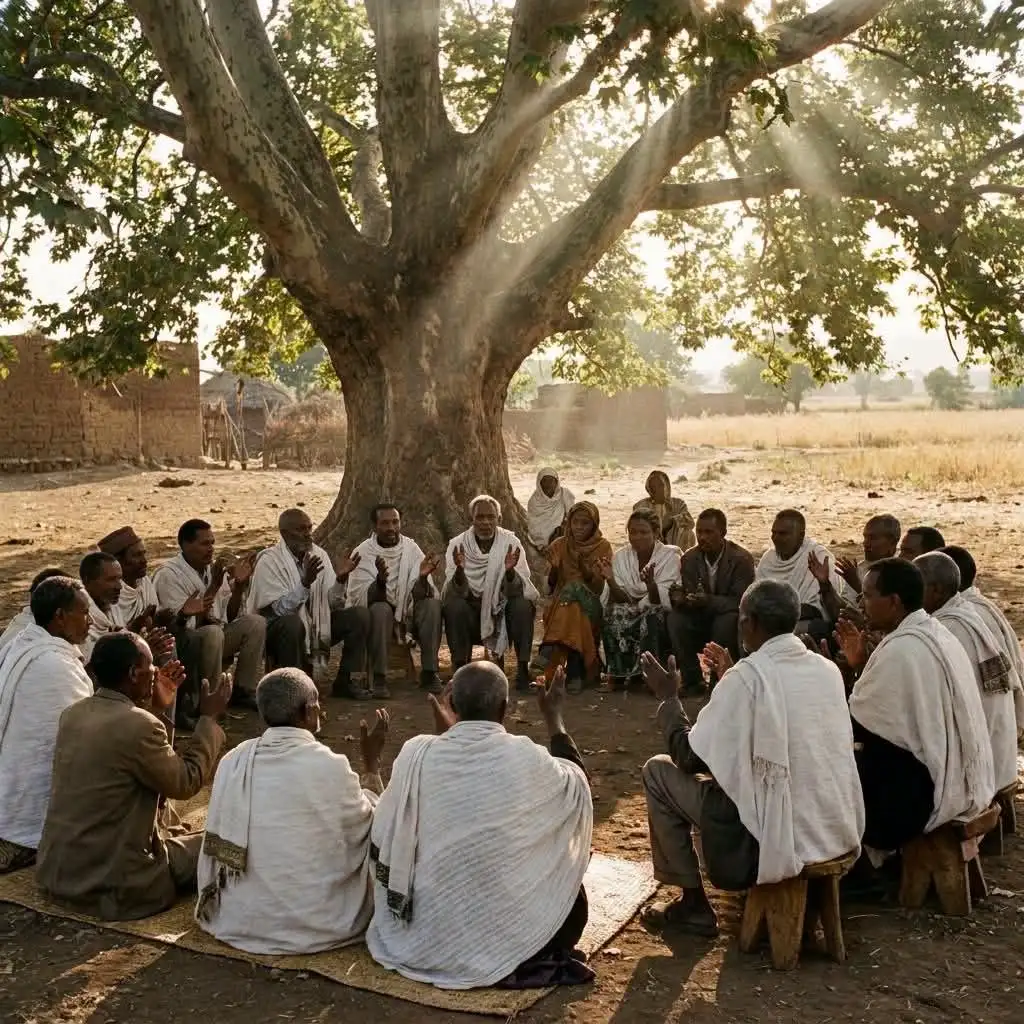
Within this traditional value system, the Warka—or sycamore tree—holds a uniquely revered place, its massive stature and expansive canopy serving as a living symbol of tolerance, magnanimity, and patience. Emphasizing how deeply Ethiopian culture is intertwined with this symbol, Prime Minister Abiy Ahmed previously noted that citizens traditionally gather under the shade of the Warka for elders' mediation, marriage proposals, and religious education, using its space to learn from one another and find collective rest. Historically, ancestors gathered beneath its branches to establish public councils, resolving major national issues through mutual respect.
In recent decades, however, the abandonment of this metaphorical shade in favor of a dangerous, zero-sum political culture has brought immense suffering to the nation. Eradicating this current dialogue deficit and returning to an ancestral culture of consensus has now become a matter of existential survival. As a land of immense diversity, Ethiopia’s various nations and nationalities possess distinct consultative values that emphasize restorative justice over purely punitive measures, focusing heavily on compensating the wronged and actively repairing fractured societal bonds.
Across the country, traditional institutions provide living examples of this indigenous democratic spirit, where decisions are reached through calm consensus rather than force or simple majority votes. Frameworks such as Jarsuma within the Oromo Gadaa system work to restore strained communal relations through truth and reconciliation, while the Gurage’s Joka Shengo, the Sidama’s Songo, and the Wolayta’s Woma operate on similar principles of collective agreement. Furthermore, the Afar’s Mada'a and the Somali’s Xeer serve as strict customary justice systems that tie individual accountability to the broader social contract to halt bloodshed, complemented by the nationwide practice of Shimgelena, or elders' mediation, which establishes peace through mutual compromise.
The overarching lesson of these localized institutions is that differences can be resolved through active listening and mutual respect rather than the barrel of a gun, a principle reinforced by traditional wisdom across various communities. Oromo elders frequently observe that good discourse provides better rest than a comfortable bed, emphasizing the supremacy of ideas, while Afar elders preach empathy by advising that one cannot understand the plight of others without actively stepping out to listen to their concerns.
To turn the current national tide into a collective victory, Ethiopia must now replant these core values of hope, consultation, and forgiveness beneath its symbolic Warka tree. The ongoing National Dialogue stands as the modern, nationwide manifestation of this enduring tradition, requiring participants to approach the process with focused minds and open hearts to harvest peace from the process. By relying on this deep, indigenous heritage of listening, the country aims to heal its political fractures, solidify its democracy, and ultimately transform its current challenges into historic achievements that safeguard the honor and dignity of future generations.