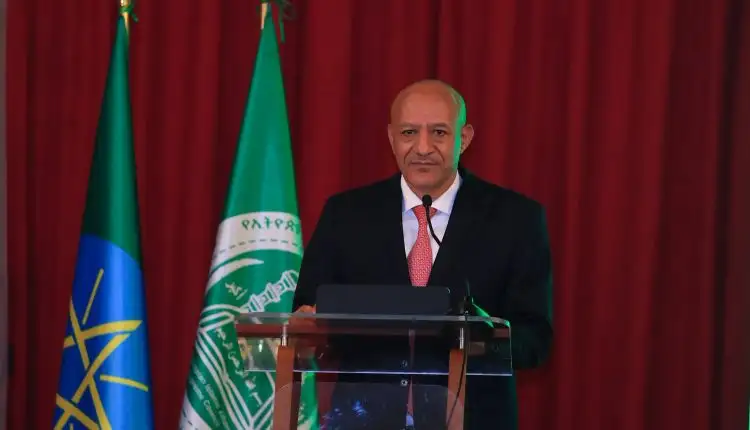
By Lalu Etalla.
Ethiopia’s landlocked status lacks any foundation in domestic or international law, and the nation possesses an absolute right to maritime access under Articles 124 to 132 of the UN Convention on the Law of the Sea (UNCLOS), declared Professor Emeritus of Political Science and US Attorney-at-Law Alemayehu Gebre Mariam.
Speaking on ETV’s Addis Dialogue, Prof. Al Mariam outlined the legal, strategic, and historical grounds governing Ethiopia’s access to the Red Sea, emphasizing that secure maritime connectivity is an existential imperative for the nation's long-term survival, national security, and economic trajectory.
As East Africa's largest economy and regional anchor, independent sea access for Ethiopia is neither optional nor negotiable. He noted that relying entirely on external goodwill for global trade represents an unsustainable geopolitical imbalance that restricts national development.
Examining the historical context of the Port of Assab, Prof. Al Mariam argued that the 1993 arrangements surrendering sovereign Ethiopian territory lacked constitutional authority, public debate, or a valid legislative mandate.
Historically, Assab functioned as part of the Afar administrative region and Sultanates rather than the colonial demarcation of Eritrea.
Outlining potential pathways forward, Prof. Al Mariam emphasized that diplomatic and commercial solutions remain the primary and preferred options for long-term regional stability.
The first one is Bilateral & Commercial Frameworks, which includes revising bilateral agreements to establish long-term port leases for years, commercial concessions, or joint economic integration models.
The second one is UNCLOS Enforceability, which is to fully leverage UNCLOS Articles 124 through 132, which explicitly guarantee landlocked nations the right of transit and access to and from the sea.
The third one is Institutional Safeguards, which entails utilising established international mechanisms to ensure border security, protect transit corridors, and support mutual economic development across the Horn of Africa.
Prof. Al Mariam concluded that achieving a permanent, legally binding agreement on maritime access is essential for fostering durable peace, economic integration, and shared prosperity across the Red Sea corridor.