By : Fistum Getachew
The upcoming 39th AU heads of state and government will present Ethiopia the golden opportunity to showcase all the new developments and changes underway in Ethiopia. The thousands of guests that will come to Addis Ababa not only heads of state and prime ministers as well as diplomats that are expected to intervene in the deliberations of the summit but also journalists and correspondents of international media outlets that come to report the news to their readers and other audience all over the world, will be the right occasion during which the world will find out that their perception of Ethiopia as a poor and backward country with no peace and stability will be proved wrong. Such perception has definitely been a result of widespread bias and prejudice against developing countries in general but mainly in Africa and other so called Third World countries. It will hence be the right opportunity to disprove these old and outmoded narratives against Ethiopia mostly and usually by its adversaries and denigrators.
For the coming days Ethiopia will be a focus of international media. It is acknowledged that Africa’s role in the international affairs is on the rise due to multiple factors not least because it is home to more than a billion people and its interaction with the biggest economies of the world is resulting in game changing economic endeavours in the world at large not only the specific countries with whom it interacts but others as well. It should not be forgotten that Africa is rich with natural resources which are key to the technological advancement of the world’s richest countries. The AU summit is hence a significant venue to give a loud voice to Africa and Ethiopia, which is one of the most influential countries in the continent due to a variety of factors.
Ethiopia’s stride towards development and progress has been going fast and in the past few years it has gained huge momentum. This can easily be proved by the visible changes in which the country has been immersed and certain economic accomplishments that have come due to the reform implemented in the macroeconomic sphere. The radical infrastructural development has spread throughout the country by specifically what is called the Corridor Development Projects.
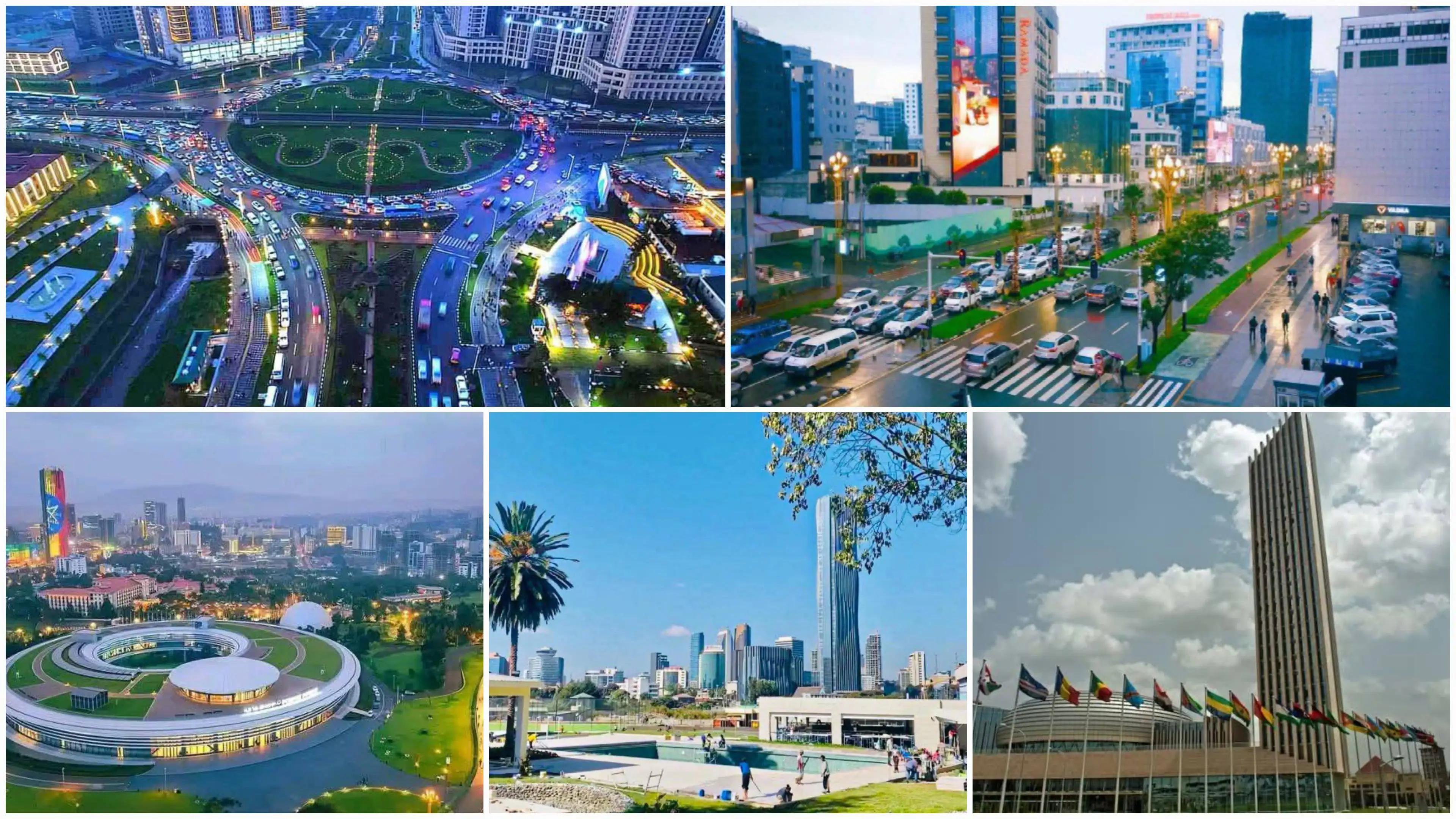
Our cities have been visibly transformed from their old faces and features to ultramodern cities with all the modern facilities that are needed to make them clean, livable and healthy to all equally, including people with disabilities. This is what Addis Ababa in particular needed and was worth it as the capital of Africa and seat to a vast number of diplomatic missions and international organisations. The new face of Addis is hence commensurate with its growing fame and reputation as a major international diplomatic hub and a source of attraction to tourists.
Based on the new climate resilient programs Ethiopia’s stride towards a green economy is also part of the development strategy the country has been following. It is known that Ethiopia is among the lead countries in its efforts to fight climate change. During the past six years alone, more than 48 billion tree seedlings have been planted and for that it has earned the admiration of environmentalists and organizations that are active in advocacy and campaigning for a sustained fight to keep the climate on check so that the level of atmospheric heat does not follow the current dangerous trends.
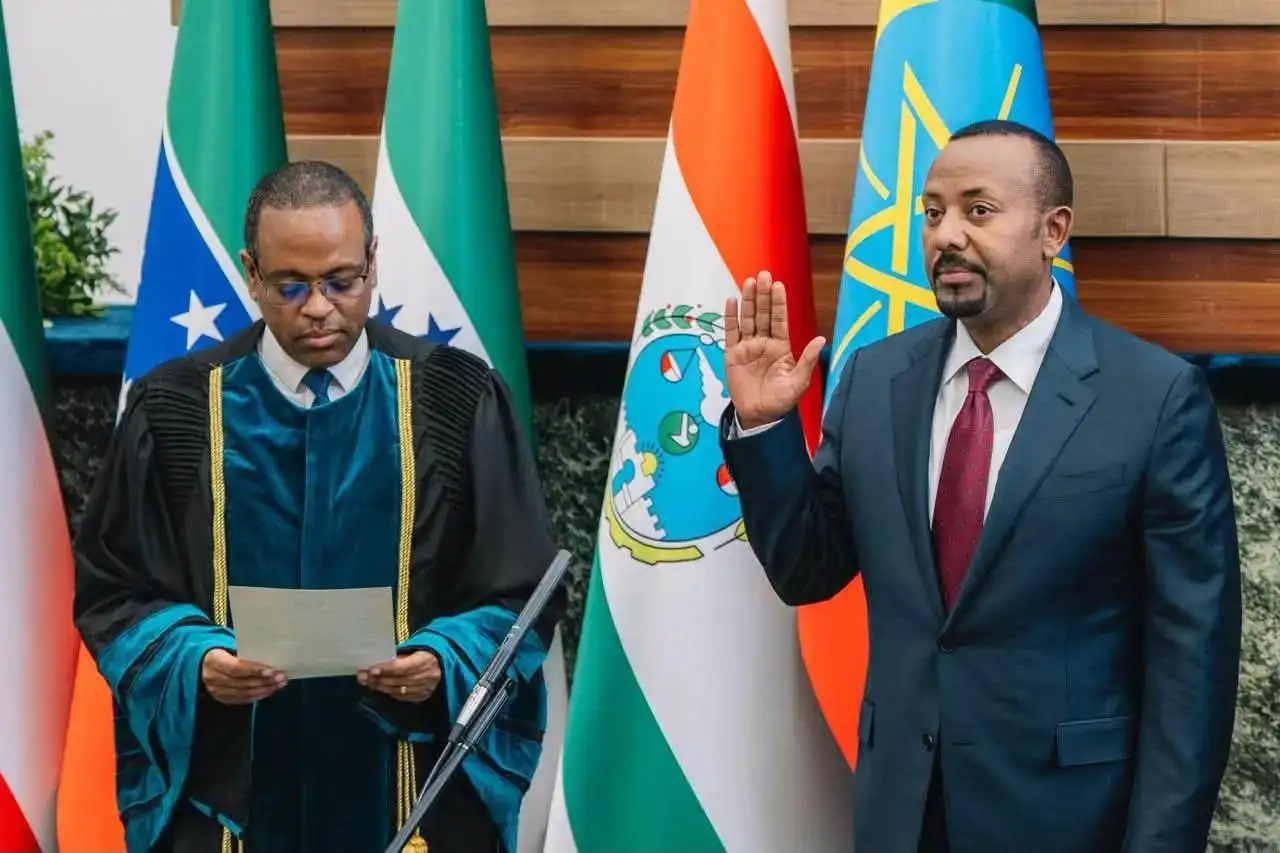
This active endeavour that Ethiopia has been constantly engaged in has gained it recognition and for that it has been awarded the chance to hold COP32 in 2027 winning over other competing venues. This is a testimonial to what the country is doing under the current reformist government. Praise and commendation have been conferred to Prime Minister Abiy Ahmed (PhD.) for his sustained battle against climate change with the extensive greening of the country.
Ethiopian cities are now covering their surface with greenery and at least 30% of the cities all over the country should be covered with grass, flowers and shrubs. This was not the case for years as more and more constructions were carried out in our cities without any restrictions and impediments both practical as well as legal. Today following the devising of new regulations, things are now changing significantly. We see more grass and trees than ever before. Parks are being developed in every city, byroads are being covered with green grass and street sanitation spaces including toilets have been constructed in every corner of the cities to respond to the needs of pedestrians. Lamp posts have been posted along all roads and this has contributed to the safety of people who can now walk in comfort along the streets even during evening hours. Besides, CC cameras have been planted in various critical areas so that there is close and continuous supervision and control of the roads by law enforcement units. In short, our cities are catching up with the standards of the most livable cities of the world.
In order to foster the potential of tourism to the maximum Ethiopia has been developing intensely its tourist attractions and destinations. Not only infrastructural updates have been extensively made but also state of the art hotels and resort areas have been constructed in multiple areas so that tourists feel at home and enjoy their stay in Ethiopia and be tempted to extend their sojourn.
It is evident that the government has given priority and exceptional attention to developing the tourism industry. The inscription of new cultural heritages in the UNESCO list of intangible heritage is further stimulus to help meet this objective of the government. For instance the recently inscribed new year of the Welayita community, the ‘Gifatta’ is the latest one and others are in the pipeline. It is undeniable that Ethiopia is immensely rich with historical, natural and cultural heritage thanks to its long and glorious history, geographical landscapes and its more than 80 nations, nationalities and peoples each of which has their own peculiar, fascinating and original culture, (costumes, food and languages) worthy of being conserved and protected at the international level.
What is more, Ethiopia’s recent exposure to the world through the construction of the Grand Ethiopian Renaissance Dam (GERD) using its own domestic resources without resorting to loans and the like has earned it the appreciation and admiration of many countries in the international stage. This has shown to the world that Ethiopia is running fast on its path towards progress and prosperity using its own resources by involving the extensive participation of its citizens.
In this respect, the contribution of the national air carrier ‘Ethiopian Air Lines’ is key. Ethiopia can be proud of its reputed airline that has consistently and repeatedly been awarded as the best in Africa and one of the best in the world with the best equipped and most modern fleet and the warm hospitality which is characteristic of Ethiopians and their tradition. The fast, efficient and easy connection that Ethiopian offers to its clients has made it the preferred and most comfortable way of traveling. Addis Ababa has thus become the most important hub of the African continent that joins Europe, the Middle East, Asia and North America.
Given that this trend is bound to multiply by leaps and bounds, Ethiopia has embarked on the construction of a new and very huge international airport destined to be the largest in Africa, capable of hosting yearly more than a hundred million travelers. This is a very ambitious project that testifies to Ethiopia’s trajectory of sustained growth towards new heights previously unheard of. This Bishoftu International Airport to be constructed not far from Addis will be the new image of Ethiopia’s advancement in the economic field showing the potential of the country just as how it has constructed the biggest hydroelectric dam in Africa, the GERD.
According to the current Ethiopian government, its objective is to extricate nationals from abject poverty and underdevelopment confining such state to the past and history books. With the current pace of growth, the country’s image as a poor and war torn country, victim of conflicts and droughts, and hence unstable, will be completely erased from the psyche of many and be substituted with a new face, a new narrative.
The kind of confidence Ethiopia has developed with all the mega projects completed on its own with success, such as the GERD, will allow it to embark on any new and huge development project. There will be no limitations for Ethiopia to dream big and aim towards lofty objectives. The digital progress that the country is now undergoing is transforming the banking system and the economy. The upcoming AI University will offer the opportunity to excel in the field and be a pioneer in the sector at the global level. The Bishoftu International Air Port, the upcoming huge fertilizer factory with the cooperation of the Nigerian tycoon Dangote as well as the Kalub Gas Refinery are other huge projects in the pipeline. What is more, Ethiopia’s venture towards the development of its mining potential is another gem to be added to all the above and is a demonstration of the new face of Ethiopia. Hence we should exploit to the maximum the 39th African Union Heads of State and Government conference as a timely and significant occasion to showcase to the world the ‘new face of Ethiopia’.