By: Fistum Getachew
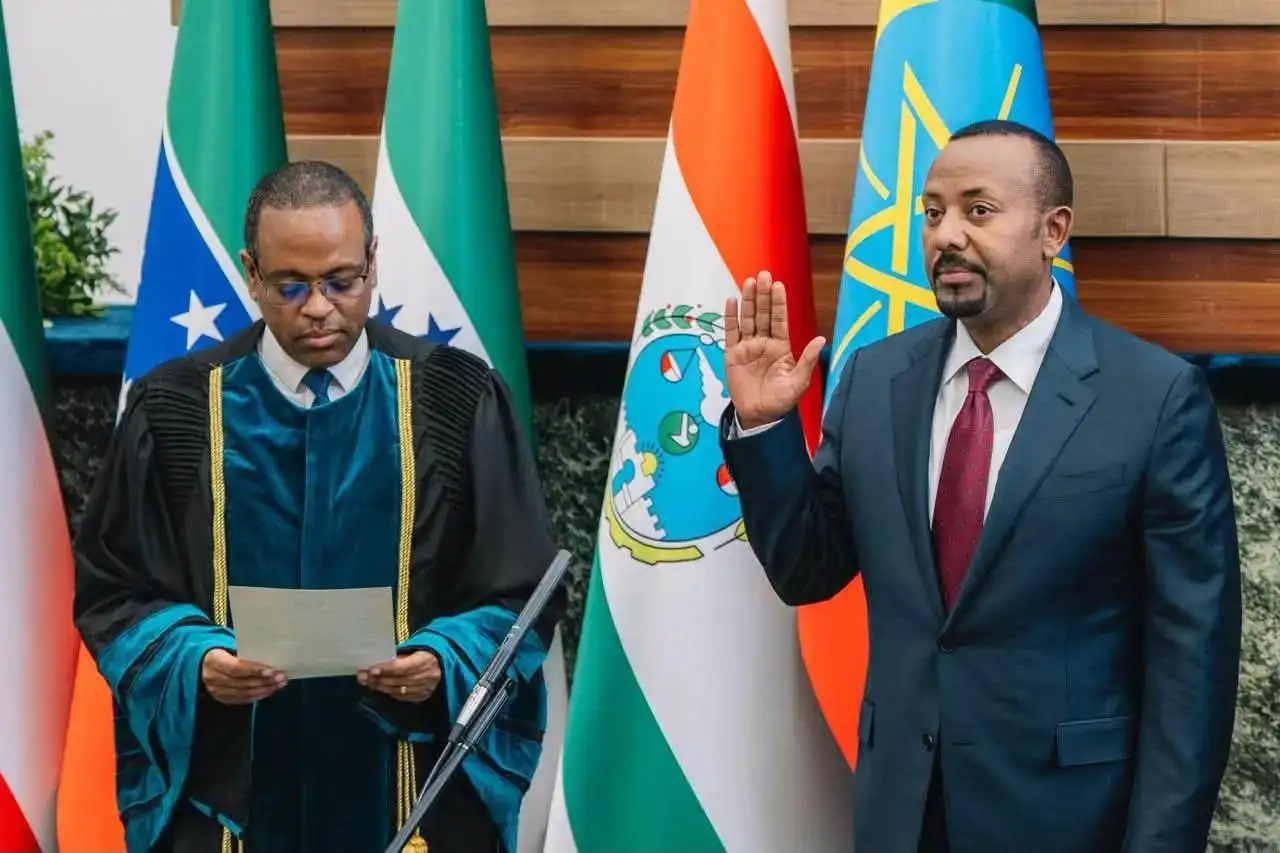
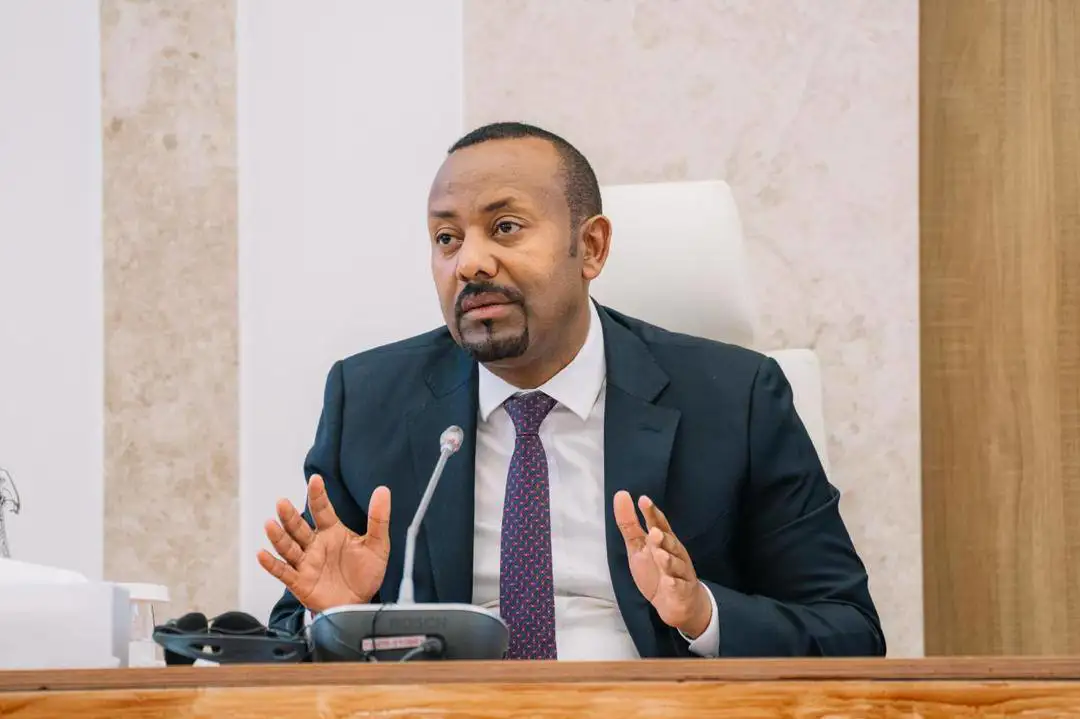
Prime Minister Abiy Ahmed (PhD) was in the House of Peoples Representatives to attend the tenth regular session of the parliament on February 3rd, 2026. On the occasion, the MPs posed several questions to the premier based largely on the six month performance report of his government. A variety of issues were raised on which the premier was asked to address and substantiate.
The queries began with issues of the economic performance of the country, questions that pertain to inflation, unemployment, industrial and agricultural production growth and other related matters. There were also questions that pertained to the issues of peace and security, issues pertaining to the imminent national election, the current national dialogue and its status as well as diplomacy, the current status of the Pretoria Peace Agreement and the situation in Tigray region. There were also questions that relate to the current status of the relations with Eritrea as well as the geopolitical issues in and among the Horn of Africa nations.
According to the premier, the fundamental problem of Ethiopian political actors is that there is a long tradition of not resolving differences in policies through peaceful means engaging in dialogue and discussions preferring instead to resort to force and pride on temporary gains by whichever party perceives to have won. However, history has taught us that resolving disagreements with the use of force is not destined to last long because the side that felt it was subdued by force will someday raise the issue again and try to undo the perceived injustice. Hence, the issue will not have been resolved once and for all and that will be a vicious circle.
Unfortunately, we have observed that this perennial Ethiopian practice has always constituted a major setback to the country’s lasting interests consistently dragging it backwards. The consequent lack of peace and stability has often affected negatively its trajectory of development and progress. It is unfortunate the premier told parliament that such lack of will to resolve disputes or disagreements among political actors by engaging in dialogue and discussions has continued to harm us. This has remained to be a tradition since time immemorial and we are still struggling with it. The premier pointed out that the current National Dialogue Commission is trying to reverse such tendency and eventually it will be a success. This is something that every citizen should note and adopt this stance of settling differences through discussions and dialogues in a peaceful and honest manner.
The other historic problem of Ethiopia has always been one of confusing the fundamental national interest of the country with temporary personal gains at the expense of the risk of putting in danger the very existence of the state. Certain groups get engaged with foreign foes of Ethiopia in order to score a temporary victory or any advantage that could also be money and push the country to the precipice of even annihilation. These groups become Trojan horses for the enemy of the country by sowing discord and hostilities among various segments of the population. Ethiopian politics has often been characterized by the actions of certain groups or individuals harming the national interests of the country by prioritizing personal ambitions. As there have always been countries that do not want to see an Ethiopia that grows and become rich fearing that its growth could constitute a threat to their existence. Ethiopia however will not kneel down to these elements and will continue to pursue its march towards prosperity.
Unfortunately, the search for similar forces has always persisted and we see it even today. These adversaries of Ethiopia continue to search ‘collaborators’ from within Ethiopia that could have disagreements with the current government and hence give them the opportunity to disrupt the country from its plans and programs of growth. Unfortunately, these subjects do not care if the country risks disintegration or even get destroyed altogether, the premier underlined. They run only for their personal gains and this has always constituted a huge issue in Ethiopian politics and continues to be so unless we decide to distinguish between temporary personal gains from lasting national interests.
Going ahead the premier also dealt with the issue of peace and security that was raised by the MPs referring particularly to how the country could hold elections in a country where there problems of disruption here and there and the atmosphere is filled with uncertainty. The premier responded that even during the COVID period in situations of difficulty the country has successfully held national elections effectively and there would be no reason not to hold the election this year. We have been preparing for the holding of the elections in an atmosphere of peace and we count to hold even more successful election this year. After all he noted that many of those who were disrupting the peace of certain localities are now abandoning their hostile stance and accepted the offer of the government to engage in peaceful endeavours.
The premier then went on to underline that his government is always ready to welcome all those who abandon their hostile and armed stance and decide to peacefully take part in the country’s political landscape because the government gives priority to national interests and not engage in revenge on a personal basis. The issue is not personal but a matter of national priority, the premier stressed.
Asked about the situation with Ethiopia’s relations with its neighbours, the premier revealed certain facts that were not known before. He said that the Eritrean government has committed several destructive actions in multiple areas in Tigray during the conflict between TPLF and the Federal Government and that Eritrea’s intention and objective was to destroy TPLF. The premier said that Ethiopia did not agree with such stance and it was then that a major rift developed between the Ethiopian government and that of Eritrea. He then revealed that the dispute between Ethiopia and Eritrea was not principally the issue of Red Sea and access to sea as many people would be tempted to believe. Naturally we distinguished between TPLF and the Tigray people and we were completely contrary to all the destructive actions the Eritrean military inflicted on the regional state causing significant harm on Tigray’s infrastructure, houses, churches and airports etc.
Pertaining to the politics of the Horn of Africa, the premier said that the countries in the sub-region seem to have chosen disputes and disagreements rather than coming together and growing together taking advantage of exchanging goods and services between themselves and planning strategically to extricate themselves from poverty. In this respect granting access to sea to Ethiopia could be one of the factors that can contribute to the growth of the sub-region not only to Ethiopia. At the moment, the premier underscored that Ethiopia is taking all that it takes to secure access to sea in diplomatic and peaceful manner because there is no need to resort to any form of force as many have alleged against Ethiopia. He dismissed such speculations as a means of attracting cheap attention because Ethiopia has proposed peaceful diplomatic means to have access to sea. In the end, the premier said, that Ethiopia could never be detached from access to sea forever by any means. He said that just as Ethiopia does not prevent its neighbors from using the rivers that flow to their land, the Tekeze to Eritrea, the Wabe Shebelle to Somalia, the Omo to Kenya and the Baro to South Sudan, so is the case when we speak of access to Red Sea for Ethiopia which cannot be dismissed as wishful thinking or mere fantasy. The link between Ethiopia and the Red Sea is ancient and can never be cancelled due to political or historic blunders committed a few decades ago. The issue of access to sea for Ethiopia is much more serious than many are ready to admit or recognize. For Ethiopia it is a matter of survival as it has security implications beside the economic issues attached to it.
Ethiopia’s security is linked to what can take place around the Red Sea area. There are several forces operating around the Red Sea area with many unpredictable consequences and naturally Ethiopia cannot be indifferent to these dynamics and delegate its security or survival to others. Ethiopia is well capable of defending itself against any security threats and aggressions, Prime Minister Abiy has underscored. It is inconceivable that a country such as Ethiopia with more than 130 million people can remain confined to be landlocked forever. Such state of affairs is not good even for its neighbours. There are five thousand kilometers of coastline around the three states of Eritrea, Djibouti and Somalia and it can only be logical that Ethiopia not be deprived totally from such excess of coastline for the countries involved. Ethiopia would be satisfied with only fifty kilometers of coastline and it believes that this can be attained with a diplomatic and win-win approach whereby all nations in the sub-region would benefit.
According to the premier, what is sure is that sooner or later Ethiopia’s access to the sea will be a reality and that is supported also by the international community. There is the general understanding that under similar circumstances peaceful and diplomatic measures should prevail and settle the matter without any recourse to conflict and hostilities. Ethiopia is certainly committed to peaceful and diplomatic process to address its problem of being excluded from access to sea.