By: Fistum Getachew
Ethiopians are these days very busy carrying out nationwide national consultation committed to close a long and sad chapter of history of the confrontations of political forces characterized by irreconcilable differences deriving from suspicion, intrigues, controversies, violence and all sorts of reactions that have come along down the years since practically time immemorial.
Unfortunately, this has become a sort of ‘trademark’ for Ethiopian politics since practically always and the outcome has often been not consultations and peaceful processes but a show of force and armed confrontations deeply embedded in the psyche of Ethiopian society despite the fact that Ethiopians do have various indigenous mechanisms of settling disputes and differences in their tradition. But unfortunately this societal value has not been introduced, transferred to and embedded in the political culture of our country.
At long last, however now Ethiopians seem to be committed to try and settle their perennial differences that have cost tremendous losses and destruction along the decades through peaceful consultations and discussions abiding by civilized way of frank exchange of views and discussions. The current consultations have the opportunity to introduce people to a new and not very familiar culture or practice, a new way of taking care of differences and disputes in any field of endeavor and search relentlessly a common ground and agreements without necessarily resorting to violent conflicts and play the zero sum game.
Finally, this could be the right time and occasion to frankly put all the principal agendas of the nation on the table and discuss them in a friendly and peaceful atmosphere without any form of prejudice and bias, without intolerance and exclusion of certain forces and privileging or adopting the ideas or views that come only from a certain part of citizens, dismissing or neglecting the others.
It is well known that Ethiopia is a country with a very old history blessed with the presence of multiple peoples and cultures, religious beliefs and outlooks. It is also reputed and appreciated for its resilience in averting or confronting invading alien forces which repeatedly tried to colonize or conquer it but in vain. However, paradoxically it has not had the fortune of developing the culture of settling the differences or disagreements between its various communities whenever there were some political discourses and stances.
Unlike even the recently formed countries which have adopted the culture of resolving differences through consultations, Ethiopians did not reach this state also because of foreign influence or interference trying to take advantage of a state of division of chaos in the country. In a recent message the prime minister sent to citizens, he mentioned these ideas that Ethiopians’ division and recurrence of conflicts or disputes opens widely the gates of further division exploited by historical enemies that have always tried to fish in troubled waters! He warned that Ethiopians must wake up and close all avenues of foreign interference obstructing the country from enjoying persistently the trajectory of fast and sustained development and progress pushing it to a new high.
It is clear that whenever a nation does not develop a certain form of internal unity and strength, it struggles to assert itself in the international arena and to protect its national interest because it projects weakness and division. Internal division creates the condition to more vulnerability and more exposure to negative alien influence and with the current state of affairs in international geopolitics, the more divided and fragmented a nation is the more it exposes itself to damaging outside influence.
In the case of Ethiopia, it needs to project a sense of unity and solidarity among its various ethnically different communities and discourage and minimize all forms of interventions that try to impact negatively on the pursuit of its national interests in the international arena. That is why the culture of peaceful consultations and discussions to iron out internal differences regarding what sort of future the country should have and which direction it should follow in its life should be adopted and nurtured. The use of force to settle differences is the worst way of doing it and there are no winners in similar scenario.
At the opening of the National Dialogue Conference we have heard the practical result of similar condition from the former president of Nigeria Olusegun Obasanjo, AU Special Envoy to the Horn of Africa, who advised us Ethiopians and other African nations undergoing through similar circumstances to always avoid the resort to conflicts because there can never be winners. Internal conflicts result in double damages and become very hard to reach reconciliation.
He said it would be easier to reconcile and make peace with an alien force because there could be a winner and a loser but in the case of a civil conflict there are no winners, rather all the forces involved become losers! Hence, the best remedy is, according to Obasanjo, settling down around a table and engaging in frank and candid discussion carried out in good faith and peace no matter how much time it may require to agree to a certain proposition and adopt common ground.
Since the foundation of the National Dialogue Commission four years ago, Ethiopians at home and abroad have been working with it continuously in the process of gathering the pressing agendas of the country so that they would be presented at the national conference now underway in Addis Ababa. This gathering and consultation is bound to be a decisive moment in the history of the country because it can be a wonderful occasion to introduce and nurture a new democratic culture of averting potential political and ideological differences and resolve them peacefully.
Ethiopians expect and hope that this consultation will bear many positive results in terms of resolving the differences through discussions between the various political forces that have not been willing to come to the table.
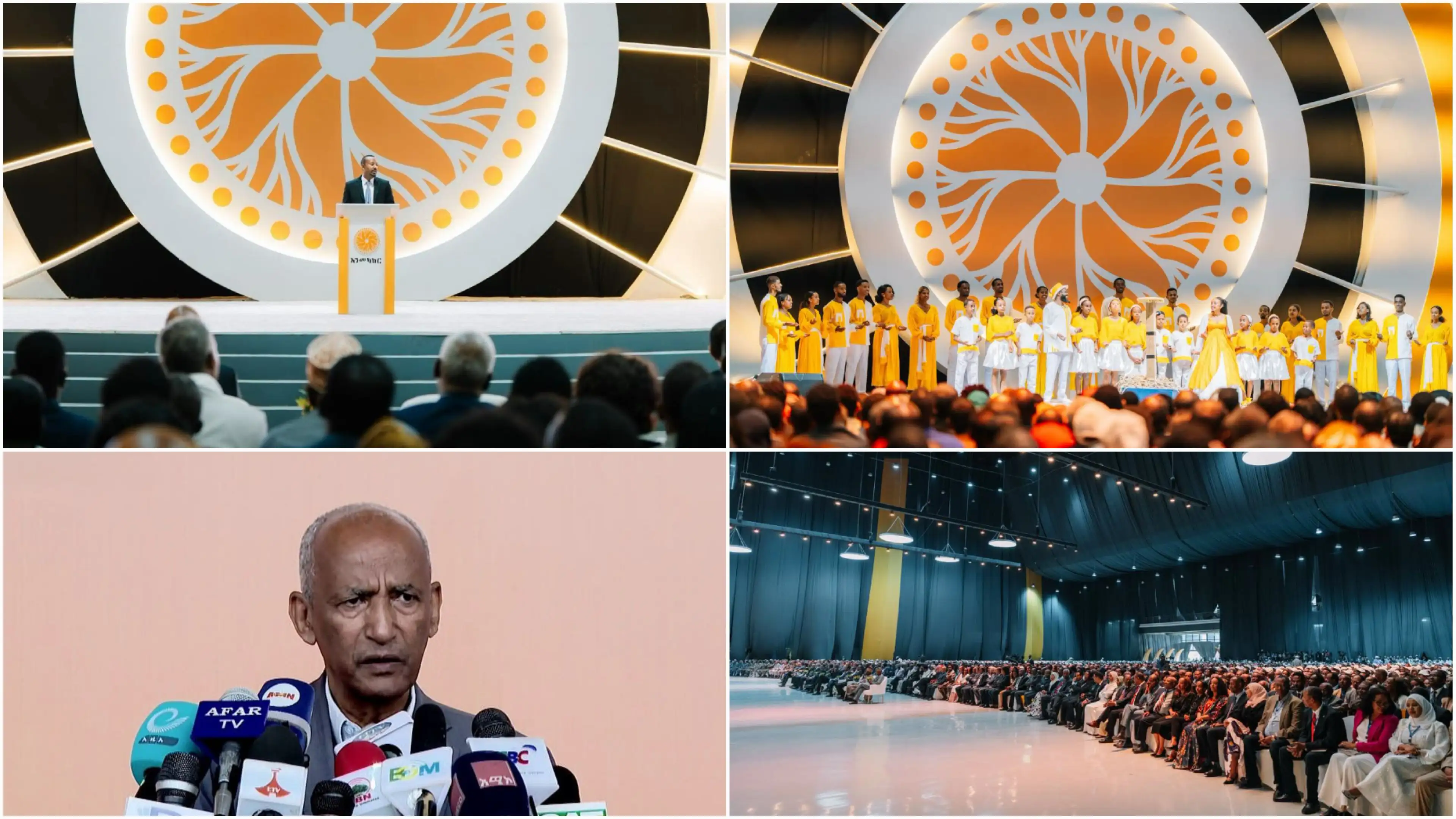
Talking about the consultation Professor Mesfin Araya, Commissioner of the National Dialogue Commission said, it will serve as a platform to resolve the issues underlying Ethiopia's longstanding differences through peaceful consultation.
He underlined that the main national consultation conference will be a place where issues that are the source of our differences will be resolved through consultation." The 4,000 delegates who are taking part in the consultations represent communities from every region, every woreda, including cities like Addis Ababa and Dire Dawa as well as all Ethiopians in the diaspora.
Professor Mesfin noted that participants are expected to engage in inclusive and constructive discussions and work toward consensus on recommendations that offer lasting solutions to issues that have fueled differences among Ethiopians.
The Chief Commissioner has argued that disagreement is a normal characteristic of democratic societies. "Having different views is natural. The problem begins when we attempt to silence differences through violence instead of resolving them through discussion."
Professor Mesfin described the conference as ‘a historic opportunity to address national challenges through dialogue rather than confrontation’. The conference represents the culmination of years of consultations involving communities across the country. It reflects a national commitment to resolving deeply rooted differences through inclusive engagement, consensus-building, and peaceful deliberation instead of conflict.
Similarly, at the opening of the consultation Prime Minister Abiy Ahmed (PhD) addressed the audience reminding them what sort of performance Ethiopians expect from them. He urged citizens to seize the National Dialogue Conference as a pivotal chance to replace old patterns of political disputes and confrontation with dialogue and consensus. He stressed the need for a culture of discussion, gathering 4,000 participants to address critical issues affecting the nation's future.
PM Abiy highlighted the dialogue's bottom-up approach, involving widespread citizen input, and called for wisdom and responsibility among participants. He described the conference as a rare and significant undertaking in Ethiopia’s modern history bringing citizens under one platform to deliberate seriously and responsibly on the issues considered fundamental and hence decisive to the country’s future.
The premier added the National Conference provides Ethiopians with an opportunity to shape their own history through consultation, describing it as a moment to build a stronger foundation for current and future generations.
The premier emphasized the importance of listening to diverse perspectives and utilizing Ethiopia's traditions of reconciliation for peaceful coexistence. Abiy reminded attendees to consider the long-term impacts of their discussions, aiming to resolve internal disagreements and showcase Ethiopia's potential for transformation through unity and dialogue. He urged participants to transform challenges into solutions and foster a responsible dialogue characterized by respect and humility.
Emphasizing the importance of addressing differences through understanding, the Prime Minister noted Ethiopia's rich history of reconciliation. He called for a focus on national interests and consensus-building to repair divisions and ensure a shared future for all Ethiopians. He urged the representatives to place national interests above political, ethnic and ideological divisions, arguing that future generations should remember this gathering as the moment Ethiopia deliberately chose dialogue over division.
Ultimately, he stressed that the responsible use of current opportunities is essential for the nation's peaceful and prosperous future. He said our politics should stop from beginning with strong words and ending with forceful action. This divide must be stopped once and for all." The premier concluded, “The opportunity before us today is not one that comes often. We are gathered here to write history together."
Former Nigerian President Olusegun Obasanjo, speaking at the Conference, highlighted the initiative as a crucial step for national cohesion and Africa's influence. He emphasized the importance of learning from history to prevent internal conflicts, which can be more damaging than external threats. Obasanjo praised Ethiopia’s National Dialogue Commission for its inclusive approach, aiming to unite citizens around a shared vision for a stronger society.
Noting the historical ties between Ethiopia and Nigeria, he expressed confidence in Ethiopia's potential as a leader in Africa, advocating for unity and collective action. The conference, featuring diverse participants, will address key issues for national consensus and peace over the coming days.
Furthermore, the national consultation has been described as a significant opportunity for home grown solutions by IGAD Executive Secretary Workneh Gebeyehu (PhD) speaking at its opening. He emphasized the importance of dialogue and mutual understanding over conflict, noting that sustainable development comes from resolving differences peacefully. Workneh underscored Ethiopia's rich traditions of reconciliation and the need to utilize internal mechanisms for mediation. The National Dialogue is seen as a chance to transform political culture by promoting consultation rather than force, and he called on participants to commit to their responsibilities, keeping future generations in mind. IGAD remains dedicated to supporting Ethiopia in this initiative, he said.
Similarly, the African Union Commissioner for Political Affairs, Peace and Security, Ambassador Bankole Adeoye, appreciated this Ethiopian initiative seeing it from the African Union's institutional perspective. He said, "The Ethiopian National Dialogue is a foundation for lasting peace and national reconciliation."
His statement reflects the African Union's broader policy preference for inclusive, nationally owned political processes as mechanisms for conflict prevention and post-conflict recovery.
As the days of the consultation progress, Ethiopians at large are full of hope that the outcome will reshape how politics will be conducted or run in the country ushering in a new phase of peace and stability. They firmly and earnestly hope and pray that this golden opportunity should not be squandered. Ethiopians should adopt the win-win solution of a peaceful and valuable national consensus.