By:Goshu Melisew
Climate change advocates are calling on global leaders to turn promises into concrete actions rather than mere words.
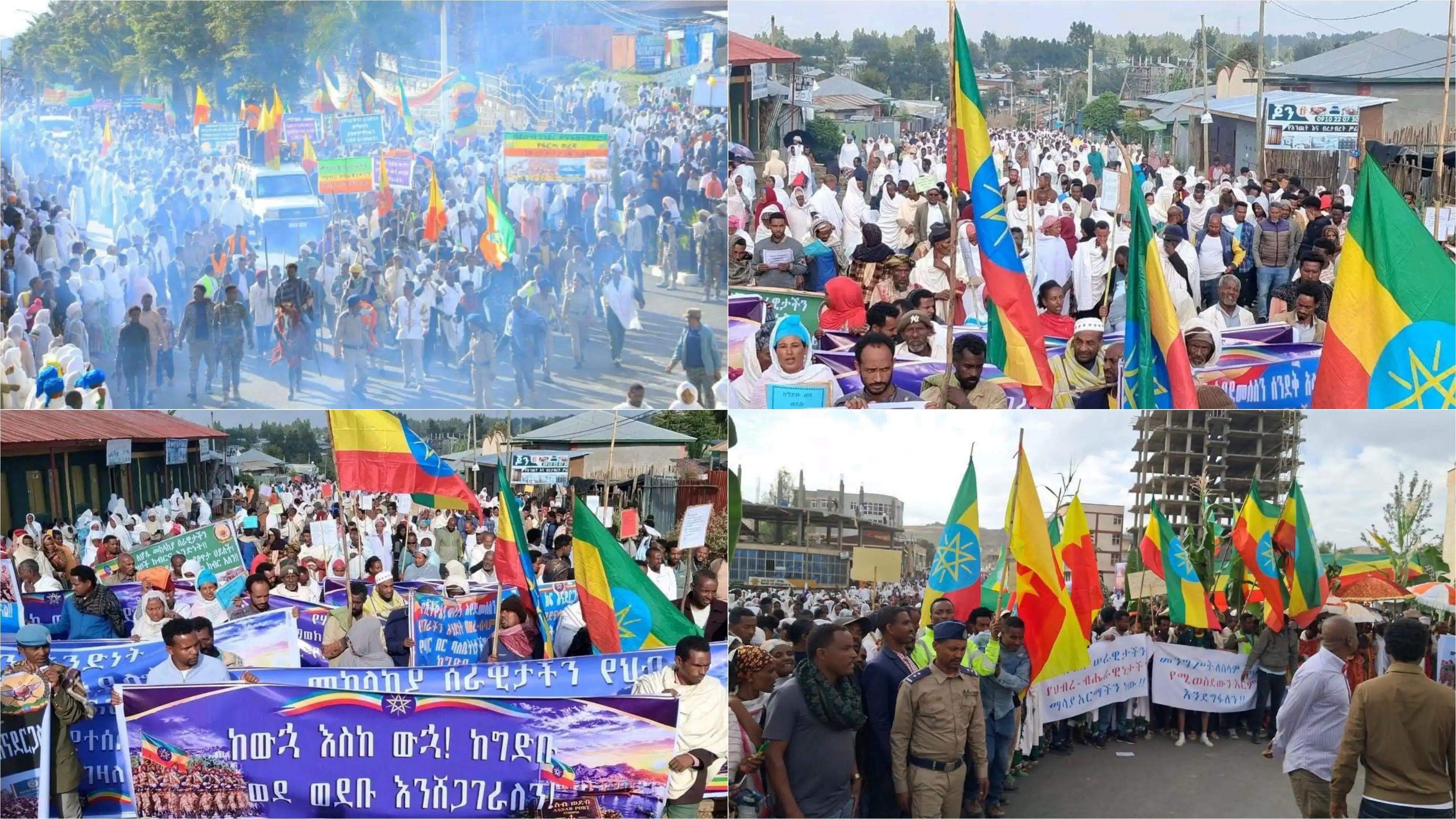
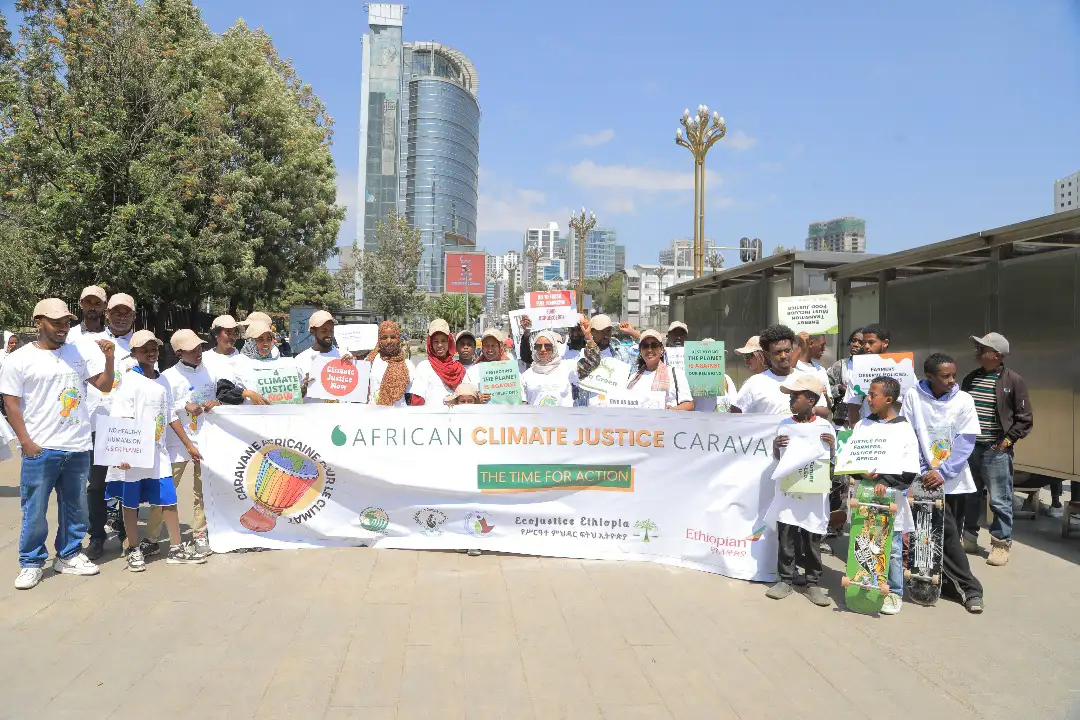
Youths and climate activists marched on foot from Ethio-Cuba Friendship Park to the Adwa Museum on Sunday as part of the “Justice for Africa on Climate Change” caravan, demanding climate justice for Africa ahead of COP30. The Carvan, coordinated across various African countries ahead of the 2025 Climate Summit in Brazil, underscored the continent’s disproportionate suffering from climate change impacts despite its minimal contribution to global emissions.
The event was organized jointly by the Ethiopian Sustainable Food Systems and Agroecology Consortium (ESFSAC) and Young Volunteers for Environment (YVE).
Bayush Tsegaye (PhD) Executive Director of ESFSAC said the caravan aims to raise awareness of climate change, promote use of green energy, underscore the leadership of women and youth in climate actions, and elevate Africa’s climate action profile globally. The initiative also showcases African governments’ commitment to advancing sustainable development and demand for climate justice.
She noted that while Africa contributes the least to global carbon emissions, it remains among the most severely affected continents. Smallholder farmers, pastoralists in lowland areas, women, and children, the elderly, pregnant women, and breastfeeding mothers face the highest risks from climate shocks such as droughts, displacement from floods, food shortages, and health crises.
With COP30 approaching, Bayush stressed that African countries expect global leaders to address these realities seriously. Support from high-emitting nations should be viewed not as charity, but as a responsibility. “The message is clear: move from promises to implementation,” she said.
Bayush also emphasized the inclusion of youth as active participants shaping climate solutions today, not just future stakeholders. Strengthening basic infrastructure through targeted investments and financial support systems is vital to help vulnerable communities adapt.
Semira Akmel, Director of YVE, described climate justice as a moral obligation. She called for a just transition that strengthens African economies, creates sustainable jobs, and that ensures youth and frontline communities are included in global climate decisions and actions.
Participants also demanded transparent climate finance, support for sustainable development, and recognition of Africa’s voice in international negotiations.
Engidawork Assefa (PhD), from Addis Ababa University highlighted the urgency of global climate action, noting Africa’s heightened vulnerability. “Climate justice goes beyond environmental concerns; it is fundamentally linked to human rights and social equity. It is about fairness, dignity, and the rights of people,” he said.
He pointed out that although African nations contribute minimally to global carbon emissions, they suffer the most due to their strong dependence on rainfed agriculture as main source of economic activity. “The major sources of this crisis are industrialized countries. They emit the majority of harmful gases, yet the consequences are felt most in Africa,” Engidawork explained.
He also called for accountability, noting that commitments from COP27 and COP28 have largely gone unfulfilled. “We are demanding ‘Climate Justice for Africa Now.’ This means reducing emissions, compensating affected communities, and supporting nations like ours to cope with ongoing climate impacts,” he stated.
The United Nations Climate Change Conference (COP30) is being held in Belém, Brazil, from November 10-21, 2025 under the theme “From Paris to Belém: Turning Plans into Action.”