By: Fistum Getachew
Ethiopia is preparing to hold its 7th general election and the second since the reformist government led by Prime Minister Abiy Ahmed (PhD) and company took office. Ethiopia’s democratic experience may not be one that can be defined or acclaimed as outstanding or exceptional but all the same it must be noted that it has been making slow but significant progress.
Since the very first electoral experience in Ethiopia beginning from the imperial times, and the military regime, many observers say Ethiopia’s 7th imminent general election can be considered as among the most consequential, inclusive and democratic ones taking into account the recently introduced reforms around the National Electoral Board and other democratic institutions. However, there are some people who say that the election season for the general election this year is not particularly warm or heated with the atmosphere still remaining calm and cold unlike during other election seasons.
They say the media coverage is not as it used to be in the most recent election seasons. Substantial debates are not seen or heard in the media and with the current explosion of the social media, one would have expected more movement and discussions, interviews and press releases or official statements of parties. Extended reactions and counter reactions could have been expected.
On the other hand, what is still true is the presence of so many parties vying for seats, not only in the House of Peoples Representatives but also for regional and city councils. Unfortunately, there are still parties which are founded on ethnic affiliation. Many political observers insist that Ethiopian political parties must move away from ethnic based existence and reliance and frame their political and economic platforms with what objectives they follow and what future they envisage for the country and its citizens if they happen to accede to power. They say parties must detach themselves from the ethnic based political dynamics.
Affiliation and membership to parties must be based on ideas and not belonging to this or that ethnic or language group, the observers underscore. Those ideas must now be considered as outdated, they insist, and they go on suggesting that ethnic based parties must even be outlawed as have done certain African countries such as Ghana. Many African politics academics argue that basing political affiliation or allegiance on ethnic affiliation has always been the Achilles Heel of many African countries’ political landscape. We have noted the so called advanced democracies of the world often criticizing Africans systems of government based on ethnic affiliation and hence potential prejudice in conducting their government affairs. We have also often heard of allegations of human rights violations by these states.
Many controversies have erupted due to such weakness and at times they have also led to violence among various groups. Associating political views with this or that ethnic or religious or even linguistic group is certainly distant from living to democratic principles based on equality before the law and non-discrimination among peoples of diverse social background. Many argue that Africa must outgrow this kind of political system and move away from reasoning along ethnic lines if it wants to reach where other reputed democracies have reached. Democracy is not a luxury for Africans as some may argue but indeed a necessity because only under democracy could there be an acceptable and legitimate government.
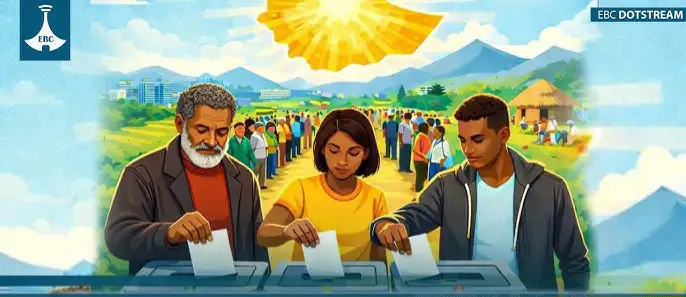
It is in this contextual reality that we can have a view of the upcoming 7th general election in Ethiopia scheduled for June 1, 2026. The reforms carried out on certain institutions such as the National Electoral Board of Ethiopia open a sense of hope for a free, fair and democratic election the results of which would be accepted by all parties. The Electoral Board has recently given relevant statements regarding the election. According to the Board, all logistical and administrative preparations have been finalized, with voter registration already underway beginning March 7, 2026 which is to continue for a month.
At a press briefing given by the Election Board Chairperson Melatwork Hailu, she said the registration process will be conducted through both digital and manual systems.
The Board has revealed that 47 political parties have so far registered 10,934 candidates to compete in the election. Of these, 2,198 candidates are contesting seats in the House of People’s Representatives, while 8,736 candidates are running for positions in various Regional Councils. Moreover, 73 independent candidates have registered for the race, including 69 men and four women.
Clearly, this is a crucial moment for the political destiny of the country because its fate will be determined by what happens after the election. That is why the maximum participation of citizens is emphasized and advised. People should believe that their voice is consequential and to be part of the body politic cannot be emphasized enough. Academics say that the electoral moment is the time when citizens make their choices based on the platforms and ideas of the political parties and their leadership. We have noted that these days there are continuous spots on the media advising voters to take things in their hands and decide on their fate by choosing the right candidates for their effective and fruitful representation in government.
This is part of the democratic process or evolution and it should continue to grow and mature with more and more experience, more hurdles to overcome. Errors can be committed but they can also be rectified learning in the process for the subsequent electoral and democratic processes. It should be taken that there is always room for improvement and progress because democratic process is or can never be perfect as it is a continuous evolution.
The so called advanced democracies have reached the current state in many decades and have gone through many developments both good and bad. But they have continued to learn from past failures and weaknesses working more on their strengths. They have modified their laws based on the evolving realities of their constituents or citizens. Societies are dynamic realities and with new developments in the way they live and work, the laws also need to be modified. If there are major developments even the constitutions could be modified or amended. This is after all one expression of democratic process.
Ethiopians are now well accustomed to going to the polls every five years based on the Federal Constitution and in the process have more trust in the system, a better sense of belonging to the body politic of the state.
This year’s election is expected to show more about the reforms adopted regarding certain institutions such as the National Electoral Board and the new leadership. With the measures taken since the reforms began, it is expected that people will have more confidence in the process and decide to take the election more seriously than ever before.
The National Election Board of Ethiopia has undergone recent reforms which have enhanced its autonomy, professional capacity, and nationwide operational reach. The institution has expanded its structures at both federal and regional levels, enabling broader voter registration, improved election management, and more effective monitoring of political parties.
What is more, according to leaders in the political sphere, socio-political observers and analysts, this year’s vote could serve to assess the progress the country has undergone in terms of its democratic experience and the resilience of its governance structures also because there have been progresses made in the electoral body and structure .
The country has a stronger institutional framework compared to previous electoral cycles held up to now. And more public participation is expected adding to the credibility of the vote.
In recent interventions regarding the 7th general election, emphasis has been given to the role of civic organisations in terms of contributing to the success of the election. The government has also repeatedly reaffirmed its commitment to ensuring an environment conducive to free, fair, and credible elections.
Meanwhile, political parties have intensified their activities by engaging in debates and presenting their manifestos to voters as the campaign period gains momentum.
The Electoral Board has distributed tablets to election officials at polling stations to facilitate the process of registration.
As part of pre-election preparations, the Board has also unveiled the official symbols of competing political parties and confirmed that all parties have signed the Candidates’ Code of Ethics and Conduct, aimed at promoting responsible campaigning and ensuring electoral integrity throughout the election period.
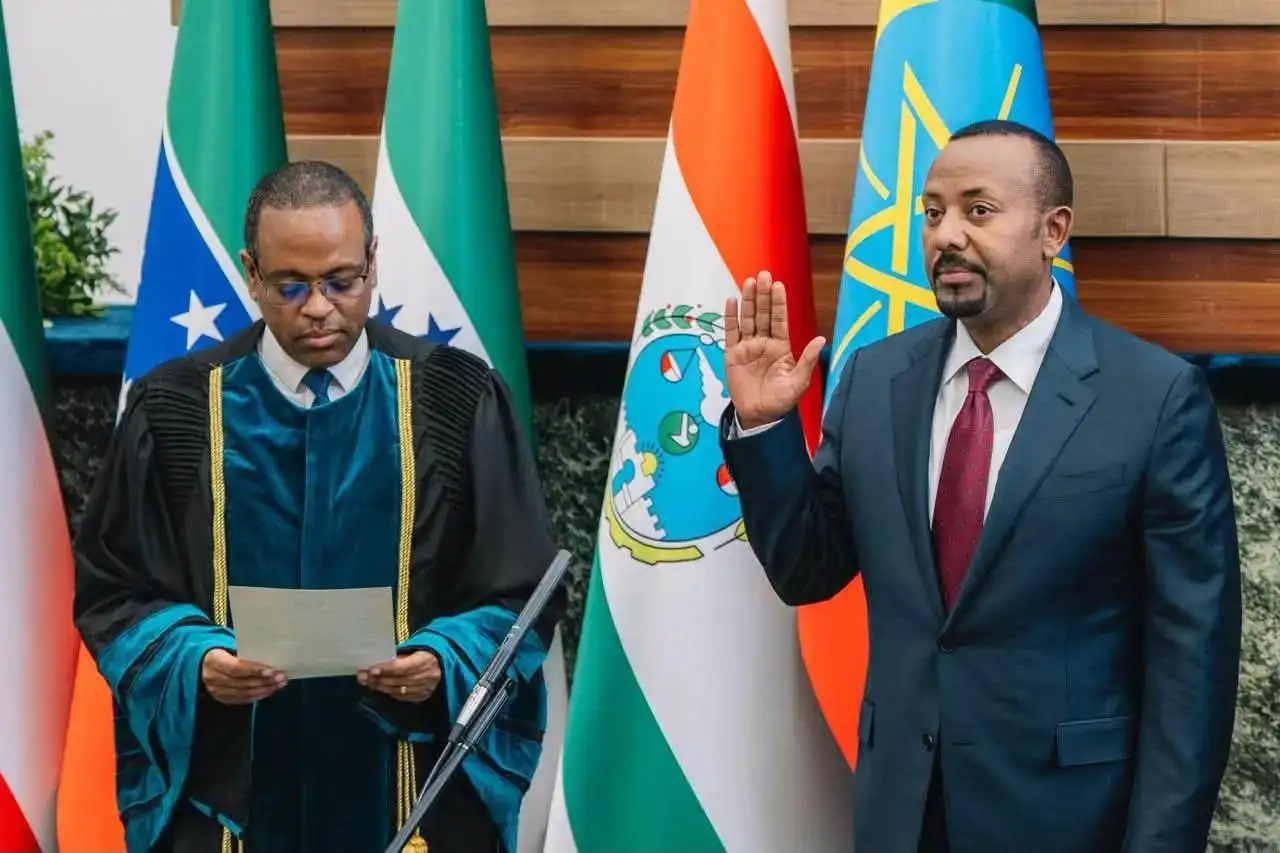
Speaking at a national forum that brought together judicial and administrative institutions involved in election preparations, Speaker of the House of Peoples Representatives Tagesse Chafo said that the government will provide the necessary support for the successful conduct of the seventh national election. The upcoming election will bring together political organizations and independent candidates contesting hundreds of seats in the federal legislature. Political parties say they are confident to take active part in the 7th general election. What does Prime Minister Abiy Ahmed (PhD) say regarding this subject?
The prime minister has asserted, “Ethiopia’s path toward democracy requires patience, strong institutions, and the collective commitment of citizens to protect the integrity of the electoral process.”
In a parliamentary address on political reforms and electoral governance, the premier highlighted the central role of elections in shaping national leadership, noting that “free, fair, and credible elections are the foundation upon which a stable and prosperous democratic system is built.”