
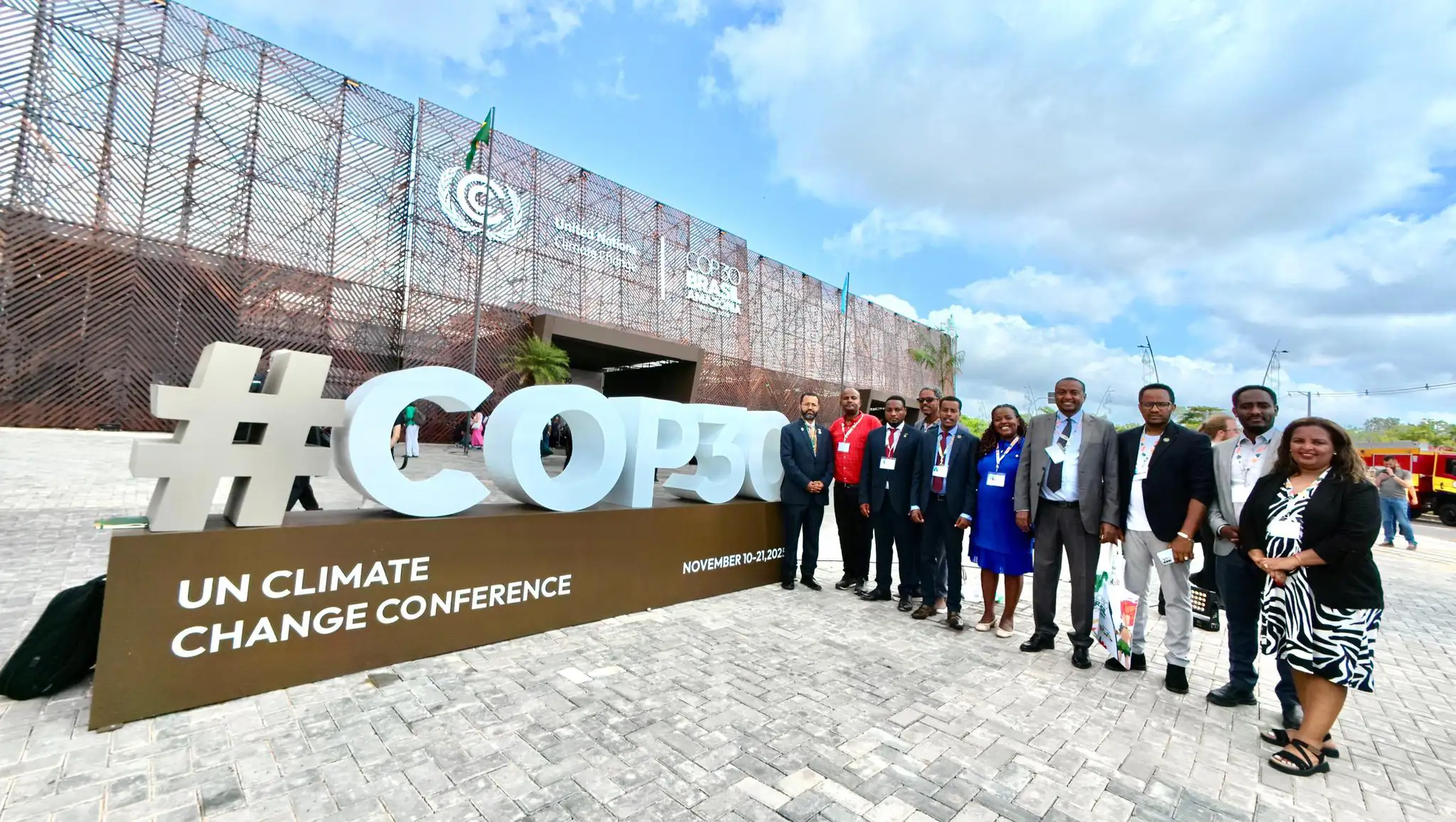
Ethiopia has taken a prominent role at the 30th Session of the United Nations Climate Change Conference (COP30), which officially opened today in Belém, Brazil.
The nation is leveraging its position to reaffirm its aggressive climate agenda, showcase national initiatives, and champion African interests on the global stage. The Ethiopian Delegation, led by Dr. Fitsum Assefa, Minister of Planning and Development, is actively engaging in the two-week-long conference (November 10-21) with a clear mandate to accelerate climate solutions and secure a future host role.
Ethiopia is advancing a set of major objectives at the conference. Firstly, the country has formally submitted its bid to host the 32nd session of the climate conference (COP32). The proposal has received a crucial endorsement from the Africa Group of Negotiators (AGN), signaling unified continental support for the nation's candidacy.
Secondly, the delegation is working to integrate the outcomes and priorities established during the recent Second Africa Climate Summit (ACS2) into the COP30 negotiation processes. This critical effort ensures that the collective interests of Ethiopia, Africa, and other climate-vulnerable nations are effectively represented in the global climate discussions.
Ethiopia is also highlighting its flagship national climate actions, including the massive Green Legacy Initiative, as a tangible example of its commitment to building a climate-resilient and sustainable future.
Building on the momentum of its domestic climate actions, the Ethiopian delegation will maintain a highly visible presence throughout COP30. Activities are scheduled to take place at the Ethiopia Pavilion and other key venues. These engagements include a series of high-level side events, bilateral and multilateral meetings with key partners and international organizations, and participation in formal negotiations to push for ambitious global climate commitments.
Ethiopia’s strong presence at COP30 underscores its enduring commitment to climate leadership and its drive to ensure that global climate action is inclusive, equitable, and reflective of the needs of the developing world.