
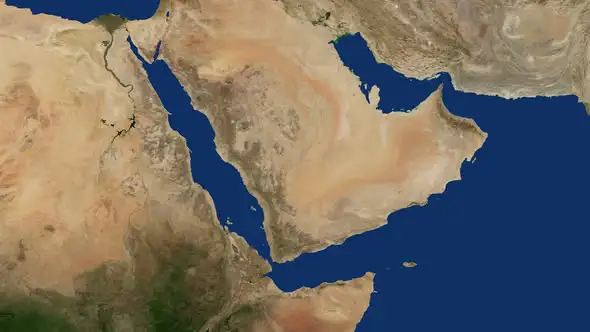
A document search has failed to locate the legal basis for Ethiopia's loss of sea access, raising fundamental legal questions about the 1990–1991 transitional government’s authority to relinquish sovereign territory.
Decisions and agreements made by governments have a profound, long-term impact, whether positive or detrimental. The loss of Ethiopia's vital access to the sea, seized through what is described as an unfair process, is a prime example of a decision with cross-generational consequences.
When Ethiopia lost its final sea outlet in 1990–1991 (Gregorian Calendar), not only was its geography altered, but citizens were reportedly prevented from discussing the matter.
The issue has now resurfaced, sparking intense debate and critical questions: Who granted the transitional government of that era the authority to sign away national territory? Where are the legal agreements that codified this decision? Furthermore, why was the principle in Article 4 of the Transitional Charter—which mandated that "The Transitional Government shall pass decisions that respect the country's interest"—violated?
Speaking on EBC’s Addis Ken Hager Guday program, legal expert Andualem Bewket stressed that the question of whether a transitional government possessed the power to permanently surrender national territory must be examined.
Andualem confirmed that while governments typically exchange documents during a handover, the current Ethiopian government has discovered no institutional or legally supported document underpinning the agreement concerning the loss of sea access. He contends this supports the view that no permanent agreement to relinquish the sea option exists.
He also referenced Article 46 of the Vienna Convention on the Law of Treaties. This international law stipulates that if a governing body lacks the proper authority to make such a decision, or if the decision violates fundamental domestic constitutional law, a subsequent government has the right to reject that decision.
The expert concluded that this issue of national existence is legally defensible, suggesting Ethiopia has opportunities to reclaim its access by referencing international precedents.
It is worth recalling that Prime Minister Abiy Ahmed (Dr.) previously informed the House of People's Representatives that attempts to find the legal documentation—confirming if the decision was approved by the Cabinet or Parliament—had been unsuccessful.
Sea Access Could Boost National Production by 30%
The lack of sea access poses a major challenge to Ethiopia's economy, with experts linking the issue to high costs and limited growth potential.
Dr. Abule Mehare, a senior researcher at the Ethiopian Economics Association, estimates that access to the sea could increase national production growth by 30 percent.
Ethiopia, with one of the largest populations among the world’s 44 landlocked countries, faces significant hurdles in building an economy commensurate with its size.
Dr. Abule highlighted that logistics account for an average of 20 to 30 percent of the cost of imported goods, creating a major obstacle to competitive pricing. Resolving the sea access question would lower domestic production costs, boost exports, and attract foreign investors, ultimately generating significant foreign exchange and job opportunities.
Ahmed Yasin, a senior expert in shipping and port management, added that gaining sea access would attract markets and encourage domestic investment. He affirmed that this question is fundamental and essential for the country’s development.
Restricted Airspace and Regional Security
The loss of sea access has resulted in more than just a lack of sovereign waters; it has also restricted Ethiopia’s airspace and limited its ability to respond to Red Sea security dynamics.
Aviation Medicine Specialist Dr. Solomon Gurmu explained that the unfairly lost sea access has also imposed limits on Ethiopia's airspace. According to the 1944 Chicago Convention, coastal nations have administration rights extending 22.2 kilometers over land and 100 kilometers vertically.
Dr. Solomon noted that regional countries can, and have, used this jurisdiction to restrict airspace usage for various reasons. This forces Ethiopian aircraft to incur additional fuel costs and experience transit delays.
Furthermore, he warned that without direct access, Ethiopia is left as a "spectator" to multifaceted events in the Red Sea region. Despite being directly affected by internal regional conflicts and the actions of armed groups, the country's inability to secure a sea access option remains a critical vulnerability.
Dr. Solomon emphasized that this vital, existential question—which is key to securing national interests and mitigating threats—must be pursued as more than just a request for a transit corridor.
The expert concluded that reclaiming the unfairly seized sea access through legal means is an inheritance from the past generation and a task for the current one.