
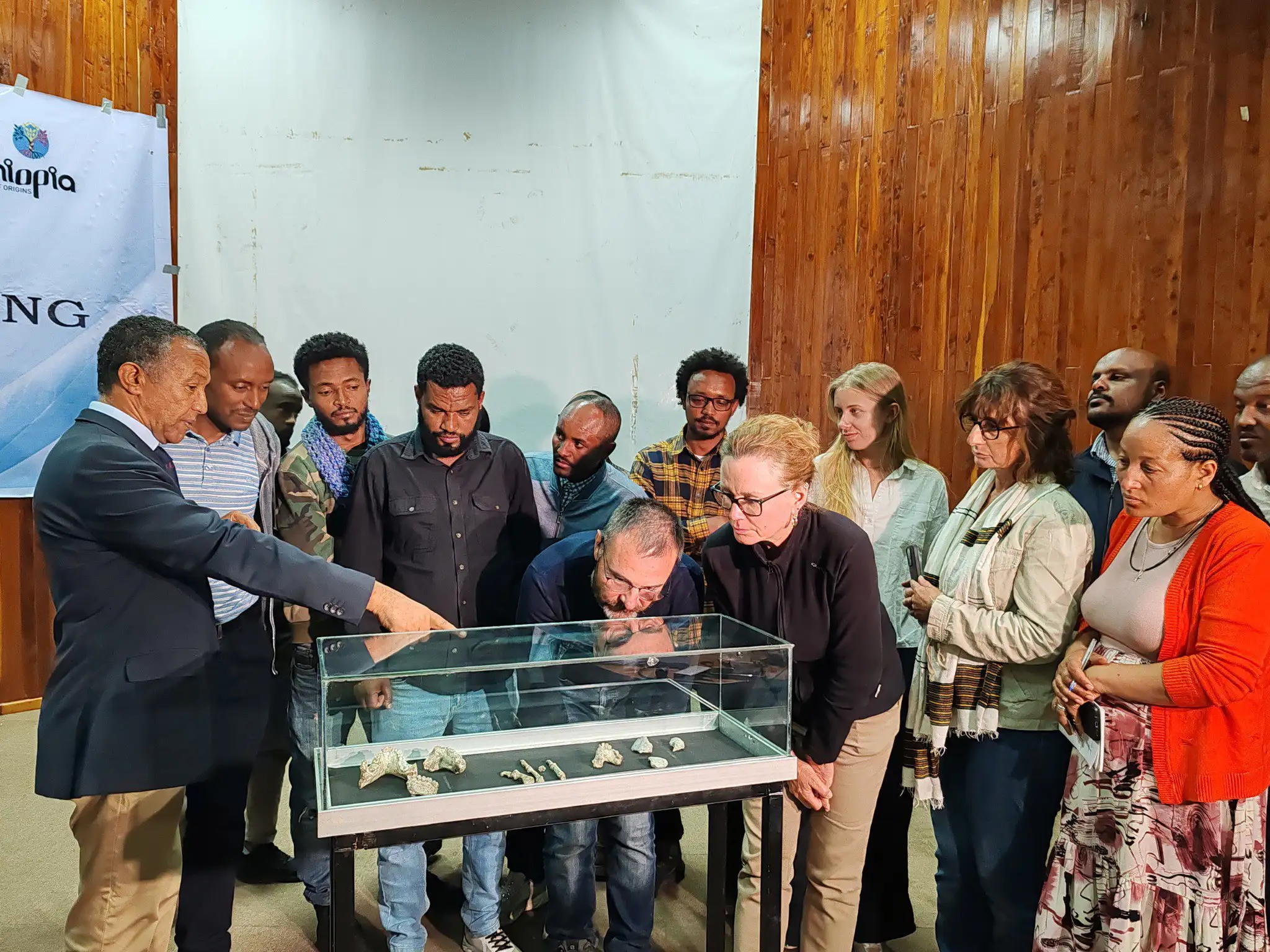
A fossil fragment dating back an estimated 3.4 million years has been recovered at the renowned Woranso-Mille site in Ethiopia’s Afar region. The discovery provides fresh evidence that further solidifies the country's unparalleled importance in the history of human evolution.
The find, announced by the Ethiopian Heritage Authority, was unearthed in the Woranso-Mille area. The site is known for having yielded multiple hominin species, including the 3.4 million-year-old Australopithecus deyiremeda, which coexisted with Lucy's lineage.
'Lucy's Close Relative'
The discovery was formally unveiled at a joint press conference involving the Ethiopian Heritage Authority and international researchers, led by Professor Yohannes Haile-Selassie of Arizona State University.
Professor Yohannes explained that the discovered human fossil confirms Ethiopia's central role in the narrative of hominin evolution. The finding is particularly significant because it dates to the same period as the iconic Australopithecus afarensis skeleton, Lucy (known locally as Dinknesh).
"This newly revealed fossil discovery has been determined through research to be approximately 3.4 million years old, indicating that it belongs to the same era as when Lucy was found," Prof. Yohannis stated.
The fossil has been nicknamed "Lucy’s Close Relative" because it shows evidence that multiple hominin species, with varying traits (some more primitive, like an opposable big toe), coexisted in the same area.
Strengthening the Hominin Timeline
The Director-General of the Ethiopian Heritage Authority, Assistant Professor Abebaw Ayalew, underscored that such research findings strengthen the evidence that Ethiopia is an ancient land and the origin of the human lineage.
It is recalled that the fossil of Lucy was discovered on November 24, 1974 (Hidar 15, 1967 E.C.) in the nearby Hadar area of the Afar region. The ongoing work at Woranso-Mille continues to add crucial complexity to the story of human ancestry.