
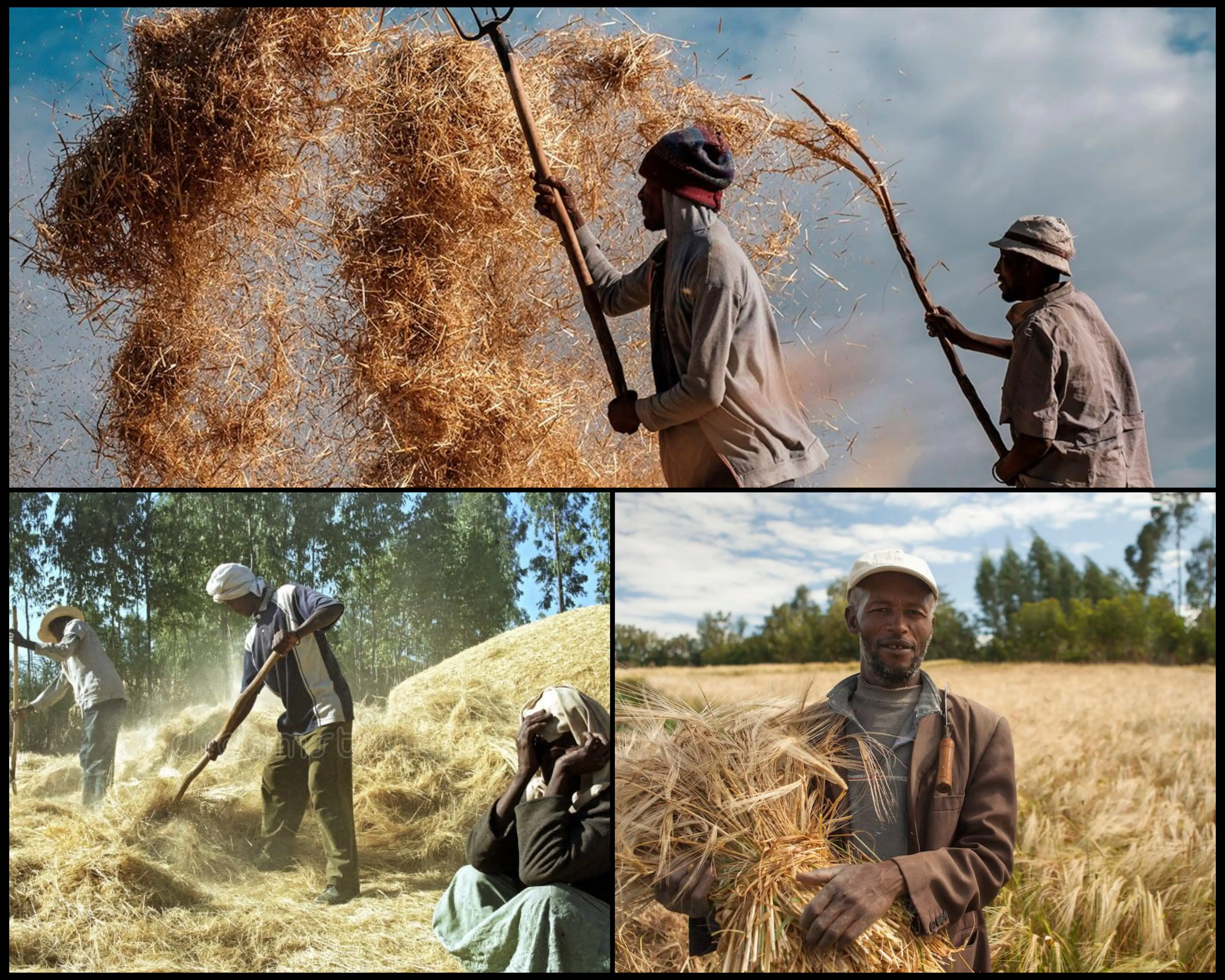
Ethiopia has reached a major national milestone, effectively transitioning from a country reliant on international food aid to one achieving self-sufficiency in wheat production, according to government officials.
This shift is primarily attributed to a concerted government focus on the farming sector, supported by a strategy that prioritises irrigation and modern technology.
Dr. Tadele Mamo, Director of Agricultural Economics Research at the Ethiopian Agricultural Research Institute, affirmed the scale of the change. He recalled a time when wheat shortages were so acute that supplies for local factories had to be allocated by quota.
"The fact that the problem of wheat supply is now absent represents a great change,"Dr. Tadele stated, adding that the sustained effort has allowed Ethiopia to break free from the cycle of dependency on wheat aid.
Key developments underpinning this progress include:
Wheat Revolution:Through the expansion of irrigation-based farming, the use of improved seed varieties, and modern techniques, Ethiopia has not only closed its import gap but is now positioned as a potential wheat exporter. The country's wheat production has rapidly increased, reaching a point where it no longer needs foreign imports to meet domestic demand.
National Programs:Initiatives like the "Irrigated Wheat Initiative"and "Ye Lemat Turufat"(Bounty of the Basket) are central to the strategy. "Ye Lemat Turufat"specifically aims to boost the production of high-value and protein-rich foods, including dairy, eggs, chicken, and honey, to improve household and national nutrition.
The success achieved so far only hints at the country's full capability. Analysts note that Ethiopia, with a total area of 112 million hectares, is among the most agriculturally rich nations globally.
Experts estimate that if the country were to fully exploit the 38 million hectaresof its most easily cultivable land—which covers 34 percentof its total area—it could produce over 1 billion quintals (100 million metric tonnes)of crops annually in the main cropping season (Meher)alone, excluding the contribution of irrigation.
This vast potential, backed by abundant water sources like major rivers and numerous lakes, provides the long-term foundation for sustained food sovereignty.
Dr. Tadele concluded that the increasing output, supported by the integration of modern agricultural technology, is playing a crucial and expanding role in driving the nation's overall economic growth. The ambition is clear: to transition from a history of reliance on aid to becoming a regional model for self-sufficiency and a major player in global food production.