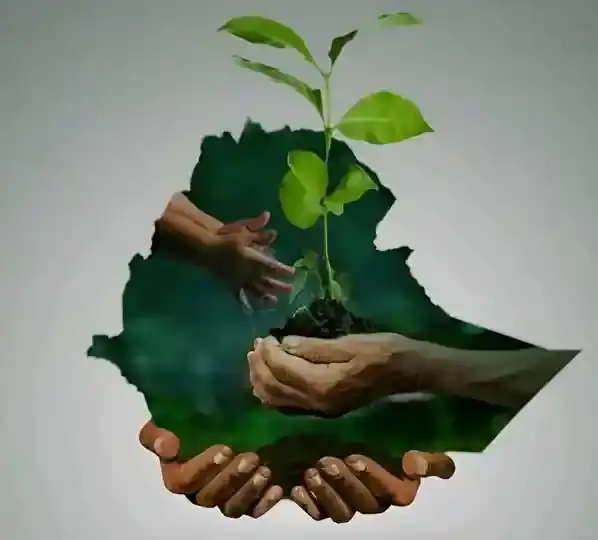
As the global community gathers in Baku, Azerbaijan, for this year’s World Environment Day—held under the theme of "Land Restoration, Desertification and Drought Resilience"—Ethiopia stands out as a proactive leader in the fight against accelerating climate instability.
With scientific data confirming that the last eleven years have been the hottest in recorded history, the global call to "Act for Climate" has never been more urgent. Ethiopia’s national strategies are directly aligned with the African Union’s 2026 agenda, which prioritizes sustainable water management and climate resilience to safeguard the continent’s future.
Central to Ethiopia’s contribution is the historic Green Legacy Initiative. Launched in 2019 under the leadership of Prime Minister Abiy Ahmed (PhD), this ambitious program has become one of the world’s most significant reforestation movements. Having already surpassed 48 billion seedlings planted, the nation is now working toward a target of 54 billion to build upon the success that has already increased Ethiopia’s forest cover from 17.2 percent to 23.6 percent in less than a decade.
Beyond reforestation, the country is undertaking a bold economic and environmental transition. Through the recently enacted Solid Waste Management Proclamation No. 1383/2017, Ethiopia has implemented a nationwide ban on single-use plastic bags. This policy is already curbing soil and water pollution while fostering a new wave of youth entrepreneurship in the manufacturing of eco-friendly alternatives. Simultaneously, the government is aggressively promoting the adoption of electric vehicles to slash the nation's $5 billion annual fuel import bill and drastically reduce urban air pollution.
Ethiopia’s commitment extends well beyond its borders through the philosophy of "Green Brotherhood." By sharing technical expertise and resources—such as providing seedlings to neighbors like Djibouti and South Sudan—Ethiopia is positioning its local success as a scalable model for the continent.
Recognized by leaders across Africa, including Nigerian Vice President Kashim Shettima, these efforts are now viewed as a vital pillar in supporting the continent-wide Great Green Wall initiative, demonstrating how a singular national vision can provide a strategic roadmap for regional and global environmental restoration.