
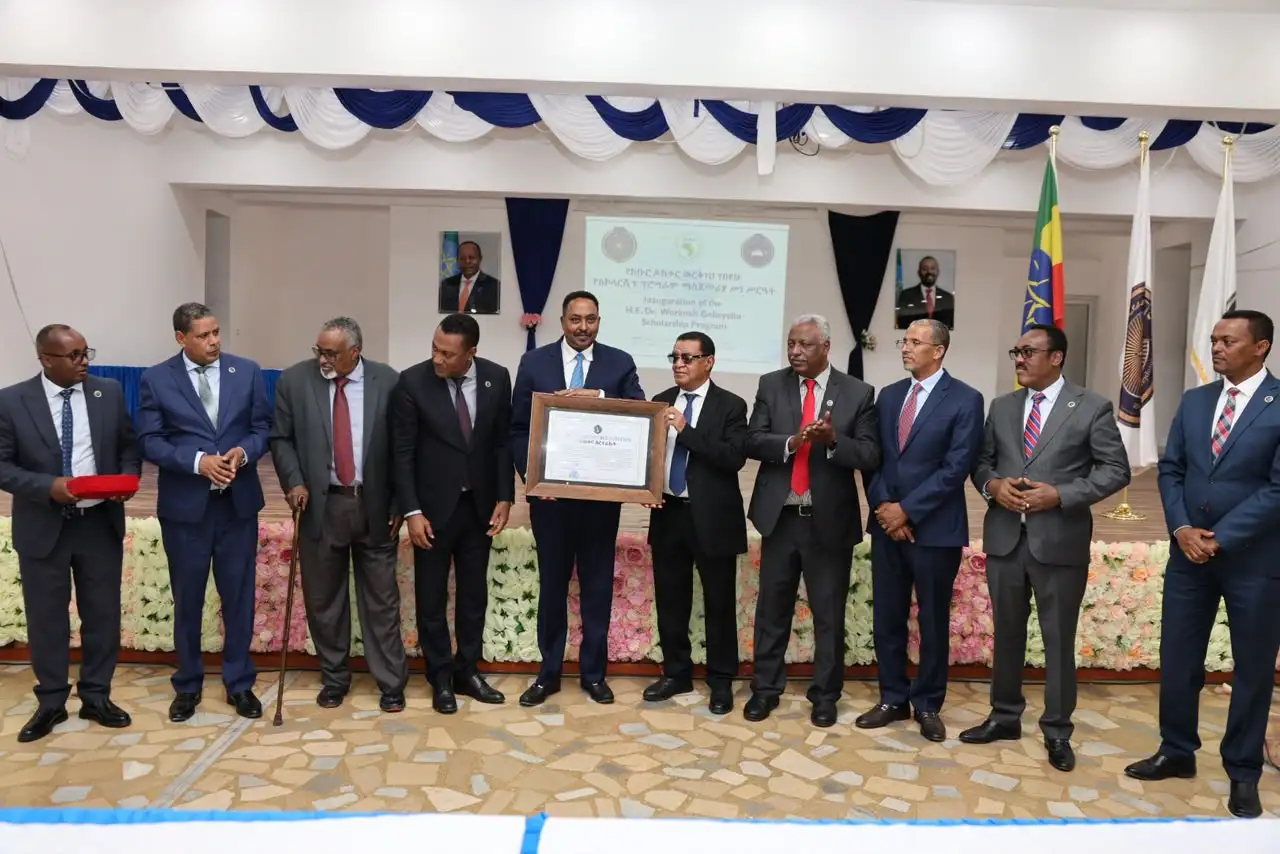
The Ethiopian Federal Police (EFP) today inaugurated the Dr.Workneh Gebeyehu Scholarship in Forensic Science at the Crime Investigation Academy of the Ethiopian Police University in Addis Ababa, a targeted program designed to nurture top talent for careers in law enforcement and forensic investigation and to boost the country’s criminal justice capacity, EFP officials said. The initiative, the EFP announced, will offer full scholarships, hands‑on laboratory training and professional placements to outstanding candidates committed to serving in forensic units, and it urged universities, donors and partner agencies to support rapid scale‑up.
The EFP stated that the scholarship—named in honour of Dr.Workneh Gebeyehu—was launched to address a critical skills gap in forensic science that undermines effective investigation and prosecution. “This program will produce the forensic experts our courts and investigators need,” said the EFP in a formal release, calling on higher‑education institutions to harmonise curricula with operational needs and on development partners to contribute technical assistance and equipment.

Speaking at the inauguration, Dr.Workneh Gebeyehu, former Minister of Foreign Affairs, welcomed the tribute and underscored the scholarship’s broader public‑service purpose. Dr Workneh said he was “deeply honoured” that the program bears his name and recommended that the scholarship prioritise merit, gender balance and geographic inclusion to strengthen forensic capacity across all regions. “Investing in forensic science is investing in justice; it protects victims, strengthens prosecutions and builds public trust in policing,” he told attendees, urging stakeholders to ensure long‑term funding and career pathways for graduates.
EFP leaders explained that the scheme combines academic coursework with practical rotations at accredited crime labs, courtroom skills training, and mentorship from senior investigators. The agency recommended selection criteria emphasising academic potential, ethical integrity, and a firm commitment to public service, and it pledged to offer post‑graduate employment guarantees within national forensic units to top graduates.
Criminal justice experts at the ceremony noted that strengthening forensic capacity can shorten case backlogs, improve evidence quality and reduce wrongful convictions. A senior faculty member from the Ethiopian Police University highlighted planned partnerships with local universities and international forensic bodies to accredit lab procedures, introduce modern techniques—such as DNA analysis and digital forensics—and implement robust quality assurance systems.
The EFP also addressed questions about transparency and access, promising an open application process and independent oversight of selection panels. Officials recommended that scholarship governance include a multi‑stakeholder advisory board—with representatives from academia, civil society, the judiciary and donor partners—to safeguard fairness and program credibility.
Organisers said the first cohort application window opens next month, with scholarships available for undergraduate and postgraduate tracks. The EFP asked interested institutions and donors to contact the Crime Investigation Academy to coordinate curriculum alignment, equipment donations and internship placements. “This is a long‑term investment in the rule of law,” the EFP concluded, urging all partners to help build a resilient, science‑based justice system for Ethiopia.