
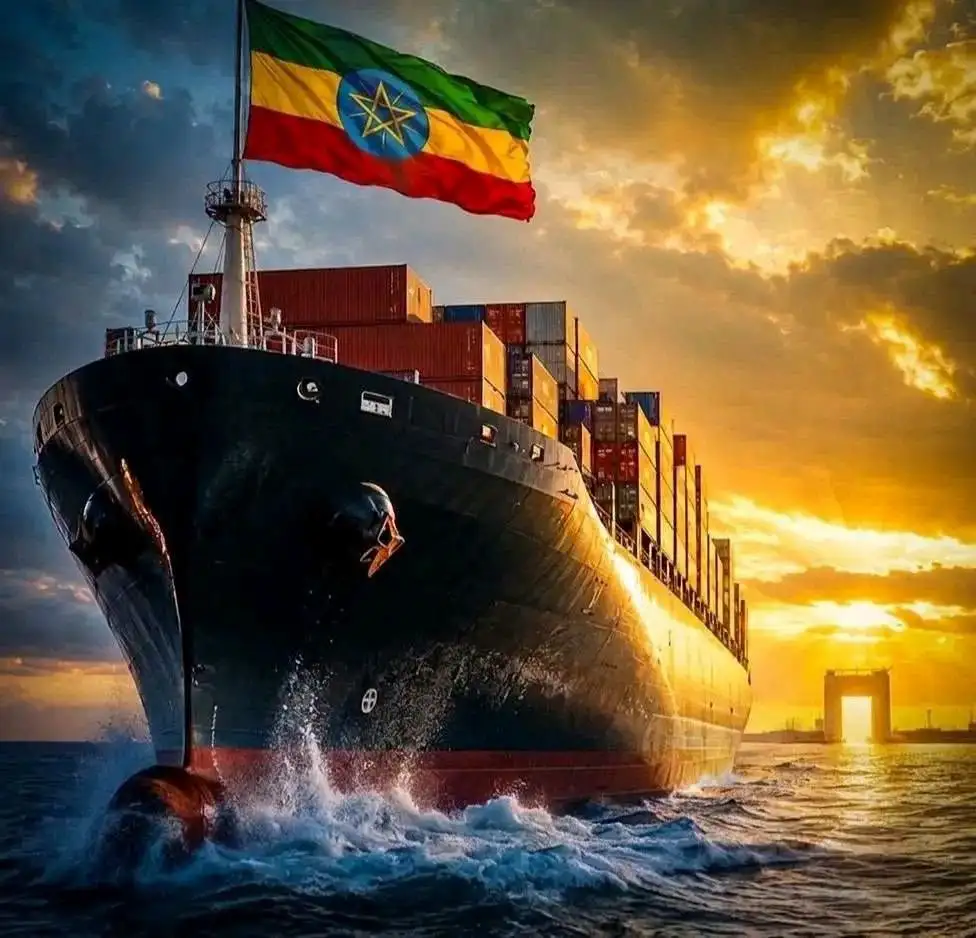
As global trade and power projection crowd the Red Sea, Ethiopia’s bid for direct maritime access has rapidly become a vital geopolitical agenda. Home to 130 million people, the world's most populous landlocked nation presents its maritime claim as a historic right, a vital necessity for survival, and an engine for shared growth across East Africa.
History testifies that the ancient Port of Adulis on the Red Sea played a pivotal role in enabling the Aksumite Empire to stand as one of the world's four great powers, serving as an international trade hub that handled luxury goods and received vessels from Rome, Persia, and India. Through the Middle Ages, the coastal region was governed under the name Meder Bahri ("Land of the Sea"), where Ethiopian monarchs collected tributes and maintained rule. In the 19th century, amidst the European Scramble for Africa and Egyptian invasions, Emperor Yohannes IV and Ras Alula Aba Nega preserved the nation's maritime sovereignty by defeating Egyptian forces at Gundet and Gura, while the 1884 Hewett (Adwa) Treaty and UN Resolution 390 (IV) after World War II saw the international community explicitly acknowledge Ethiopia's imperative need for sea access.
Beyond historical justice, Ethiopia’s position is firmly anchored in modern international law. As a signatory to the United Nations Convention on the Law of the Sea, the country points to Article 125, which grants landlocked states access to the sea and freedom of transit through neighboring territories, as well as Article 127, which explicitly prohibits transit states from imposing unjust customs duties or taxes on traffic from landlocked nations. Consequently, Ethiopia's initiative does not infringe upon the sovereignty of neighboring states but represents a diplomatic endeavor to exercise rights recognized by international law.
The foreign currency burden and strategic vulnerability Ethiopia faces due to its landlocked status remain severe. For over three decades, relying on a single port for more than 95 percent of its maritime trade has posed an ongoing national security threat, while paying over $2 billion annually in port fees to Djibouti stifles national development—a financial drain equivalent to losing the cost of building a Grand Ethiopian Renaissance Dam every three years.
Securing sea access would elevate Ethiopia's economy by eliminating the "landlocked tax," lowering import costs for essential commodities like fertilizers, and easing the cost of living for farmers and citizens alike. Reduced transport costs would also make domestic exports competitive on the global market, providing an economic foundation that, combined with strategic security, would allow Ethiopia to safeguard merchant shipping against piracy independently while enhancing its diplomatic influence across the Red Sea corridor.
Grounded in peace, diplomacy, and mutual development, Ethiopia’s pursuit of sea access is not intended to disadvantage neighboring nations. Instead, it offers immense potential to establish lasting stability in the Horn of Africa, expand regional trade, and transform the area into a self-sustaining economic hub. Moving forward, advancing this historical and legal right through peaceful negotiation and regional cooperation remains key to securing Ethiopia's rightful maritime stake and a prosperous collective future.