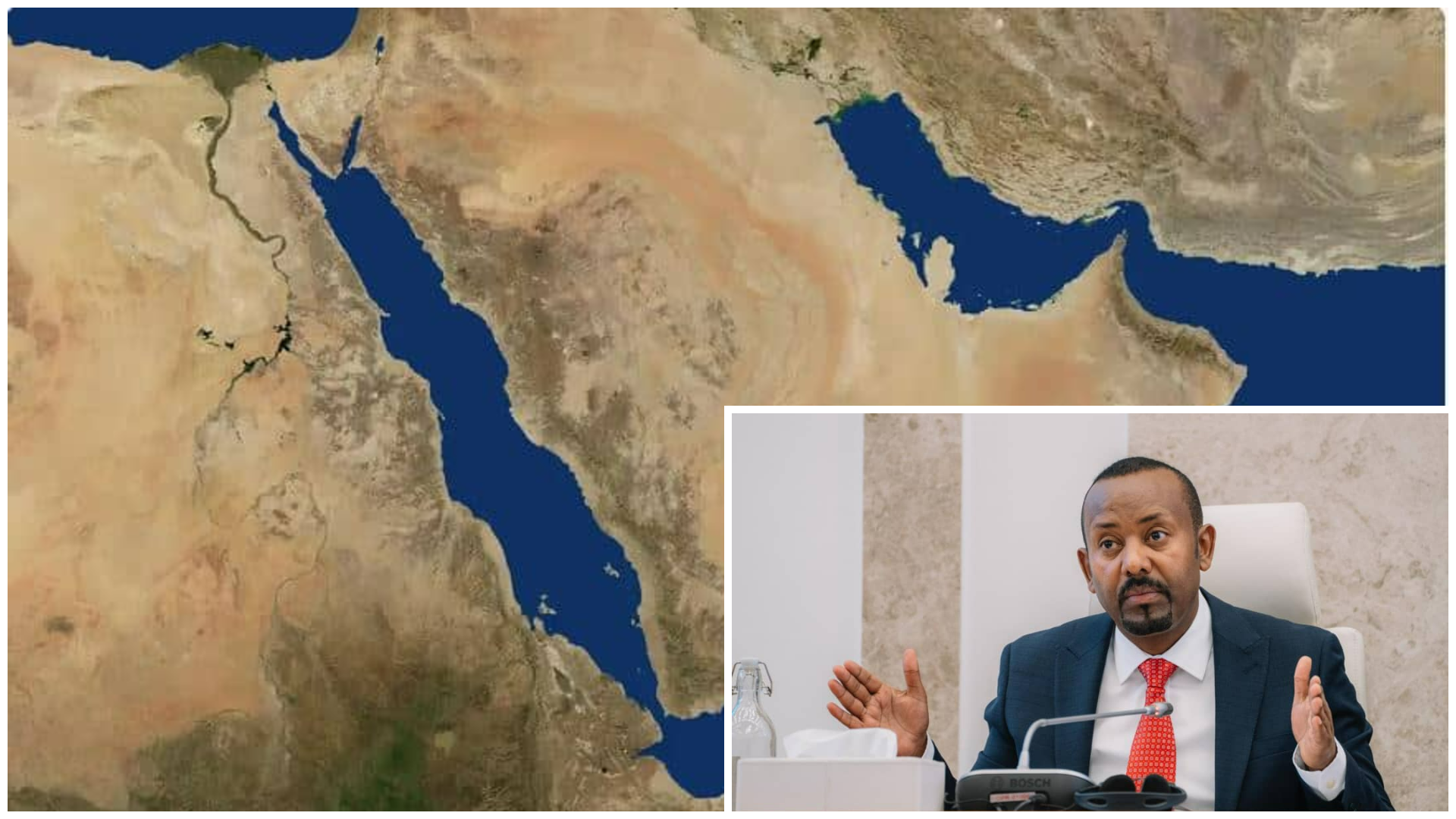
Ethiopia, a nation once administering multiple ports, has found its current landlocked status to be a profound injustice. In its heyday, when the Aksumite Empire was one of the world's four great powers, Adulis was the indispensable economic and strategic hub.
Historical studies, including research from Bartleby.com, confirm that the secret to Aksum's power from the 1st to the 9th centuries lay in its control of the Red Sea trade routes.
The Ethiopian Strategic Studies Institute, referencing Professor Richard Pankhurst, highlights that before the Scramble for Africa, Ethiopia maintained its global connection via the Red Sea through the ports of Adulis and Massawa. These historic lines of commerce were crucial to the civilization's survival and regional influence.
The Plot to Block Access
The strategic effort to sever Ethiopia from the Red Sea began with the expansion of European powers. Historical accounts point to Britain, which was governing Egypt and Sudan, as the principal actor in this complex plot. As the conspiracy unfolded, Italy, which had already seized Massawa, acquired Assab through a company named Rubattino, incorporating it into its colony.
Following Eritrea's liberation from Italian colonial rule and subsequent federation with Ethiopia, the country temporarily regained its sea access and possessed a robust naval force.
The 1993 Turning Point
However, the enduring question of Ethiopia's Red Sea access faced a renewed challenge in 1993 following Eritrea’s separation. When the transitional government recognized Eritrea’s statehood, it controversially included the autonomous port of Assab in the handover.
Contemporary observers and critics have made it clear that Ethiopia's loss of a seaport was engineered through the manipulation of the country's historical adversaries and the ruling power at the time.
Former UN Secretary-General, Egyptian Boutros Boutros-Ghali, has been cited as the "main author of the drama," with Ethiopian leaders as the "actors," resulting in a once-maritime Ethiopia becoming landlocked overnight.
Former U.S. President Jimmy Carter, who was active in the region, wrote about the period, expressing his concern: "When Meles Zenawi took power in Ethiopia in 1991, I had concerns about the issue of Eritrea, but Meles gave Eritrea its full independence in 1993, cutting off Ethiopia from the Red Sea, making it a landlocked country with a huge population."
An Existential and Generational Question
Academics have long raised the issue. Notably, Professor Yacob Hailemariam, a prominent opposition figure in the 2005 election, underscored the importance of the maritime route. In his book, “Whose is Assab?”, he detailed the circumstances of the port loss and outlined legal avenues for its return. For years, citizens who raised the sea access issue were often officially persecuted for allegedly infringing on another country’s sovereignty.
The current reformist government, which took power in 2018, brought the question of sea access—considered a major national strategic break—back to the fore. Initial steps included diplomatic talks with Eritrea and coordinating with partners to gain support in this area.
Two years ago, Prime Minister Abiy Ahmed (PhD) publicly escalated the issue, declaring the Red Sea question to be one of Ethiopia's existential survival and a generational imperative.
Citing a UN study, the Prime Minister noted that direct maritime access contributes up to 25-30 percent of a country's Gross Domestic Product (GDP). For Ethiopia, a rapidly growing nation that acts as a regional connector, the Red Sea is fundamental to its existence.
The Prime Minister has consistently maintained that shared use of the Red Sea is key to achieving peace, unity, and prosperity in the Horn of Africa. He stressed that Ethiopia seeks this access through peaceful means and the principle of give-and-take. He also stated that Ethiopia is prepared to offer stakes in key national assets, including Ethiopian Airlines, the Grand Ethiopian Renaissance Dam (GERD), and Ethio Telecom, as part of a deal.
This approach aligns with international law and diplomatic principles, clearly signaling to the global community Ethiopia's desire for a constructive dialogue with its neighbors.
The Standoff
Despite international acknowledgment of Ethiopia's legitimate request, progress toward a solution remains slow. Prime Minister Abiy Ahmed recently addressed the House of People's Representatives, stating that Ethiopia, having been blocked for 30 years, cannot wait another three decades for an answer.
Referring to the landlocked status as the "final injustice" inflicted upon the nation, the prime minister explained that re-establishing sea access is necessary to free Ethiopia from this "captivity."
He revealed that Ethiopia had engaged in extensive talks with Eritrea regarding Assab, even beginning maintenance on the Assab road, but the issue was ultimately reversed by the Eritrean side.
While emphasizing that the movement to revitalize Assab was thwarted by the Eritrean government’s refusal, the prime minister stressed that Ethiopia will not remain blocked forever, but its priority remains peace.
The Red Sea question, he affirmed, is historical, geographical, and above all, a generational mandate that will not be reversed. Ethiopia's position is that the most beneficial path for all is to share and develop the resource, fostering mutual growth.