By: Fistum Getachew
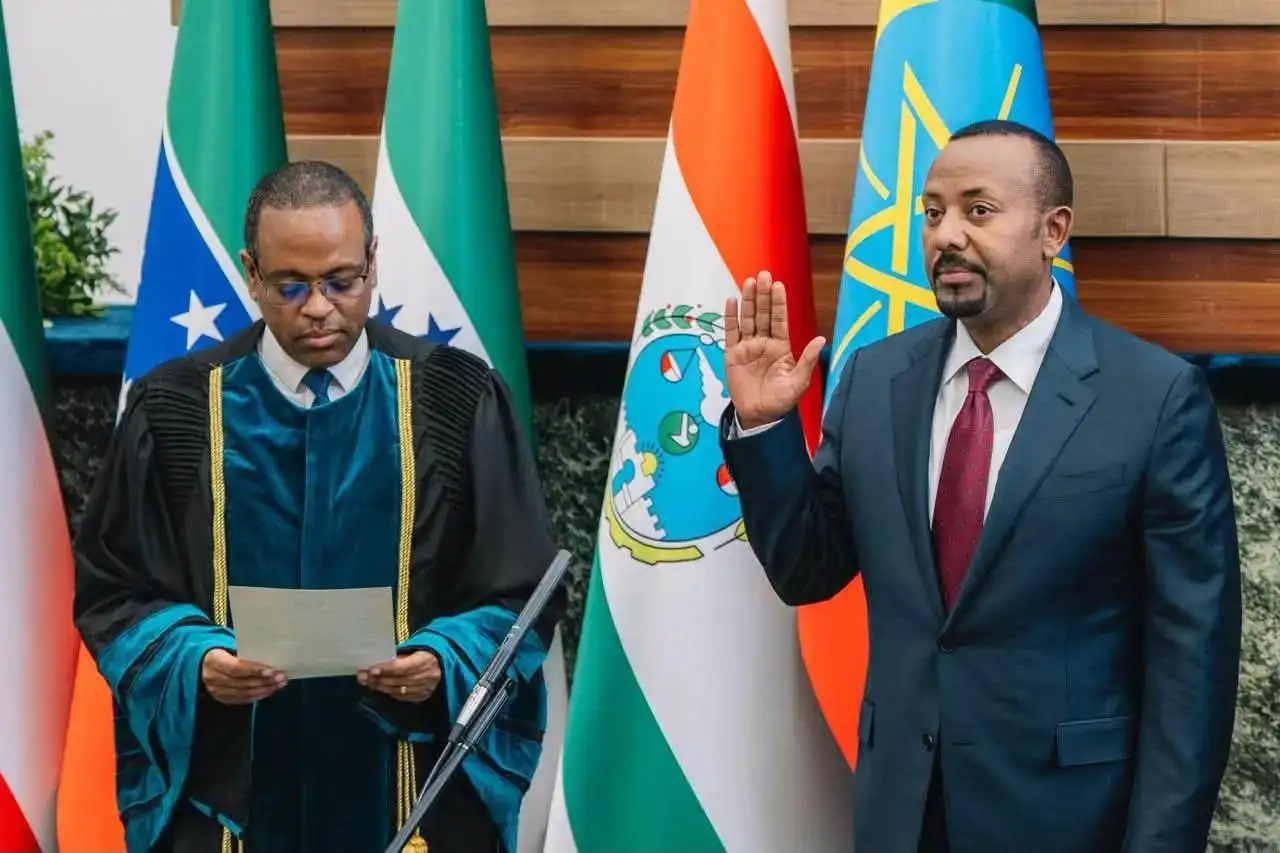
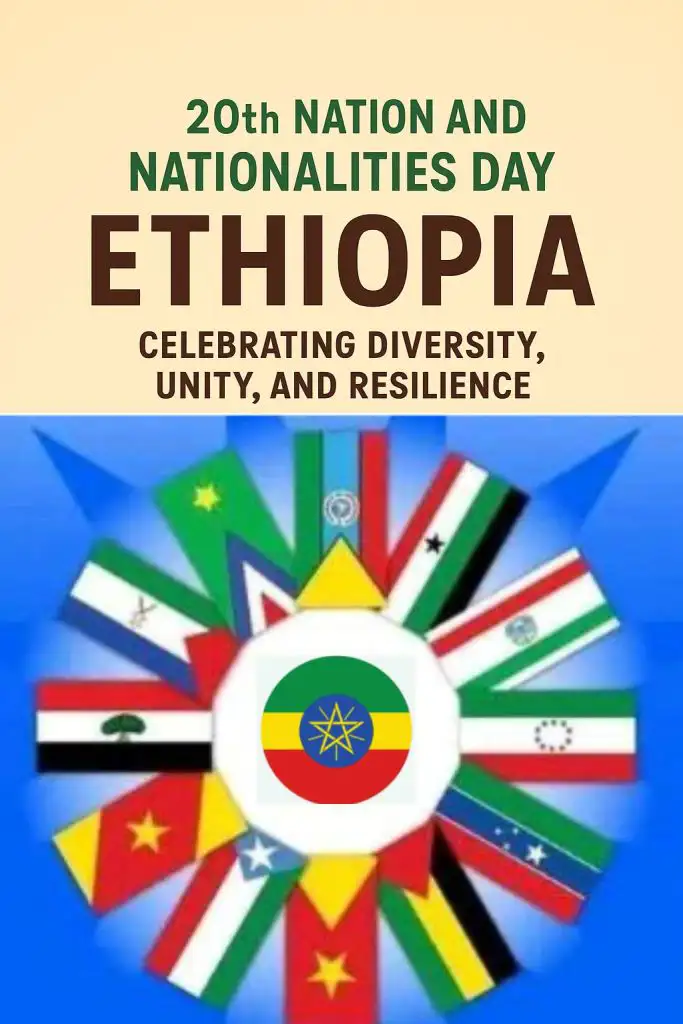
The 20th Nations, Nationalities and Peoples Day was observed on December 8th 2025 at the city of Hossaena, in the Central Regional State. Held under the theme “Democratic Consensus for National Unity,” the event was attended by Prime Minister Abiy Ahmed (PhD), senior federal officials, regional presidents, city mayors, and leaders from various administrative structures, along with invited guests. Thousands of residents of the city packed the stadium donning the various colors of Ethiopian traditional and cultural vests in a joyous atmosphere of festivity escorted with dances of all sorts.
The Nations, Nationalities and Peoples’ Day has begun to be observed on the occasion of the promulgation of the 1994 Federal Constitution that has officially decreed Ethiopia a federal state in which all nations, nationalities and peoples have equal rights and are treated equally under the Constitution. It is well known that Ethiopia is a mosaic of peoples and cultures. There are more than eighty ethnic groups living in Ethiopia and each ethnic group has their own language, culture and norms that they have preserved across centuries.
Before the promulgation of the FDRE Constitution in 1994 Ethiopia was practically a unitary state with some sort of decentralization but not arranged in a manner that every nationality had their autonomy in regulating their internal affairs. The new federal arrangement sanctioned by the new Constitution has guaranteed that every regional state constituted under the Constitution is entitled to its autonomy to regulate its internal affairs in conformity with the letters of the Supreme Law. Besides each regional state has its own internal regional constitution with a similar arrangement as at the federal level. Each regional state has its own executive, legislative and judicial organ just as the federal state has. The people of each regional state have the right to elect their own representatives that would take care of their affairs.
The Federal Constitution provides for the powers that the federal government can enjoy vis-à-vis the regional states and where the regional states have power within their constitutions. In fact under the Constitution Article 39 sub-article 3, it is provided that every Nation, Nationality and People in Ethiopia has the right to a full measure of self-government which includes the right to establish institutions of government in the territory that it inhabits and to equitable representation in state and Federal governments. The Federal Government has no right to interfere in the internal affairs of the regional states. The Federal Constitution is in this respect very clear and unequivocal but if a dispute arises between states and there are other disputes referring to the application of the Constitution, it will be up to the House of Federation to deal with them as per Art 62 of the Federal Constitution.
In reference to the rights of nations, nationalities and peoples the Constitution at Art 61 sub 1 and 2 provides the House of the Federation is composed of representatives of Nations, Nationalities and Peoples. Each Nation, Nationality and People shall be represented in the House of the Federation by at least one member. Each Nation or Nationality shall be represented by one additional representative for each one million of its population.
Each nation, nationality or people have equal rights under the Constitution without any distinction of language, religion or size. All these developments were unknown before the promulgation and coming into effect of the Federal Constitution on December 8, 1994 which led to the recognition and celebration of the day known as the Nations, Nationalities and Peoples’ Day.
It can hence be concluded that the equality of all nations, nationalities and peoples is a result of the new Federal Constitution and is also guaranteed by the same document. We can say the promulgation of the Federal Constitution is the dawn of a new era in Ethiopian political landscape. The age old inequality, real or perceived, between the various nations of Ethiopia has been officially stricken away decreeing equality between all peoples under one law. Regional states are now free to deal with their fate except when it comes to areas where the jurisdiction belongs exclusively to the Federal Government such as issues of defence, international relations, federal agencies etc. as provided for in the Constitution under Articles 51 and 52.
The Nations, Nationalities and Peoples’ Day is a testimony to the new reality and its celebration. Ethiopians of all origins now know that they enjoy equal rights with their other compatriots irrespective of differences in language, culture or religion.
During the 20th celebration of the Nations, Nationalities and Peoples’ Day in Hossaena City, several important messages were transmitted to the public. Among them was President Taye Atske Selassie who underlined the fact that the celebration is held after the completion and inauguration of the Grand Ethiopian Renaissance Dam, GERD, which is a testimony to the strong will and unity of all Ethiopians when it comes to realizing such a huge project with immense implications on not only the development trajectory of the country but also on the stance and image of the country at international arena.
President Taye Atske Selassie has also called on all Ethiopians to intensify their efforts toward building a prosperous, respected, and proud nation. He emphasized that Ethiopia must strengthen its prosperity, dignity, and national pride by fostering unity grounded in justice and equality.
The President also extended his congratulations to all nations, nationalities and peoples.
Similarly, Prime Minister Abiy Ahmed (PhD) addressed the huge crowd that assembled at the stadium in Hossaena city of the Central Ethiopia Regional State to celebrate the day during which he noted that the central purpose of the annual celebration of what is also called ‘Ethiopian Day’ is reaffirming the shared national aspiration and collective national interest of all Ethiopians, adding that the country’s diversity is not a source of division but the foundation of its strength. He emphasized Ethiopia’s commitment to turning challenges into opportunities, strengthening national unity, and safeguarding its sovereignty.
According to the premier, Ethiopia is a nation painted with many colors, cultures, languages and traditions, built by the shared sweat, wisdom and sacrifice of its people. He emphasized that all citizens must stand as equals, without hierarchy, and work together to pass on a stronger and more prosperous Ethiopia to future generations.
The Prime Minister said Ethiopia is being transformed witnessing visible progress across multiple sectors, including agriculture, mining, tourism, technology and urban development.
“Our cities are being renewed, our rural communities are moving forward, our historical heritages are regaining their glow and becoming not only Ethiopia’s pride but Africa’s as well,” he said.
PM Abiy emphasized that achieving sustainable prosperity requires more than inherited independence, calling on the younger generation to shoulder both the freedom won through sacrifice and the responsibility of national development.
He urged Ethiopians to see not only the challenges facing the country, but also its immense untapped potential. “Ethiopia is a country with many challenges, but also with vast opportunities that must be unlocked,” he said.
However, the premier warned against attempts by hostile forces to exploit internal differences, stressing the importance of putting national interest above narrow agendas. “We started in peace and we will finish in peace,” the Prime Minister said, reaffirming that unity and shared purpose remain the cornerstone of Ethiopia’s future prosperity.
On the same occasion Federation House Speaker Agegnehu Teshager said the festival’s 19-year history reflects its vital role in strengthening Ethiopia’s multi-national unity. He emphasized that fostering people-to-people relations, promoting brotherhood, and upholding the values of coexistence are essential to advancing the nation-building process.
“This festival represents a historic milestone in the journey toward a genuine federal system, where all identities are equally recognized and respected,” Speaker Teshager stated.
Since the launch of the country’s national reform, the annual celebration has continued to grow in significance, playing a vital role in strengthening unity, solidarity, and the spirit of brotherhood and sisterhood among Ethiopians.
Also on the same occasion the Government Communication Office has issued a statement emphasizing that the Nations, Nationalities and Peoples Day is crucial in renewing constitutional commitments and reinforcing the full diversity potential of the country. It said that Ethiopia is a nation whose rich diversity can be expressed in many forms.
According to the statement, Ethiopia is an ancient and remarkable country, adorned with a rich diversity of language, culture, ethnicity, religion, political views, age, gender, and more.
It is also the proud owner of a constitutional system that values this diversity and transforms it into a source of strength, the statement added.