By: Fistum Getachew
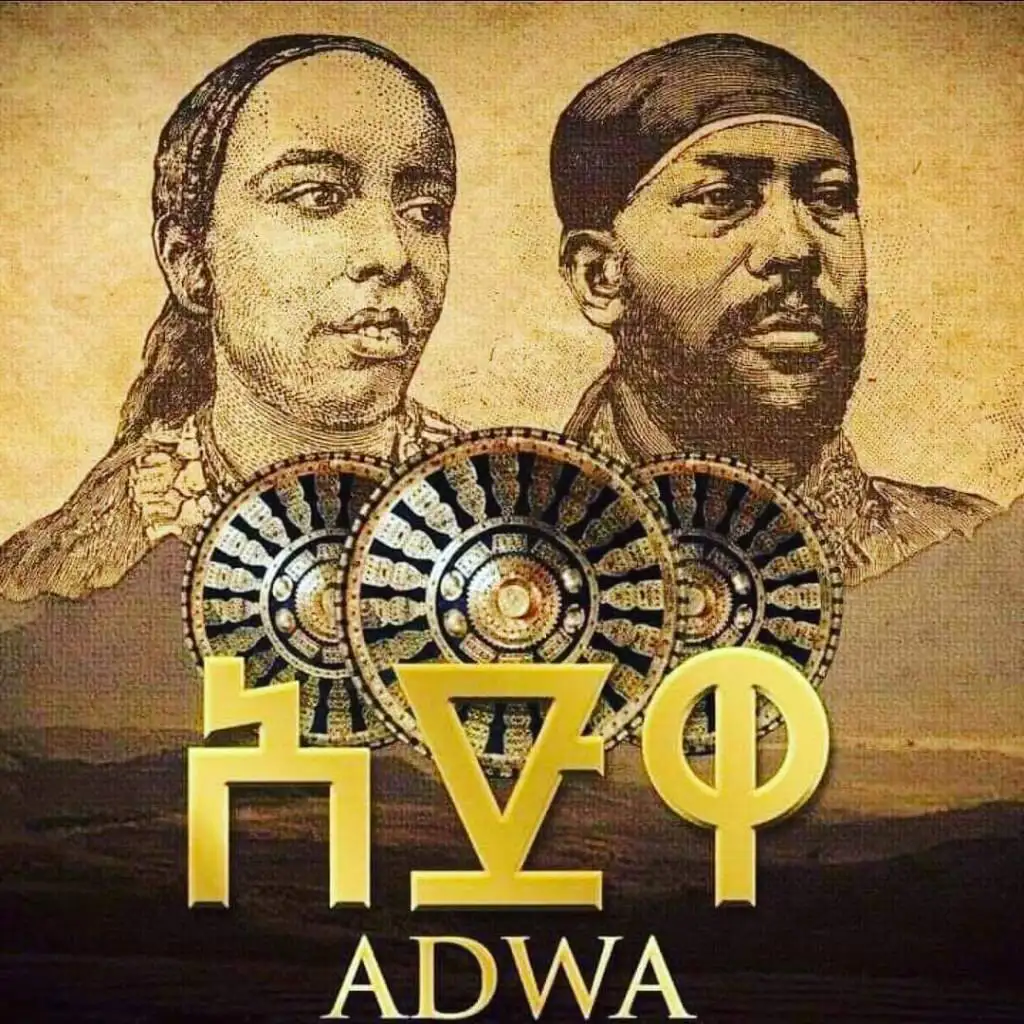
Many people may think that Adwa is just the name of a certain locality that is found somewhere in the northern part of Ethiopia. Or they might believe that it is a reference to a battle where Ethiopia and Italy carried out their war with Ethiopia resulting victors. These are people who have a better familiarity with the history of the world. When we think of Adwa we do not refer only to the battle between two armies and two peoples. For Ethiopians Adwa has become the ID card of their country, the testimony of their resilience and rejection to any sort of attacks against their country. In fact it is Adwa which put Ethiopia on the map of the world as soon as the victory was made public and known to the entire world. It was the moment when Europeans as well as others came to know about the existence of a country called Ethiopia and began to wonder what kind of country and what kind of people lived there. Adwa introduced Ethiopia to the larger world.
It should however not be forgotten or taken lightly that the current relations between Ethiopia and Italy are among the closest that could exist between two countries. In fact, the recent exchange of visits between the leaders of the two nations, Prime Minister Abiy Ahmed (PhD) of Ethiopia and Prime Minister Georgia Meloni of Italy testifies to the extent and depth of the close relations. The people to people relations have also been very close. So much so that there have been intermingling among the two peoples through marriages and the forming of families. The economic and cultural relations are also extensive and meaningful.
However, the fact that we glorify the victory of Adwa does not reduce anything from the reality mentioned above. Adwa is considered as a product of the years long past when Europeans believed that it was their right to divide Africa in to several pieces as if it was a piece of cake, irrespective of what may have been the choices of the peoples of the continent. It was days when Africans were subjected to the military might of Europeans.
Before Adwa several European countries had already colonized dozens of countries in Africa. These colonialists did not consult anyone when they divided the continent and in certain cases there were situations in which even families were divided in with artificial boundaries. Besides the way the Africans were treated in their own backyards by the invaders was to say the least inhuman. Africans were treated as subhuman people ready to be exploited by the new masters.
A lot has been said about what sort of atrocities were carried out against African peoples and there was no one which was ready to challenge such state of affairs. When there were signs of rebellion or protest the colonialists did not spare any method to terrorize the people and treat them in the harshest way possible. The people had no choice but to be docile and obedient because they had to avoid being treated with cruelty and lose their lives.
We can say that Adwa has contributed to change this status quo in terms of the relations between the colonizers and the colonized. Ethiopia’s successful rejection of colonialism against a European force was considered as a blow to all colonialists and good news full of hope for those under the yoke of colonialism.
The history of Adwa may not have reached soon and in detail but when it did it became a source of immense inspiration to Africans and people of African descent and heritage. It created a sense of optimism that Europeans are after all like any other people, susceptible of being beaten in conflicts or disputes. The prestige of Europeans in front of Africans was reduced to small pieces. It was shattered and a new power balance was created between Europe and Africa.
The belief in inferiority of Africans that was systematically inculcated in the psyche of Africans was eradicated and Africans began to have trust and confidence in themselves and their means and various forms of struggle for freedom and independence came to the fore. The wheels of history had begun to run fast forward. People had the conviction and belief that their liberation was imminent and not a mere dream.
Adwa inspired and contributed to the conception of Pan-Africanist Movement and the widespread struggles for the peoples of African descent suffering under unjust treatments. It then grew in to the formation of liberation movements that were to result in the independence of African countries which were under colonial rule. That is why academics say that the Victory of Adwa is not limited to the confrontation between Ethiopia and Italy alone, or even in the larger context of Europeans and Africans but also the dynamics of people of African descent struggling to liberate themselves from Europeans and white peoples of the world. Adwa broke the ceiling in the sense that the once mythical mentality of Europeans always victorious against Africans was made groundless. It is a new milestone in the relationship between Europe and Africa, between whites and blacks, if you like.
Few wars or battles in the world of the late eighteen hundreds have become more consequential than the battle of Adwa which we now observe at its 130th anniversary. Even if so many years have passed since that fateful day of the triumph, one cannot say that it has been fully replicated in our modern days. Adwa was the result of the unity of all Ethiopians who left aside all their internal issues of any sort and focused on defending the dignity, territorial sovereignty and the preservation of their freedom and independence. Ethiopians have always had the tradition of putting aside their intestinal issues when a foreign aggression becomes a threat to their country’s independence.
This time as well it was just the continuation of that long standing traditional value. For Ethiopians there has never been compromises when it came to the risk of being humiliated in front of whatever kind of enemy. They are always ready to pay the ultimate sacrifice because martyrdom is considered a huge honor not only for the sacrificed but also for their families. That is how Ethiopia survived all the years of turmoil and aggression during all the wars it had to endure. Its patriots are always vigilant and their leaders are equally wise and capable of making the right appeal to their followers and benefit from the strength of unity.
In fact Adwa is considered as a result of Ethiopian unity and showed that there are no limits to the achievement of unity. Just recently Ethiopia has again shown to the world that it could build the biggest hydropower dam in Africa on its river despite the resistance many tried to present as an obstacle and arrest the Ethiopian flagship project that was intended to change the country’s economy. There have been various attempts to sabotage the construction but Ethiopia managed to accomplish the task without resorting to any kind of assistance, loan or grant from outside sources. Even here we can say that it has set a new standard of what unity and resolve can achieve in a country. Many have said that with the Grand Ethiopian Renaissance Dam (GERD) Ethiopia has replicated the exploit of Adwa and it is another piece of good news to be cherished on the occasion of the 130th anniversary of the Victory of Adwa.