By: Fistum Getachew
There are often observations made that Ethiopians do not have the tradition of settling differences in political views in a peaceful and diplomatic manner. The history of Ethiopia shows that whenever there were differences in ideas or views or policies between different groups or forces, the usual solution sought or chased has almost always been the use of force. Particularly if the issue involves power grab, the preferred method has always been the use of warfare led by the principle ‘the winner takes it all’.
There is a very long tradition in Ethiopia which thrives on the admiration of victory in warfare or any other means perceived as being part of glory or prestige. But historical experiences of the past tell us that such solutions have never been long lasting because those who were dissatisfied with the outcome of the ‘feuds’ will never sleep before re-attempting to wage another war with those who defeated them and deprived them power they feel must have been theirs.
Records have shown that such vicious circle has been repeatedly taking place throughout a big part of Ethiopian history. Many say that Ethiopia is a society that admires warriors and possibly winners not those who want to peacefully negotiate and reach a certain pact. Such approach is considered as weakness or even lack of courage or cowardice. Usually our society glorifies whoever engages in fights and prevails. In the first place, there is a lot of suspicion between forces that are at loggerheads. That is why any sort of negotiations and peace agreements end up being violated. This historical ‘weakness’ has persisted for a long period in Ethiopian history. And it has resulted in huge damages to the country and its nationals. Whenever there was a political controversy it was difficult for Ethiopia to settle it with peaceful and frank discussions.
In more modern days Ethiopia has had changes of governments and constitutions but even now we cannot say that there was wide participation of citizens also because there is a source of powerlessness and not enough political consciousness. People are not accustomed to believing that their vote could decide the outcome of any electoral process. People usually take things for granted with the conviction that key decisions or policies are always already predetermined by whoever is in power and whatever they do will have no practical impact on the end product.
It is true that many times especially in less developed countries, elections have been marred with irregularities and citizens had practically no role in rectifying such state of affairs or prevent them from happening. These are things usually under the control of the incumbent or those who have the institutional power to manage and run the elections. Even during the Derg years in Ethiopia there were cases of ‘political discussions’ but were often ‘hijacked’ by those who are called to influence the participants. Those who have shown opposing views or have different views than the ones who lead the discussions, they are systematically silenced or their views are sidelined. This has naturally created frustrations among potential voters and erodes the faith in the system.
Ethiopians may have taken part in the discussions related to the drafting of constitutions that were promulgated during the past two governments. But still critics have always alleged that a lot was to be desired in terms of having carried out genuine and meaningful participation. If people have the perception that their voices have not been counted or given due weight, they continue to feel disappointed with the results of any electoral process and resist accepting the results.
With all this in the background the National Dialogue Commission has been established in 2021 so that there will be a fresh start in the political process of Ethiopia aimed at ironing out issues and reaching some sort of general understanding among communities. It would be clear to avoid certain prejudice when we talk about deliberations or discussions relating to any issue that constitutes a potential source of contention.
Ethiopian history is full of ‘negative and controversial narratives’ that shed bad light on a certain group of people or demonize them. There are those who use these narratives as a stepping stone for their political ambitions. This is a pity because a country should not be prisoner of its past or be engulfed in such continuous and persistent debates or accusations over events that could not be proven beyond doubts or where there could possibly be manipulations of the facts aiming to reach a certain objective.
Continuous reference to past stories, good or bad, hardly serves to advance the life of citizens in the current period. Many argue that past injustices must be recognized, admitted and some sort of retribution be considered to totally heal the scars and have some of closure to the entire story, once and for all. They say even if these episodes may have taken place many years ago, the presumed victims are encouraged by some to keep the past incidents in their memory and continue to raise them as if they happened yesterday and present them as the only causes of the grievances or failures of today, obstacles to total unity and harmony among communities.
The current purpose and rationale of the formation of the National Dialogue Commission is hence mainly to consult and discuss with people on issues that they think should be addressed openly and adequately with concrete results. There are Ethiopians who still insist in asking that they need to ‘settle certain historical wrongs’ before they could decide on the fate of their future as part of the entity Ethiopia, as citizens with equal rights with the other citizens, irrespective of their origin, faith and other identity, distinctive factors. There is need to make every interest group feel part of the country’s choices and priorities and develop a sense of ownership of whatever takes place in the country.
The raison d'être of the National Dialogue Commission is hence to make a paradigm shift in the entire discourse relating to political life in the country. This Commission has been trying to make its case to all nationals that their views and ideas will be gathered and counted. They will then be considered in the form of agenda for the eventual body which will carry out a thorough and deep series of deliberations. This is of course done before reaching a certain consensus on the outcome of the finding with consequent results to be included or define the upcoming constitution that could be accepted by all. This arrangement will hopefully do away with the suspicion or assumption that the ideas included in the findings and recommendations are not a result of only a group or few groups who have made it for their political ends only, but inclusive of various ideas.
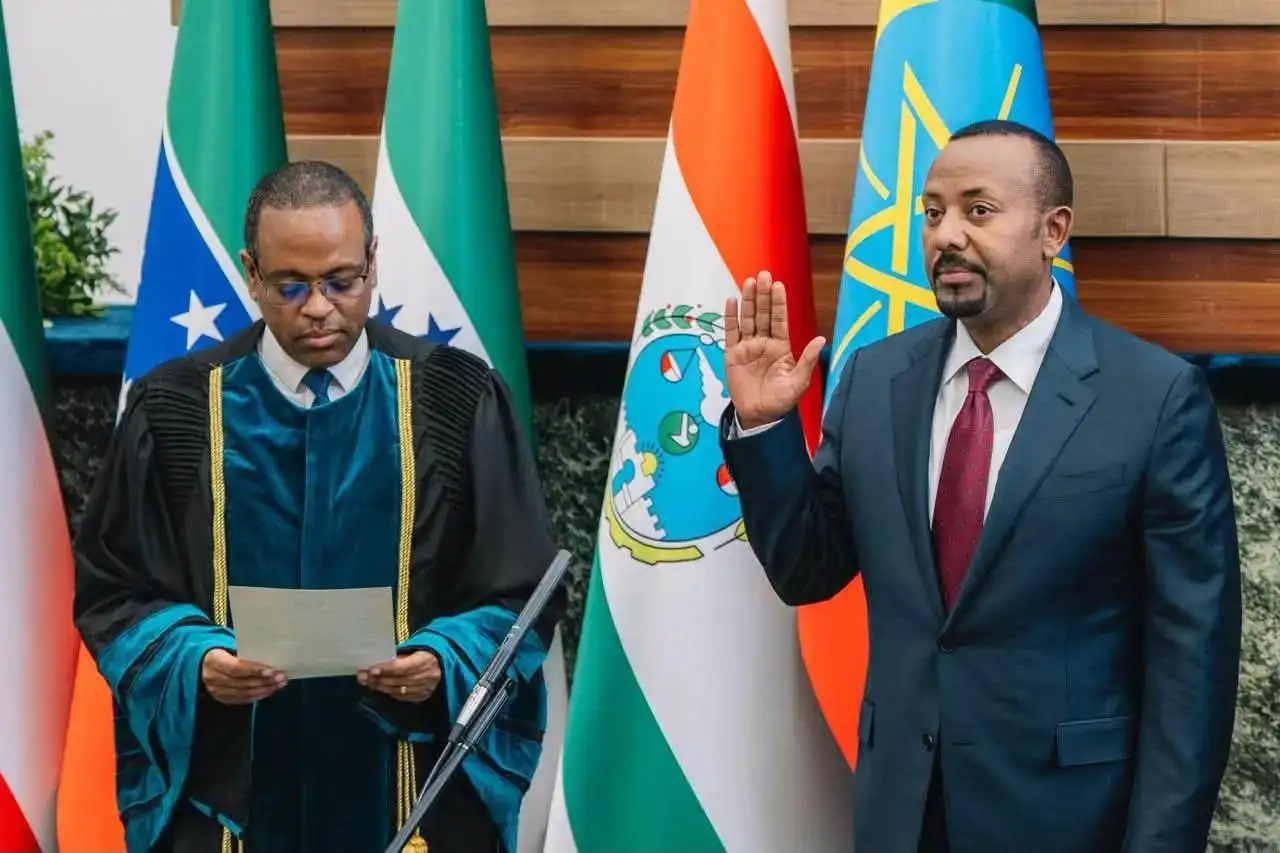
On the occasion of the report presentation that the Commission has recently carried out at the House of Peoples Representatives, it was stated that during the past almost four years since its formation the Commission has been successfully carrying out its activities based on its schedule. This process has been hailed by many as a very good initiative that would involve every vested interest as much as possible. It is also considered by many as a sort of Truth and Reconciliation Commission as experienced in South Africa. Such Commission was established in order to help heal the wounds that the Apartheid political ideology and system has inflicted on the victims which were all the black population of the country.
We have also seen similar bodies founded in Rwanda to bring about a new chapter in the socio-political landscape of the troubled country in the wake of the aftermath of the genocide of 1994. Many other countries such as Mexico have also carried out similar consultations and discussions among their citizens trying to come to terms with alleged past negative incidents or episodes of history as well as power politics committed against certain communities because of their particular ideologies, views or identity. The point very often made is that these injustices must be condemned openly even if they are part of the past and it would be unfair to blame the current society for incidents that took place years ago.
The Ethiopian National Dialogue Commission has in its collection of agenda accepted every view presented to it by all those groups of people from wherever they came but were willing to take part in the consultations. The members of the Commission have said they are satisfied with the work they have been carrying out because it has been an all-encompassing process involving practically all of the participants.
The Commission carried out its task in virtually every part of the country as well as abroad where there are big communities of diaspora. The Commission has also carried out their consultations even in areas where there were perceived risks or threats of instability and precarious security situation. Civic organizations, political parties and prominent individuals as well as international partners have also taken part in the consultation so that no one feels excluded from the process for any reason whatever. The Commission has tried to include even the views of groups that have resorted to ‘armed struggle’ and are in the bush alleging injustices committed against them.
In the recent report the Commission presented to the House of Peoples Representatives, it outlined the challenges that it had faced in certain localities and why because of that it could not complete the job within the exact schedule and hence sought an extension to their mandate which they got from the House with unanimous vote.
It was reported that the Commission will complete its task within the extension of the coming eight months. Meanwhile, the feedback that comes from observers has been very positive and encouraging. It was observed that the Commission’s dialogue is a positive step towards bringing closer citizens from all walks of life including the diaspora who have been embraced in the process of agenda collection. The activities of the Commission also help bring about a new society that is moving towards a democratic process in the choice of governments and peoples’ representatives. It has been repeatedly stated democracy is the only system of government that can keep a multicultural society as Ethiopia together and thriving ahead on its path towards growth and development. In this respect the upcoming 7th general elections will definitely be consequential.