
By: Fistum Getachew
Ethiopians are bracing up for the 7th general election come 1st June, 2026. The tradition of elections in Ethiopia goes back to imperial times when candidates vied for seats as members of the then lower chamber of the parliament. They campaigned trying to garner as many votes as possible to be part of the chamber because it was a highly prestigious post. There were no political parties in those years as there are today. Moreover, there were no means of campaigning using the media, the press and especially TV coverage as it is common practice today. Above all social media were unknown let alone be used to promote political platforms and programs.
Ethiopian political dynamics have been continuously evolving since those days. The political consciousness of constituencies has also grown a lot because there have been several elections since those imperial times. Moreover, citizens have learnt from the experience of other countries and this has influenced Ethiopia’s electoral tradition to a certain extent.
Looking at those days today with the benefit of hindsight, those elections held in monarchical days could be defined as mere formalities as those elected had practically no power to influence the policies of the monarch nor those of his close advisors let alone determine the political landscape of the nation as any MP and parliament is expected to do nowadays. In this respect, there is a lot to be desired because there is skepticism among electors and even the elected that they can have the lion’s share of the power to determine the socio-political path of the country. This is true of many countries which have a rudimentary system of government because the role of the executive usually tends to be predominant and in many cases we observe the parliament merely rubber stamping the policies of the incumbent.
Many academics in election matters argue that in many African countries the political systems and the democratic practice do not allow for the full exercise of powers of elected members of parliament. To start with, they sustain, the candidates for the seats are often allowed to run after passing certain vetting practices or else they are prevented from taking part in the elections in the first place. There are allegations that the incumbent does not usually allow people who could be perceived as challenging or having some popularity that could have the potential to present an obstacle to the control of power.
Those with opposing ideas or outlooks to those of the incumbent are also often discouraged from taking part in election because they are seen as threats to the system. Even if they manage to be registered for the polls, opposition parties or individuals allege that they are often likely to be subjected to various forms of obstacles, intimidations and harassments including their potential electors where there are suspicions of their presence. This would practically put them out of the picture.
It is often said that democracy may be the best system of government available but it is also very difficult to practice it with its full potential. There are unlimited factors that threaten it because there are so many elements in the political landscape, multiple ideas and varying ideologies. The maturity of the citizens is also another factor that weighs in the process and should be taken into account.
African governments are often blamed for restricting democratic practices or base their power on tribal/ethnic affiliations which is not exactly what democracy is all about. Academics say democracy is a political system in which ideas are the factors of contests and not origin or status of any sort of politicians. The influence of wealth is definitely a big factor that has the potential of determining the kind of political systems and candidates. Candidates do not succeed to be elected only on the basis of their political platform or ideas. They need a lot of money to campaign effectively and make their ideas clear to their potential electors. They need to rally in several localities and venues including using many means of communication.
Today the influence of the social media is overwhelming all other forces. We are living in a world dominated by what the social media carry on their pages. Comparing the current political landscape to the one in earlier years is simply unthinkable. Today they are more intense and complicated with a lot of sophistication. The more resources one has, the better placed they are to carry out a huge and well organized campaign led by professional advisors and consultants. That is why that only the strength of ideas do not guarantee victory. Many complain that elections are hence becoming more and more commercialized.
Be that as it may, Ethiopia’s experience of elections has continued even during the military regime of the seventies and eighties when people were asked to vote for members of the so called National Assembly or ‘shengo’. A new constitution was also promulgated after ‘extended deliberations’. A one party state was declared and put in place with the Workers Party of Ethiopia and no other parties were allowed to exist or compete in the elections. The government declared that socialism was the ideology of the state. However, the government was accused of being ‘totalitarian’ and very distant from the idea of a democratically elected and functioning government, a system observed in many other countries.
After the fall of the military regime, the Ethiopian People’s Revolutionary Democratic Front, EPRDF, took the reins of power and again there were immediate talks of democracy and elections as it seemed to have included in its party’s platform. There were talks that EPRDF had the support and approval of the USA and other forces which were reportedly happy to see the former military regime ousted and be replaced by a democratic system.
Parties were encouraged to be formed along nationality lines alleging that all ‘nations, nationalities and peoples’ needed to be represented in the political process. However, the political landscape became fragmented and forming a government became a bit complicated. To address this issue the Tigray People Liberation Front, TPLF formed and led a coalition of four major parties to administer the nation. This was criticized by many academics and civil societies as ‘unfair’ and discriminating of those who were not represented in the government that was to be led by the coalition of the EPRDF composed of only four parties.
When elections were subsequently held they were run on the basis of nationalities and many felt that such move would create animosities among communities and disturb the peaceful coexistence of people despite differences in origin, culture, and language etc. Many were disappointed with this state of affairs. In any case, five elections were held along the years up to 2010 when the current reformist government was formed and the TPLF-EPRDF was subsequently replaced by a new party called Prosperity Party, led by Prime Minister Abiy Ahmed (PhD).
During the EPRDF reign, a new constitution was drafted, and promulgated forming a new federal system. This system is in fact still in vigour and is governing the political landscape of the nation despite the many criticisms that many political actors made against it principally because of the inclusion of provisions that are considered as a threat to the unity of the country. The alleged threat comes from a provision in the Constitution that allows every nation, nationality and people composing the federation has the ‘right to self-determination’ including ‘the right to secede’ from the federal state.
This provision underwent fierce criticism and rejection from many circles outside the EPRDF at the time of promulgation of the Constitution in December 1994. They argued that the very survival of the country as we know it today could be in serious jeopardy. It was however admitted that in the same Constitution there are provisions that defend and promote the human and civil rights of citizens. Some have defined them as modern and unprecedented even in the ‘advanced democracies’.
In any case based on this Constitution, Ethiopia has been continuously holding elections and in many cases there have been some progress particularly on the preparations and holding of the electoral process. Among the novelties of the electoral process was the founding of the National Electoral Board or Commission which has been mandated to run the polls. There have been elections that were considered by many as a mere formality for the confirmation of the incumbent on power. We have also seen many so called opposition parties dismissing them as ‘rigged’ and hence not ‘legitimate’.
According to the same critics, the most notorious case of such elections was the one that was carried out in 2005 during which there was extensive participation of the electorate. There were lots of debates between parties and people were very much attracted by these processes. But finally the results were considered disappointing because of the way the election process ended.
Ethiopia’s continuous path towards a valid democratic system of government is still in evolution. Many say democracy is a process that cannot be attained in one go. The current reformist government has held one election five years ago and has had wide approval from the people. After that election this one will be the second one and it will be a new opportunity for the incumbent to be reassured of the approval of its policies by the electors. There are several issues to be discussed and debated among political parties and people are waiting for them.
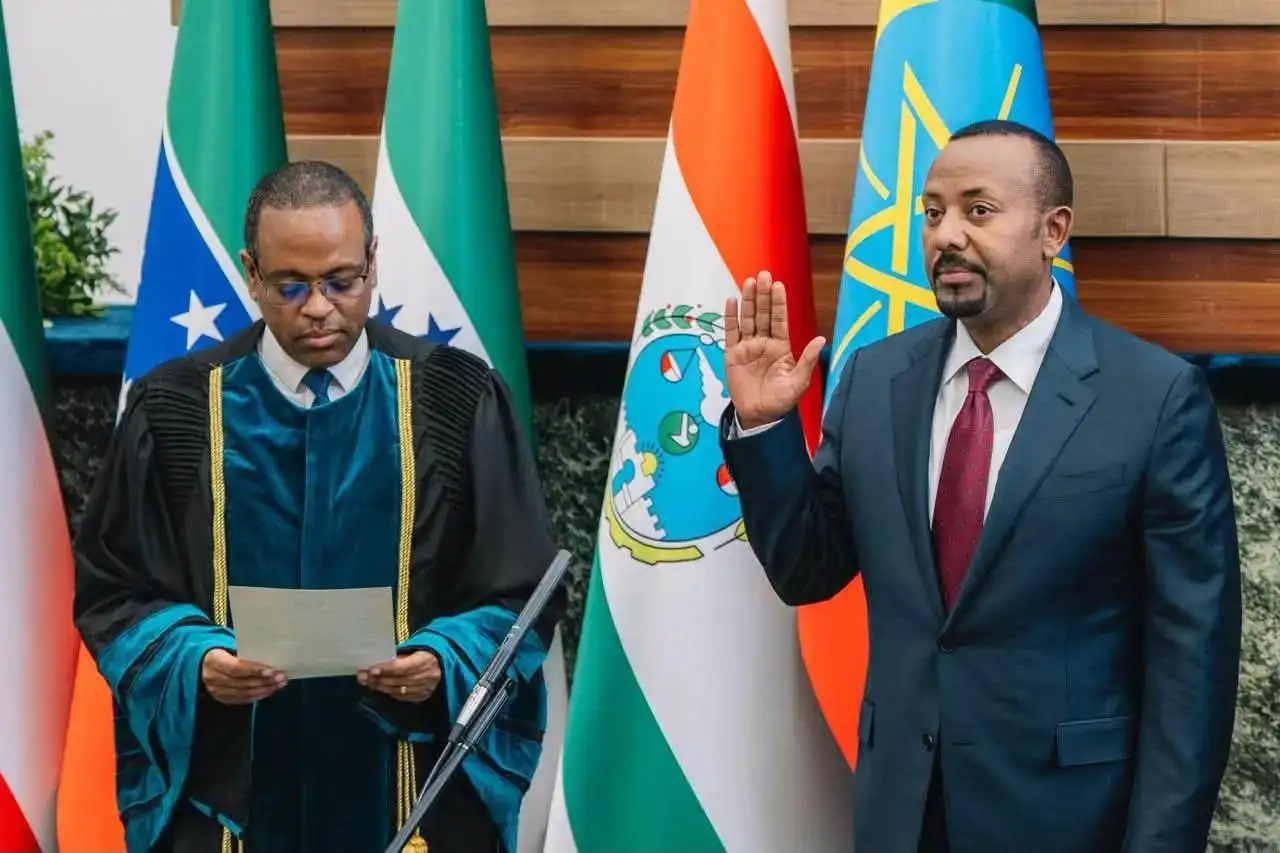
This year’s election according to Prime Minister Abiy Ahead (PhD.) will be better than the one held five years ago in all respects. He said it will be free, fair, credible and above all inclusive. The premier added everyone is encouraged and even urged to take part in the process and assert their rights. Or else, he said, they will regret it for the next five years until there will be another election.
Taking part in elections is advised by advocates of democracy because it is a constitutional right. It is part of the democratic process the country is trying to build and develop. However, we have also seen the existence of some who argue that there are not the ideal conditions in which to hold elections. But the government has reassured citizens that there are the necessary peaceful conditions under which to hold the polls. It has reminded the skeptics that even with COVID ravaging and the conflict in the north, the country has held successful elections. There are no issues of security or absence of peace that could disrupt the process.
This year, the 7th June 1, 2026 election will be even better than the one held five years ago in every sense, according to the premier. Currently parties are registering for the polls and soon the process of voter registration will be carried out. As there will be the digital process replacing the manual one, there will hopefully be less complications and a more reliable process that would satisfy people.
Premier Abiy has said, “With regard to the election, my message to the Ethiopian people is: let us judge it by the results. I can state with confidence that this parliament will be a place where diverse voices are heard in many ways.”