By: Fitsum Getachew
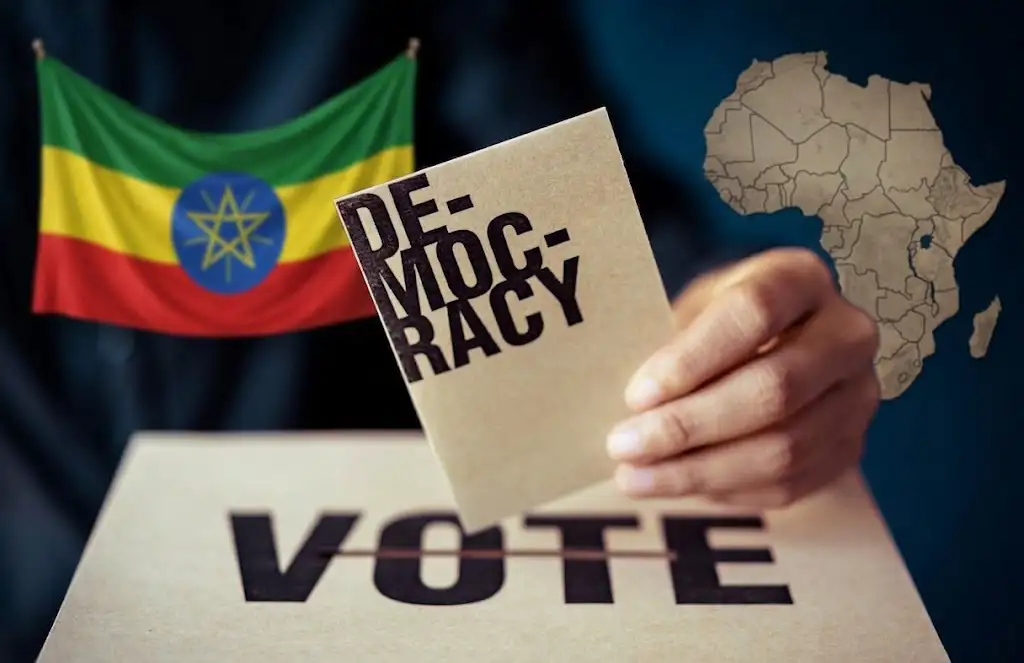
Whenever we talk about democracy, we have noted that many tend to associate it with elections. It is true that elections are one of the most visible and significant expressions of democracy in any country. However, we have often seen that holding elections alone would not guarantee democracy. It depends on what kinds of elections are carried out and under which circumstances. Is there pluralism that guarantees enough choice for voters? Is there an equal opportunity situation for all contenders to attempt to take power with the ballot box? Are there independent and strong institutions that guarantee that the polls are held without any irregularities or tampering with the process both in the counting of the votes as well as in the tabulation? These are some of the issues that have often led African countries to interminable controversies that at times have even ended leading to hostilities. Unfortunately, this is testimony to the fact that the tradition of settling differences or disagreements by sitting around a table and talking has yet to become reality.
In Ethiopia and in Africa in general, we can say that elections have played an important but often controversial role in shaping the political system of the countries involved. Understanding elections in Africa requires a broader examination of the essential features of a democratic system of government, the relationship between elections and democracy, and the current state of democracy across Africa. Together, these elements provide a comprehensive view of how democracy functions both in theory and in practice.
Academics say that a democratic system of government is built on several key principles that ensure the participation of citizens, the protection of rights, and the accountability of leaders. Popular sovereignty is one of the most fundamental features in a democracy which means that power ultimately belongs to the people, who exercise that power directly or through elected representatives. In a true democracy, the legitimacy of government authority comes from the consent of the governed, usually expressed through regular, free, and fair elections.
The rule of law is another essential feature where laws apply equally to all individuals, including government officials. The principle is that no one is above the law, and legal processes must be transparent, consistent, and just. The rule of law protects citizens from arbitrary decisions and ensures that governance is conducted within established legal frameworks.
Pluralism is also a defining characteristic of democracy. This means that there should be more than one political parties and organizations that compete for power. This allows citizens to choose from a range of political ideas and policies ensuring that government reflect diverse interests within the society. Without real choice there is little meaning in the process and the public themselves lose confidence and trust in the system.
What is more, there should be the protection of human rights and fundamental freedoms. These include four key freedoms: Freedom of speech, freedom of the press, freedom of assembly, and freedom of association. These rights enable citizens to express their opinions, criticize the government, and participate actively in political life. A democratic system cannot function properly without these freedoms, as they ensure that citizens can make informed decisions.
Transparency and accountability are also critical elements. Democratic governments are expected to operate openly and to be answerable to the people. This means that leaders must explain their actions and decisions, and citizens must have mechanisms to hold them accountable, such as elections, independent courts, and watchdog institutions.
Moreover, separation of powers is another key feature where power is divided among the three branches of government that is the executive, legislative, and judicial branches. This is meant to prevent the concentration of power in one institution and creates a system of checks and balances, reducing the risk of abuse of authority.
Many consider that regular, free, and fair elections are perhaps the most visible feature of democracy. Elections are closely related to democracy because they serve as the primary mechanism through which the will of the people is expressed. Elections are not just events but processes that reflect the broader political environment. They must be competitive, inclusive, and credible and without genuine elections, a system cannot truly be considered democratic. That is why the Ethiopian government has been working on this issue with determined focus. In Ethiopia, elections have been held periodically since the establishment of the federal system in 1995. The country has made efforts to institutionalize electoral processes, including the creation of the National Electoral Board of Ethiopia. Such institution has contributed to the credibility and fairness of elections avoiding the skepticism of some who always allege that elections here are not fair attributing to the advantages of the incumbent while carrying out the campaigns. They also allege that there have been put restrictions on the choice of their candidates. Such allegations as political restrictions, limited media freedom, and concerns about transparency may have affected public trust in the electoral system.
However, all these allegations have been rejected by the government because it has been preparing to conduct this years election in a free, fair and transparent manner.
In fact, this has been testified by scholars and civil societies who have been approached to reflect on the pre-election preparations. For instance Professor Brook Hailu, a distinguished scholar has noted that the Ethiopian election process is proceeding in a largely fair manner; and this would potentially help lay the foundation for a stronger democratic political culture in the country.
According to him, Ethiopia has made significant progress in holding regular nationwide elections. Over the years, Ethiopia has gained two key strengths: the discipline to hold regular five-year polls and the operational capacity to run them on a large scale.
More than 60 political parties have fielded candidates at federal, regional, zonal and city levels for the election, he said, adding that nationwide televised debates have given to all parties, including smaller ones, to introduce their programs and respond to questions.
Capacity of the Electoral Board and adequate staffing are also critical to ensuring credible voting across Ethiopias large and diverse electorate, Prof. Brook stressed.
Meanwhile, the National Election Board of Ethiopia (NEBE), in collaboration with the Ethiopian News Agency (ENA), has launched its first-ever election debate platform for political parties.
The initiative marks a significant milestone in Ethiopias electoral process ahead of the general election. Board Chairperson Melatwork Hailu said the platform was developed over several months as part of broader reforms aimed at strengthening democratic participation and improving the quality of political competition in the country.
She noted that the initiative is also designed to help political parties communicate their positions more clearly and effectively within structured time limits.
Melatwork added that NEBE has conducted extensive preparatory activities, including training programs and mock debates, to support participating political parties and strengthen their readiness.
The last election carried out in 2021 has shown marked improvements in terms of administration and participation, but there were still some critics who declined to join the process because they claimed they did not have the treatment they deserved in order to be as competitive as the ruling party. The government however has claimed to have presented the best possible landscape to carry out free, fair and credible elections.
Academics argue that elections contribute to the strengthening of a democratic system in several important ways. They say elections provide legitimacy to governments creating trust in the system. Elections also promote accountability beside encouraging participation and engagement, which are essential for a healthy democracy. However, scholars who study the matter say that elections alone do not necessarily guarantee democracy. They assert that a country may hold regular elections but still lack other democratic features such as freedom of expression or judicial independence. The probability of experiencing irregularities cannot be avoided unless elections are supported by strong institutions and a democratic political culture which naturally takes a lot of time. The established democracies have reached their current status after several years of trial and error, building on their practical experiences. Through time, they have rectified their mistakes and shortcomings while building on their strengths.
When we examine the state of democracy in Africa, it is important to recognize that the continent is highly diverse, culturally, politically, ideologically and even economically and this has reflected on the kind of stage their democratic development stands. Since the 1990s, many African countries have transitioned from authoritarian regimes to multiparty systems as they have been influenced by outside pressure as well. This period brought significant political changes across the continent. To be accepted by the international order African countries have been urged to accept democracy as a system of government or face some sort of marginalization from among many of the strongest economies of the world on which they often rely for funding their economies and growth.
Some African countries such as Ghana, Botswana and Senegal have made notable progress in building democratic systems expressed through multiple peaceful transfers of power. They have relatively strong institutions. In these countries, elections are generally considered credible, and citizens enjoy a reasonable level of political freedom. And we have seen that these countries have received the appreciation of many countries in the West.
On the other hand, some countries continue to face various and continuous challenges with issues of irregularities and corruption in the electoral process as well as the presence of weak institutions hindering democratic development. In certain cases, we have noted leaders extending their time in power through ad hoc constitutional changes carried out on purpose thus undermining one of the basic principles of democracy.
We have also seen conflict and instability often affecting the democratic development of African countries. Civil wars, ethnic tensions, and political violence have sometimes disrupted electoral processes and even weakened state institutions. In such environments, it becomes difficult to conduct free, fair and credible elections or to ensure the protection of human rights.
Despite these challenges, there have been positive trends in recent years with increased civic awareness, the significant role of civil society organizations, the positive influence of technology and social media contributing to greater political participation.
International organizations and regional bodies such as the African Union, the EU and others have also contributed their share in promoting the democratic process and democratic norms with established frameworks and guidelines for elections.
Democracy in Africa is complex because it varies widely from one country to another. Overall, Africa can be described as a continent with a mix of democratic progress and persistent challenges. While some countries are consolidating democracy, others are experiencing democratic backsliding. Therefore, we can conclude that democracy is evolving.
Ethiopia has exerted relentless efforts to implement democratic reforms even if challenges have been trying to block it. Given that the country is big with a large and diverse population, coping successfully with all the challenges its diversity and magnitude present driven by socio-political dynamism is a hard task. Obviously building a strong democracy goes beyond elections. We have seen above that the rule of law, the supremacy of the law, equality before the law, a strong and independent judiciary, an equally strong and independent media can be considered as the other ingredients of a democratic system. The Ethiopian government knows that building strong institutions is part of the process of building a democratic state. That is why the current government has been focusing on strengthening the democratic institutions and instilling more confidence and trust in the peoples psyche or forma mentis.
We can conclude that our experience with elections highlights both the progress and the challenges of democratic development. We have noted that across Africa, democracy is advancing in some areas while facing setbacks in others. The future of democracy on the continent will depend on the commitment of governments, institutions, and citizens to uphold democratic principles and to work toward more inclusive and accountable systems of governance.
It is everybodys hope and expectation that the upcoming general election in Ethiopia will live up to the anticipation of citizens because they know that it could be highly consequential in terms of leading the country to a trajectory of continuous nurturing of democratic culture. Indeed, an ancient and historic country such as Ethiopia really deserves it.