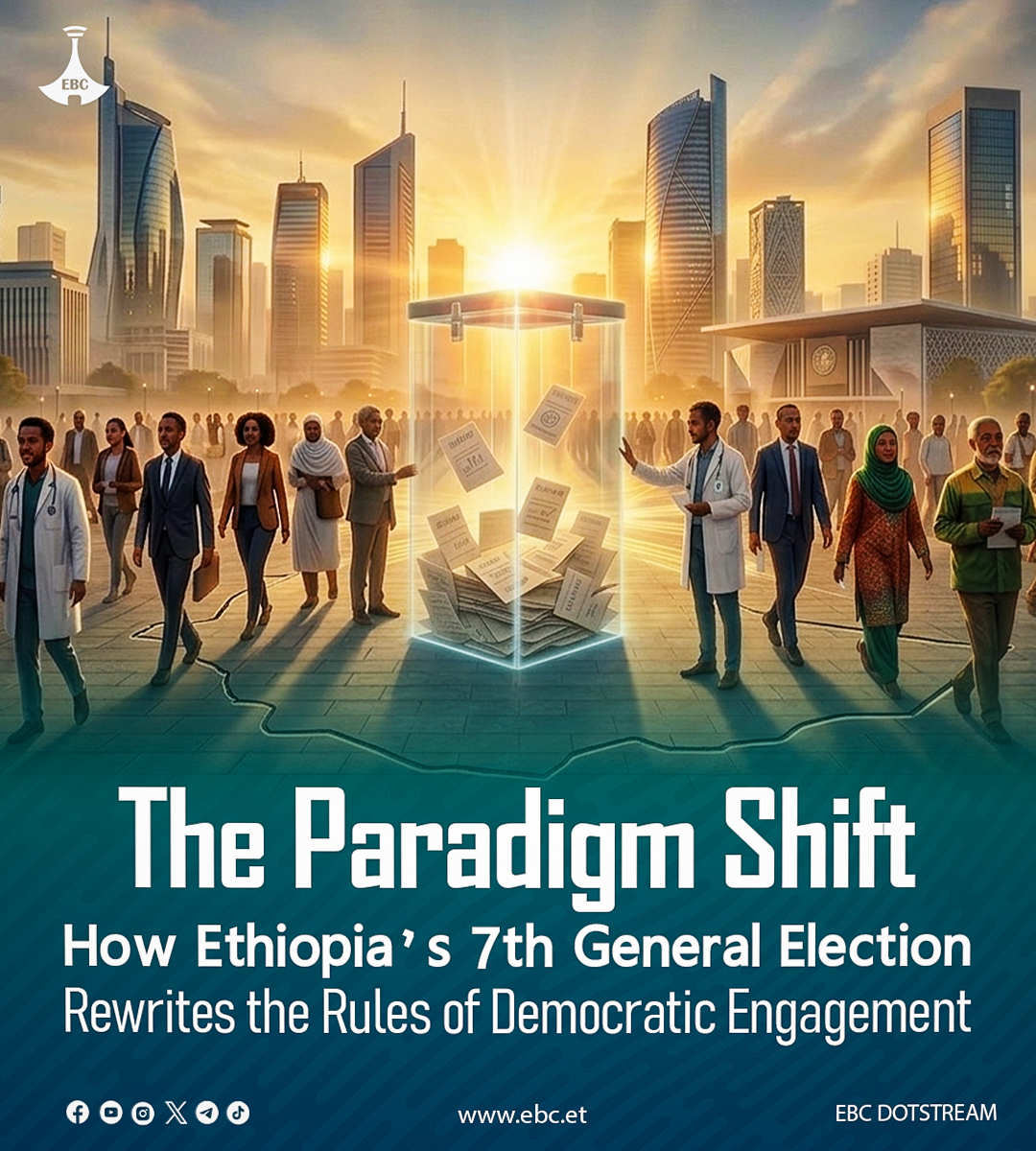
Can a nation of over 130 million people, navigating a complex web of historical pressures, economic shifts, and regional vulnerabilities, execute an electoral process that is not just orderly, but fundamentally peaceful, radically inclusive, and genuinely democratic?
For decades, external skeptics said it was impossible. They argued that democracy in Africa—and specifically in the Horn—was bound to be a zero-sum game of singular party dominance, logistical breakdowns, and post-electoral friction. But as we stand on the precipice of June 1, 2026, Ethiopia is not just defying those expectations; we are completely rewriting the playbook.
Nelson Mandela once profoundly remarked:
"If you want the cooperation of humans around you, you must make them feel that they are important—and you do that by being genuine and humble."
What we are witnessing right now across our great nation is a genuine, institutionally backed elevation of the ordinary citizen's voice. This is not just a one-day voting ceremony. This is Ethiopia’s 7th General Election, and it marks the dawn of an entirely new democratic chapter.
To understand the profound scale of what has been achieved in the lead-up to this election, we must first look into the mirror of our past. Ethiopia’s electoral journey has never been simple.
For generations, our political landscape suffered from deep-seated structural pitfalls. We saw eras marked by overwhelming single-party dominance, a palpable deficit in institutional trust, and systemic bottlenecks that routinely stripped elections of their truest meaning—which should always be a joyful, public celebration of civic duty.
True democratic maturity does not mean a historical absence of challenges; it means the hard-earned capacity to learn from those challenges, to fortify legal institutions, and to build an unbreakable framework of public trust.
Enter 2026. The National Election Board of Ethiopia, under visionary leadership, did not merely patch up old systems they completely re-engineered the process. By launching a groundbreaking, fully integrated technological system for both voter and candidate registration.
They placed "Innovation and Technology" at the very center of their five-year strategic plan. From local Kebeles to specialized mobile polling units designed for our pastoralist communities, the goal was singular: absolute administrative precaution, total accessibility, and the elimination of double registration or process manipulation.
Let’s break down the core pillars making this election vastly superior to any that came before it.
Pillar 1: Radical Inclusivity.
Inclusivity cannot be a hollow buzzword. It must be measured by systemic access. Through the deployment of the digital application "Mirchaye"—meaning My Election—alongside robust, secure in-person registration, the Board successfully married cutting-edge modernization with traditional outreach.
The results? A staggering, historic milestone: 50.5M+ registered voters. Over 5.5 million of those citizens registered seamlessly through digital platforms. This isn't just a data point on a spreadsheet; it is a profound national indicator that the weight of the citizen's voice has taken center stage in our national destiny.
Pillar 2: A Multi-Party Field of Substance
The second pillar is the sheer quantity, diversity, and quality of political competition. A democracy thrives not just when people show up to vote, but when the menu of choices available to them is rich with ideas, regional representation, and programmatic depth.
In this cycle, Over 10,000 candidates have stepped into the arena—with 2,198 vying for the House of Peoples' Representatives and 8,736 for Regional Councils. Crucially, 73 brave independent candidates are running, proving that formal party structures are no longer the gatekeepers to political participation.
But what truly sets this process apart is the signing of the comprehensive, 7-chapter, 30-article Electoral Code of Conduct by 48 competing parties. The culture has definitively shifted away from toxic antagonism and personal attacks toward a sophisticated, peaceful contest over policies and programs.
Pillar 3: Absolute Media Equality
The third pillar is an unprecedented marketplace of ideas, built on the foundation of absolute media equality.
As the great philosopher Jürgen Habermas noted, a vibrant public sphere is the lifeblood of true democracy. In a move that guarantees total fairness, NEBE partnered with the Ethiopian Media Authority to conduct a transparent lottery system, allocating free, unhindered airtime to all political entities.
Think about the equity in that system. The ruling party and the opposition are not fighting for a platform; they are fighting on the merits of their intellect and the strength of their vision. With hundreds of hours of free airtime, every single alternative policy has been laid bare before the Ethiopian public.
Pillar 4: Programmatic Debates Over Conflict
This structural equity naturally birthed our fourth pillar: A highly mature culture of political debate.
Prior to election day, the Board successfully wrapped up national inter-party debate forums where 33 parties engaged intensely on 19 major national issues, broadcasted across 5 local languages. This completely replaces standard campaign rhetoric with deep public education. The voter is no longer moved by mere emotion; the voter is guided by verified data and comparative policy analysis.
Pillar 5: Fair and Transparent Budget Allocation
Financial equity is just as critical as media equity in a thriving democracy, bringing us to our fifth pillar: Fair Budget Allocation. Recognizing that campaigning requires resources, NEBE took unprecedented steps to level the financial playing field. By implementing a highly transparent and equitable formula for distributing election funds among competing political parties, the Board ensured that a party's ability to reach voters is determined by the strength of their platform, not the depth of their pockets. This vital financial lifeline empowers parties of all sizes to campaign vigorously, independently, and effectively across the nation, ensuring that no viable political voice is silenced by a lack of funding.
Let’s look at the absolute logistical triumph of this pre-election phase.
Beyond the candidate metrics, look at the mechanisms of transparency. Over 220,000 certified party agents will be stationed inside polling booths across every single region. This ensures that both the ruling party and the opposition have their eyes on the process at all times. Furthermore, 1,814 accredited journalists from 64 media institutions are on the ground, creating an impenetrable shield of public accountability.
And the world is watching with profound respect. The African Union has dispatched a high-level delegation of 73 short-term observers from 37 African nations—and in a beautiful nod to progressive leadership, 61 percent of that entire delegation are women.
Simultaneously, the Intergovernmental Authority on Development (IGAD), led by the distinguished former Ugandan Vice President.
This international presence isn’t just for oversight; it represents Ethiopia's absolute confidence in opening up our democratic strides to continental and global standards.
This upcoming Monday, June 1, 2026, will not just be an election day; it will be a definitive declaration of our national maturity. We are proving to ourselves, to our African brothers and sisters, and to the global community, that political competition does not have to be defined by friction, control, or conflict. It can be beautifully orchestrated through dialogue, programmatic contrast, and the rule of law.
The voice you will hear at the polls this week is not just the voice of political parties; it is the collective voice of citizen trust, institutional resilience, and a deeply promising future.