Ethiopia has backed a sharp warning from UN Secretary-General António Guterres, who says Africa is being "starved" of clean energy investment despite holding the world's richest solar potential.
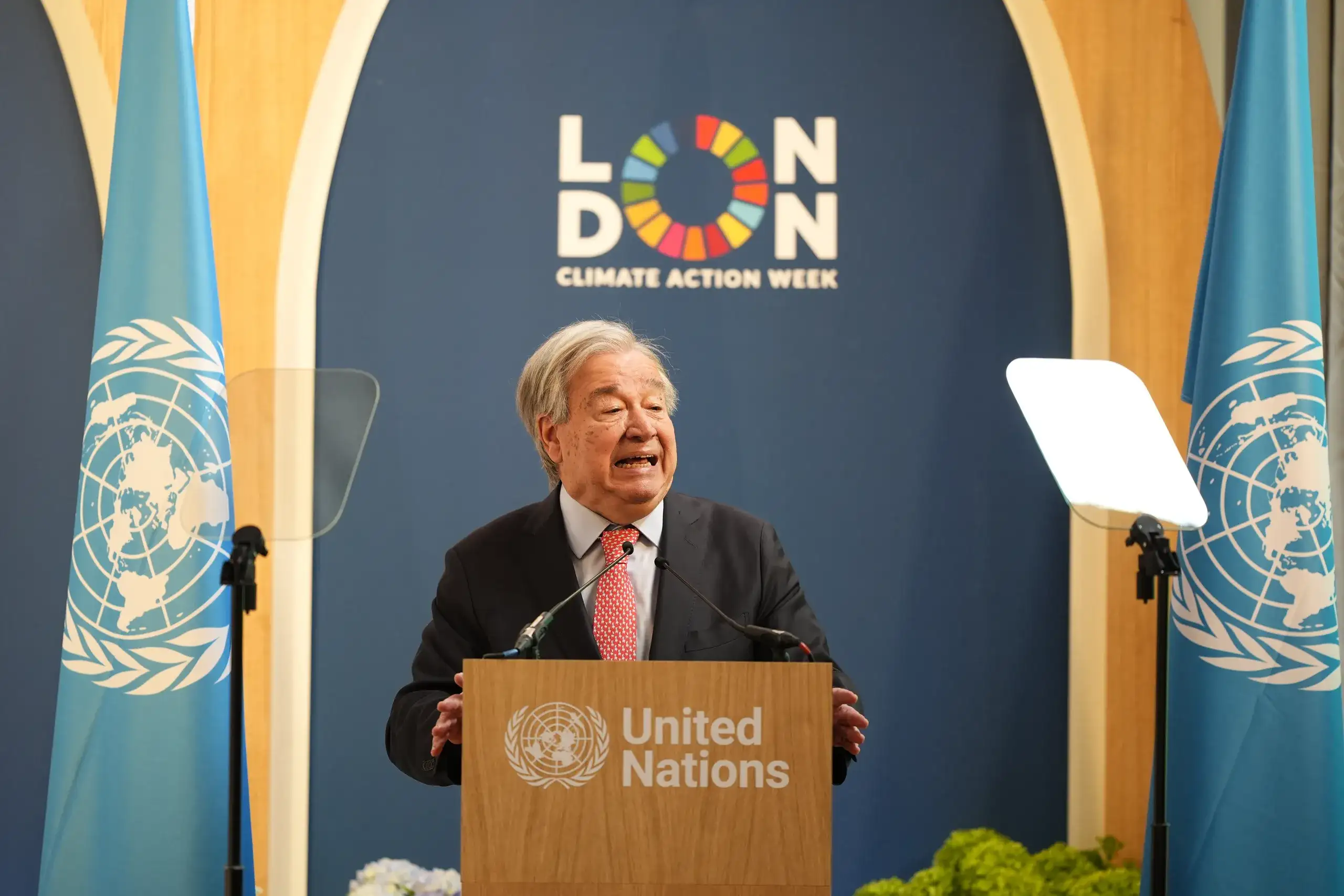
Delivering a landmark address at London Climate Action Week, the UN chief spotlighted a glaring paradox that directly reflects Ethiopia’s own economic and development realities: despite holding sixty percent of the world’s best solar potential and vast critical mineral reserves, the African continent receives a meager two percent of global clean energy investment.
For Ethiopia, a nation actively pioneering ambitious green initiatives, from expanding the three-hundred-megawatt Aysha Wind Farm in the Somali region to becoming the world's first country to ban internal combustion vehicle imports, the Secretary-General’s remarks validate long-standing frustrations over international financing barriers.
While more than six hundred million people across Africa still lack access to basic electricity, developing economies face borrowing costs for clean energy projects that are two to three times higher than those in wealthier nations. Calling the global financial structure deeply unjust, Guterres argued that energy independence cannot be built on fossil fuel reliance and admonished international lenders for overpricing risk while underpricing real green opportunity in resource-rich African states.
The UN Secretary-General also issued a warning regarding emerging global demands, pointing out that power-hungry artificial intelligence data centers could consume enough water by 2030 to meet the basic needs of all 1.3 billion sub-Saharan African residents for an entire year, a troubling metric for Horn of Africa nations where drought and water security remain constant threats. Furthermore, Guterres noted that fossil fuel companies flared one hundred sixty-seven billion cubic meters of gas globally in 2025 alone, an amount equal to Africa’s entire annual gas consumption wasted into the atmosphere.
Demanding an end to what he characterized as extraction without development, the UN chief urged international financial institutions to overhaul their lending models, boost development bank lending capacity, and ensure that wealthy nations honor commitments to mobilize at least three hundred billion dollars annually toward a broader target of 1.3 trillion dollars by 2035. As Ethiopia works to diversify its energy grid beyond rainfall-dependent hydropower to protect its growing population from climate shocks, local leaders emphasize that achieving lasting economic resilience will depend on whether the global community finally heeds the UN's call to deliver fair, accessible capital to the African continent.