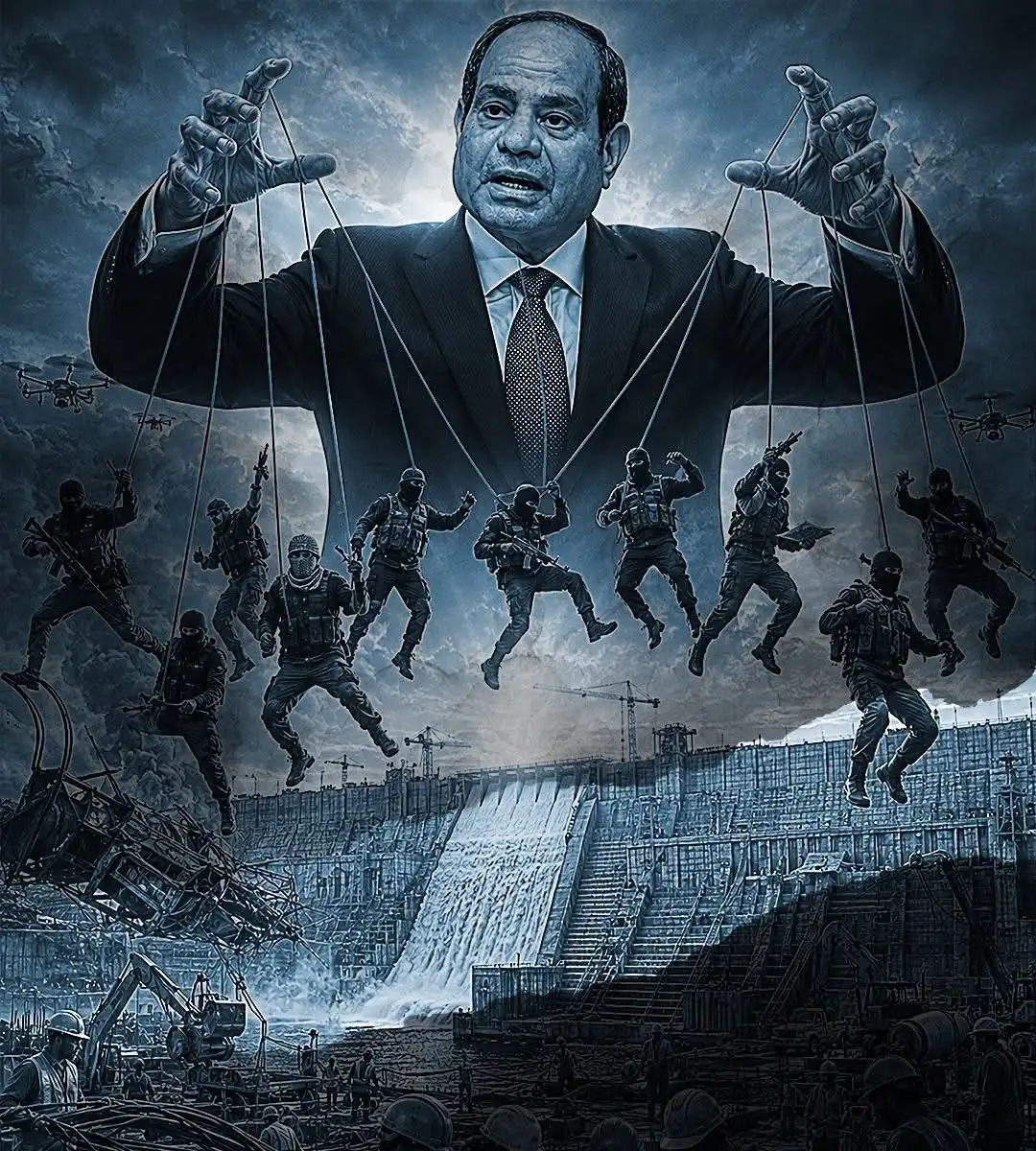
Imagine handing over 85% of your paycheck every month to a company you've never worked for and then being publicly criticized the one time you ask to keep enough to cover food and rent. It sounds absurd. But that's roughly the emotional logic underpinning Egypt's long-running objections to Ethiopia's use of the Blue Nile.
Ethiopia contributes more than 85% of the Blue Nile's total water volume: water that originates in Lake Tana and the tributaries of the Ethiopian Highlands before flowing into Sudan and then Egypt. Despite supplying the overwhelming majority of the resource, Ethiopia is routinely told, in one form or another, that it has no legitimate right to use that water to lift 120 million people out of poverty. That's not hyperbole for rhetorical effect, it's close to the actual math of the river system. And it's why so many Ethiopians hear Egypt's escalating language not as legitimate concern, but as something closer to entitlement dressed up as international law.
What Egypt has actually been saying
Egypt's rhetoric has sharpened noticeably over the past year. Foreign Minister Badr Abdelatty has repeatedly accused Ethiopia of "unilateral" operation of the Grand Ethiopian Renaissance Dam (GERD), framing Egypt's water security as nothing less than an "existential issue" and insisting that trans-boundary rivers are governed by rules Ethiopia is allegedly ignoring. Egypt's Ministry of Irrigation has gone further still, publicly labeling GERD an "illegal dam" that violates international law and citing fluctuations in downstream discharge as evidence of reckless management. Cairo has also taken its objections directly to the UN Security Council, framing Ethiopian statements about the dam's completion as destabilizing to the region.
These are serious, pointed accusations. But strip away the diplomatic escalation and what's left is less a legal or scientific case than a political one: a narrative aimed at preserving an arrangement that was never equitable to begin with.
Geography doesn't take sides
The Blue Nile (Abbay), as it's known in Ethiopia: begins in the Ethiopian Highlands. That is not a matter of national pride or interpretation; it's elevation, rainfall, and hydrology. Confusion between the Blue Nile and White Nile has muddied public understanding for decades, but among hydrologists the picture has never been in dispute: Ethiopia is the water tower of this river system, contributing the vast majority of the flow that Sudan and Egypt depend on downstream.
A dam built differently
It's worth noting how differently Ethiopia has approached this compared to Egypt's own history. When Egypt built the Aswan High Dam in the 1960s, it did so without consulting upstream nations at all. GERD's development has taken a different path — years of technical negotiations, shared engineering data, and repeated invitations to Egypt and Sudan to participate in joint assessments. The dam is now fully operational, monitored continuously by engineers, and the severe downstream water crisis Egypt long warned of has not materialized.
A more complicated picture of "scarcity"
Egypt's framing of its water situation as existential sits awkwardly next to its own consumption patterns: water-intensive export crops like cotton, more than twenty golf resorts, and an entirely new city being built in the Sahara Desert, all irrigated from the same Nile system Cairo describes as under existential threat. That doesn't mean Egypt's downstream concerns are fabricated. But it does suggest the crisis is, at minimum, more manageable — and more political — than the emergency language implies.
Eleven countries, not two
The deeper issue is this: the Nile has never belonged to just Egypt and Sudan, however comfortable that arrangement became under colonial-era agreements that granted the two downstream nations near-total control over water falling almost entirely on other countries' land. The river flows through eleven nations — known by many names, including Abay, Atbara, and Sobat: each with legitimate claims to sustainable, cooperative use.
Ethiopia isn't asking to seize the Nile or harm its neighbors. It's asking for what any country supplying 85% of a shared resource might reasonably expect: a seat at the table, and the right to keep enough for its own people to live.