By: Fikir Tadesse
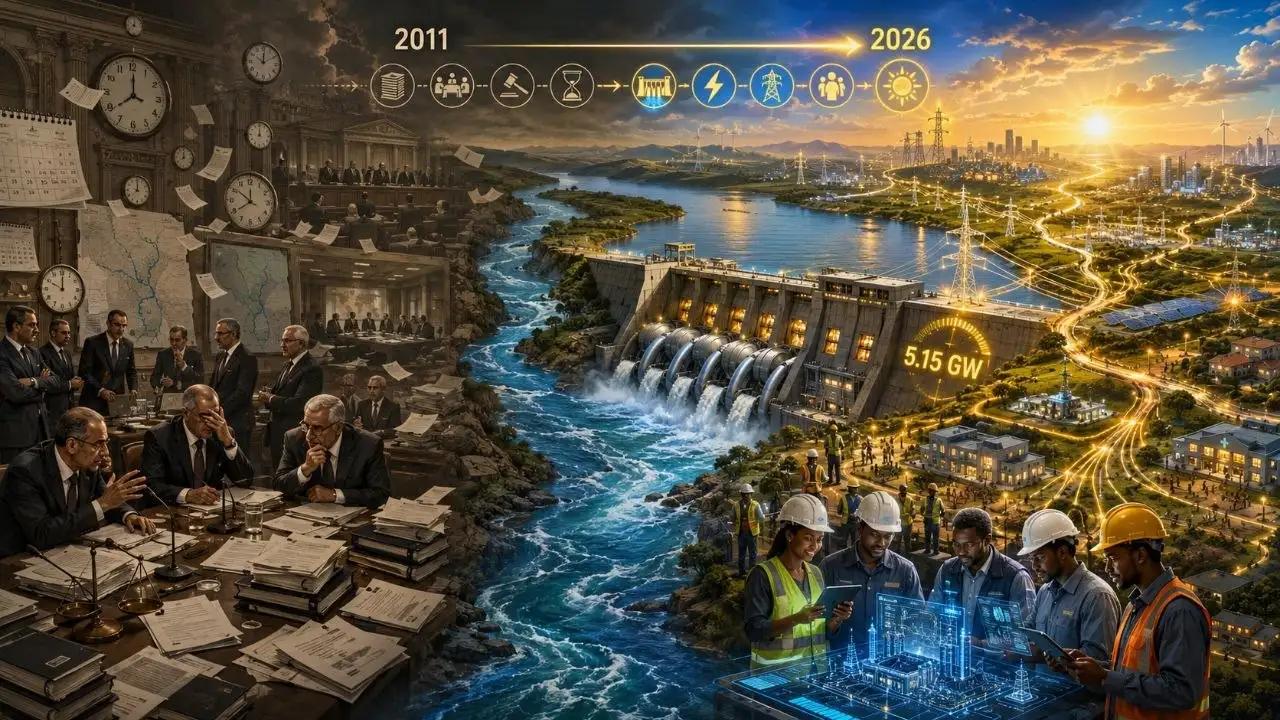
Two countries, one river, and two completely divergent strategies over the last 15 years. One nation spent the era litigating a dam that already exists; the other spent it building an energy economy around it.
When construction on the Grand Ethiopian Renaissance Dam (GERD) began in 2011, Egypt declared it illegal from day one.
Fast forward to 2026: the dam is complete and fully operational. At 5.15 gigawatts, it is Africa's largest power plant.
Cairo’s legal objections never halted construction—they merely ran alongside it.
So, what did each side actually do with those 15 years?
Egypt built a diplomatic case, relying on UN complaints, African Union mediation attempts, and lobbying for US intervention. Ethiopia, meanwhile, built infrastructure: turbines, transmission lines, and export contracts.
The results are undeniable. Ethiopia now sells power to Djibouti, Sudan, Kenya, and Tanzania, with Somalia and South Sudan slated next. This has translated into over $100 million in annual electricity export earnings, bolstered by a new $400 million grid expansion deal signed this year.
In its most recent move, Egypt's Nile committee reaffirmed its stance that GERD is "illegal," pointing to fluctuating downstream flows. Yet, the same statement conceded it is too early to judge this year's flood season, as definitive data won't be available until August.
Two key realities anchor Ethiopia's position.
Geographically, over 86% of the Blue Nile's water originates inside Ethiopia's highlands. Developing a resource that begins within sovereign borders is fundamentally different from unilaterally cutting off a neighbor's supply.
Mechanically, GERD is a hydroelectric project, not a consumptive reservoir designed to hoard water. The water passes through the turbines and continues downstream; the volume still moves, generating electricity along the way.
For over a decade, Egyptian officials warned that this dam would trigger a catastrophic downstream water crisis.
Today, the dam is done, and that catastrophe has not materialized. What is being debated now is a much smaller, seasonal flow issue—one just as easily attributed to delayed rainfall as to dam operations.
The uncomfortable question for Cairo is this: after 15 years, is the ongoing objection really about protecting the Nile, or is it about a decade of denial catching up?