
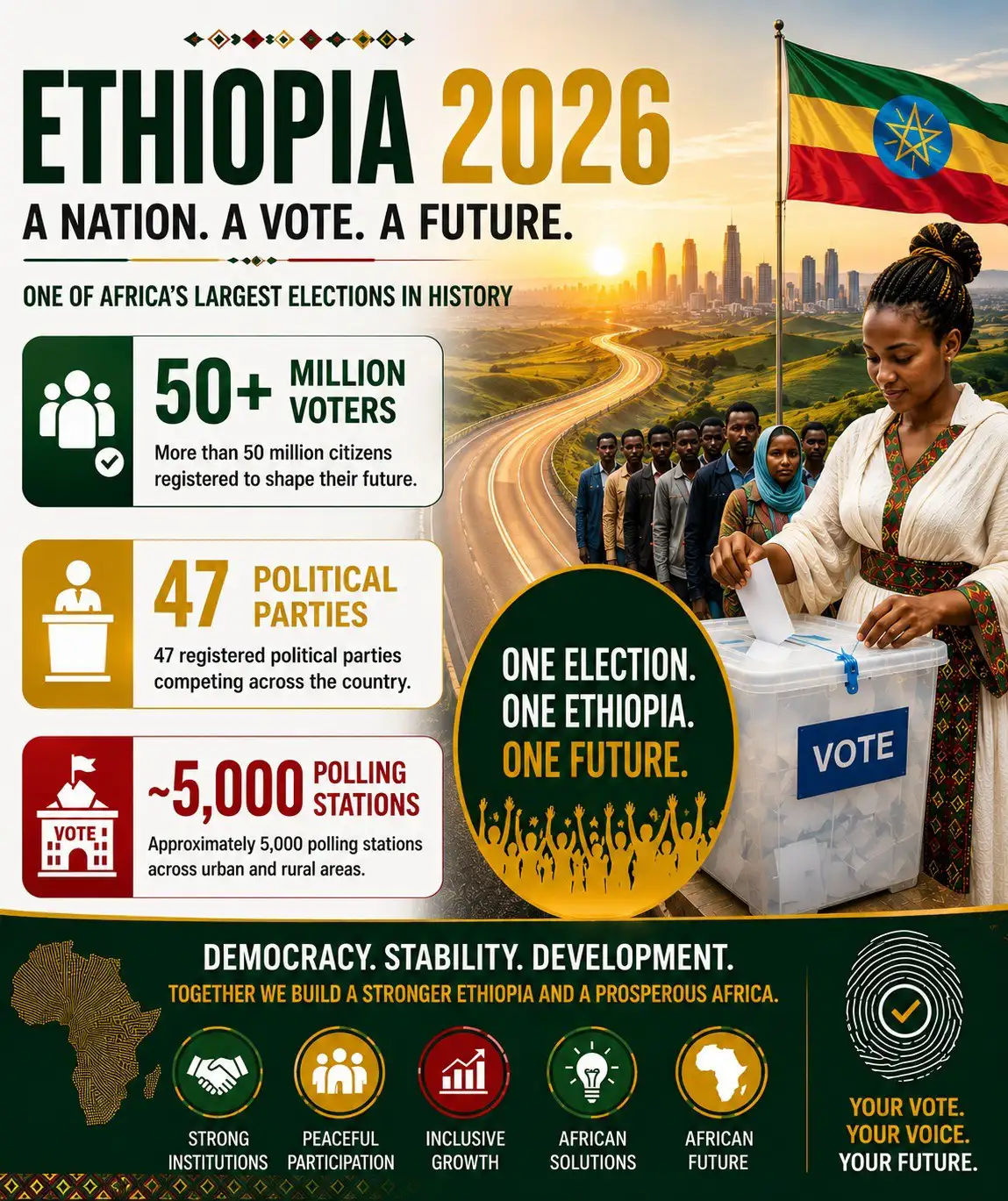
Ethiopia’s upcoming June 1 general election carries profound significance that stretches across the African continent. For observers, this vote is more than a domestic political event; it serves as a critical test of democratic reform and institutional credibility for one of Africa’s most influential nations. Since the political transition began in 2018, Ethiopia has worked to modernize its electoral system, most notably by restructuring the National Election Board to foster greater independence and transparency. The scale of this effort is underscored by the registration of over 50.5 million voters, a massive mobilization that signals a strong public desire to engage in shaping the country’s future despite significant challenges.
While this high voter turnout reflects a deep-seated belief in the power of the ballot, the broader struggle for democracy in Africa goes beyond election day. As the continent grapples with political instability, constitutional crises, and shifting public expectations, Ethiopia’s experience highlights the urgent need to build institutions that are not only functional but also trusted, inclusive, and resilient. The road ahead remains complex, as the nation balances reform efforts against persistent security concerns, ethnic divisions, and economic pressures. Ultimately, the success of this democratic exercise will not be defined solely by the final vote count but by the ability of Ethiopia’s institutions to move past these obstacles and deliver the stability, justice, and accountability that its citizens and the wider region are striving to achieve.