
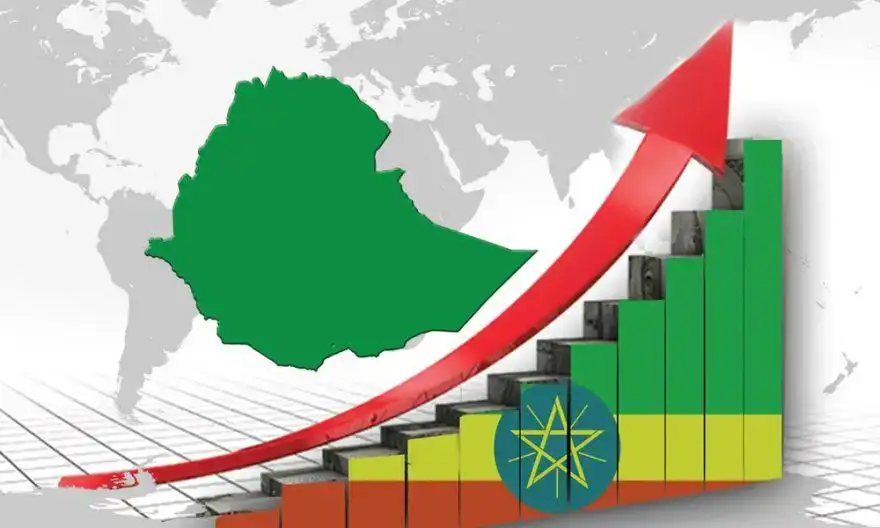
In a statement regarding current national affairs, the Office of the Prime Minister announced that Ethiopia’s economy recorded a 9.2% growth rate in the 2017 fiscal year, positioning it among the fastest-growing economies in the world. The statement emphasized that the progress observed over recent years is not merely a government promise but the result of an output-oriented administration where tangible, visible results are being achieved. Building on this momentum, the economy is projected to reach a 10.2% growth rate in the 2018 fiscal year.
This broad-based growth encompasses the agricultural, industrial, and service sectors, with the industry sector increasingly becoming the primary driver of development. This trend reflects the government's sustained focus on manufacturing, industrial development, value addition, and export-oriented products. These achievements are the fruits of planned leadership and accountability, tracked specifically through the Prime Minister’s 100-day performance evaluation system. Furthermore, total export revenue is expected to reach 20 billion USD, representing a nearly 100% increase compared to the 2016 fiscal year.
Inflation continues to decline, now approaching a single-digit level, which marks a significant improvement compared to the double-digit inflation that had placed heavy pressure on households and businesses in recent years. This success was achieved even amid significant external pressures, including the current geopolitical tensions in the Middle East that have disrupted global energy and strategic materials markets. Additionally, since the launch of the Homegrown Economic Reform Agenda, the government has refrained from entering into any new commercial loan agreements from external sources, significantly easing the country's debt burden.
Behind these statistics lie tangible changes that Ethiopians can experience firsthand. The Grand Ethiopian Renaissance Dam is currently generating electricity for homes, commercial institutions, and neighboring countries; it is a project entirely supported by Ethiopians, built by local engineers, and completed despite sustained external challenges. Alongside hydropower, Ethiopia is expanding its renewable energy capacity through projects like the Aisha II and Asela wind farms, which strengthen national grid resilience and foster regional energy cooperation. Furthermore, the construction of the Bishoftu International Airport—one of the largest infrastructure investments in African history—has officially commenced. As the Office of the Prime Minister concluded, these accomplishments are not merely aspirations; they are tangible facts.