
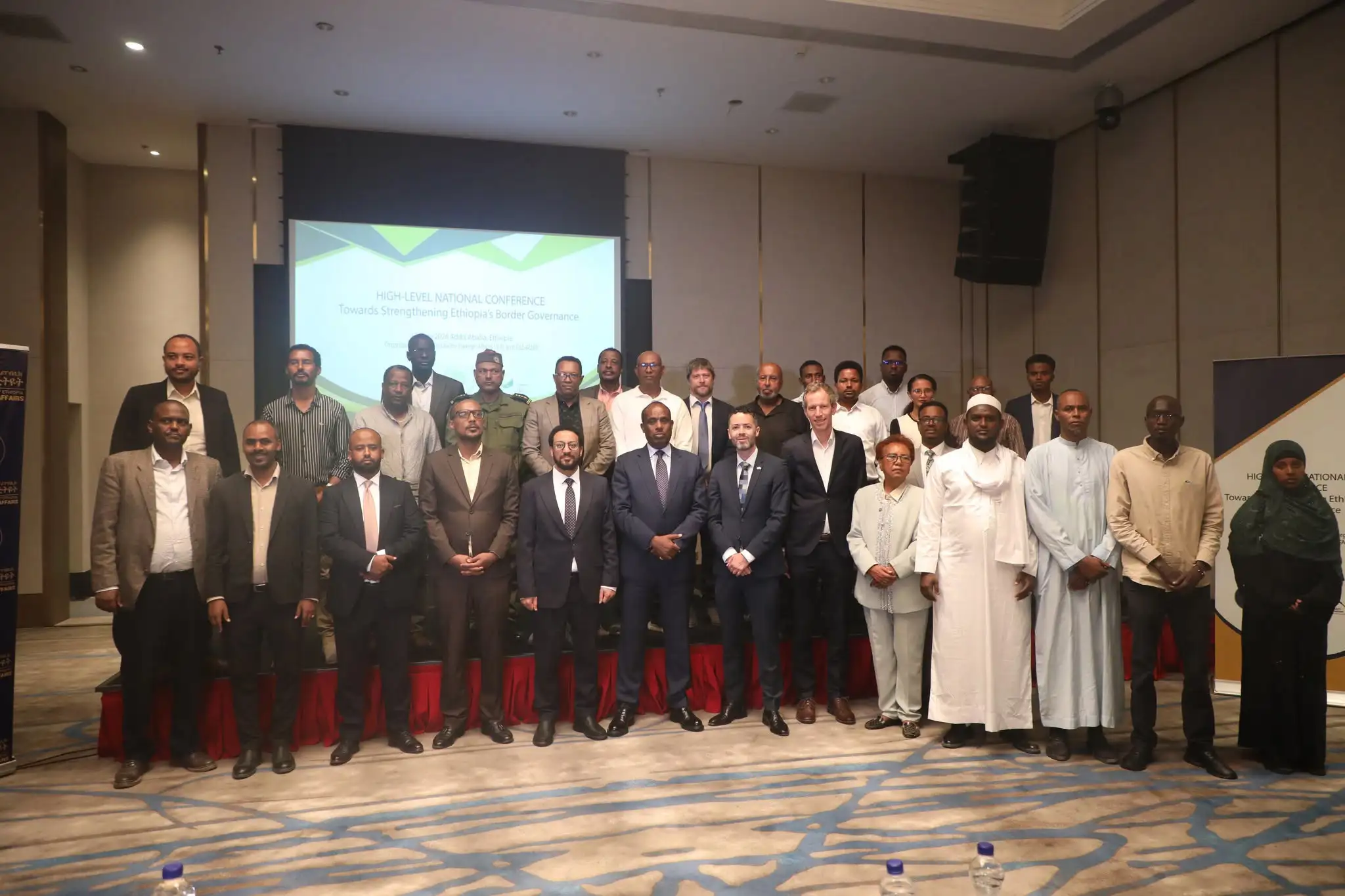
The Institute of Foreign Affairs has announced a significant policy shift aimed at transforming Ethiopia's borders from mere security barriers into corridors for development, shared prosperity, and peace. During a national conference held in Addis Ababa, which centers on a study regarding the strengthening of Ethiopia's border management, the Institute’s Director General, Jafar Bedru, highlighted that the nation is moving away from its long-standing approach of viewing borders strictly as security threats.
The newly approved roadmap introduces a fresh continental perspective that prioritizes neighboring countries and focuses on the development of border regions. Jafar noted that historically, these areas were excessively restrictive for legitimate trade and the movement of people while remaining porous for illegal contraband and weapons smuggling. To rectify this, the new roadmap mandates strict coordination between institutions such as the police, customs, immigration, and regional administrations.
This policy change is rooted in the conviction that Ethiopia’s security and prosperity are intrinsically tied to the stability of its neighbors, with the primary goal of ensuring that legitimate trade routes prevail over illegal networks. A critical component of this strategy involves creating frameworks that benefit local communities, particularly women and youth engaged in cross-border trade.
This transition fully aligns with the African Union Border Program and the principles of the Niamey Convention, reflecting a broader continental move to redefine borders as jointly managed development zones rather than mere symbols of sovereignty. Developed in collaboration with the German development agency and other partners, the roadmap is expected to further integrate Ethiopia with its neighbors through the Intergovernmental Authority on Development and the African Union, aiming to transform every border line into a corridor of peace and shared prosperity.