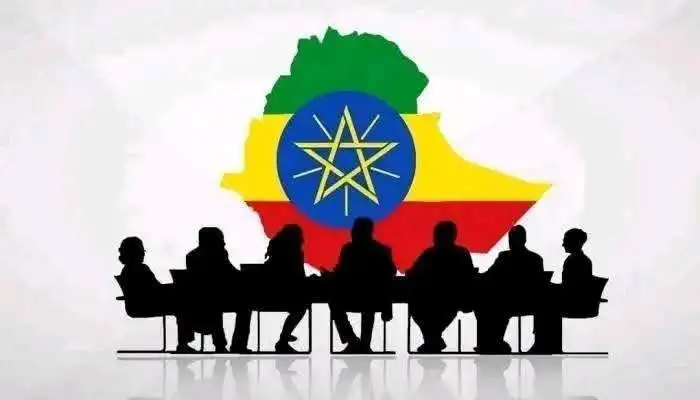
Ethiopia, a nation with a long history of state-building, has endured numerous upheavals and historical fractures. To address these challenges, the philosophy of Medemer (synergy) serves as a foundational pillar, aiming to repair past divisions by learning from previous experiences and correcting errors to foster national consensus. Medemer seeks to move beyond the barriers of extremist and narrow identity politics to build a system based on inclusive intellectual superiority.
At the core of this approach is the belief that war and conflict are destructive "zero-sum games" that result in losses for all sides. In contrast, true dialogue around a table is the only reliable path to ensure every citizen and political force emerges as a winner. Prime Minister Abiy Ahmed (PhD), the architect of Medemer, emphasized this during a forum on April 23, 2023, titled "End War; Let Us Consolidate Peace," stating, "It is better to negotiate for 20 years than to fight for two."
This historic statement serves as a roadmap for the ongoing national dialogue process. The Prime Minister’s position reflects the reality that war causes human, economic, and social devastation in a few days that leaves scars lasting for decades—a fact to which Ethiopians can attest. History confirms that no lasting victory is gained through the barrel of a gun; sustainable peace is only achieved when differences are resolved through discussion and the superiority of ideas.
To translate this principle into action, the National Dialogue Commission has been established. It has completed the extensive process of gathering agendas and identifying stakeholders, and it has set a date for the final deliberations. This platform is not intended to incite conflict by raking up the past, but rather to build national peace by strengthening common values. The government has expressed a firm commitment to accepting and implementing the policy recommendations that emerge from this collective forum, raising hopes for a new era of national understanding.
The existence and continuous progress of a nation depend on the mutual understanding and cooperation of its citizens. While Ethiopia has a long history, various political systems have left behind unresolved societal grievances. Recent memory shows that the past habit of suppressing these contradictions by force—rather than resolving them through dialogue—has left the country at a crossroads. The current national dialogue represents a vital opportunity to correct distorted narratives, address historical scars through forgiveness and truth-based trust, and build consensus on fundamental issues like constitutional amendments and national symbols.
International experience supports this approach. Countries that have navigated major political and societal crises have successfully transitioned to development by conducting similar dialogues. From Rwanda’s post-genocide social reconstruction to the political resolution of the decades-long conflict in Northern Ireland, history proves that lasting peace is secured through negotiation rather than force.
As this dialogue will shape the collective future, it is the civic and national responsibility of every Ethiopian to support the process and contribute to its success. By embodying the values of Medemer—love, brotherhood, and knowledge—citizens are urged to illuminate the light of dialogue to overcome the destructiveness of war and leave a positive mark on the future of a prosperous and united Ethiopia.