By: Kassahun Chanie
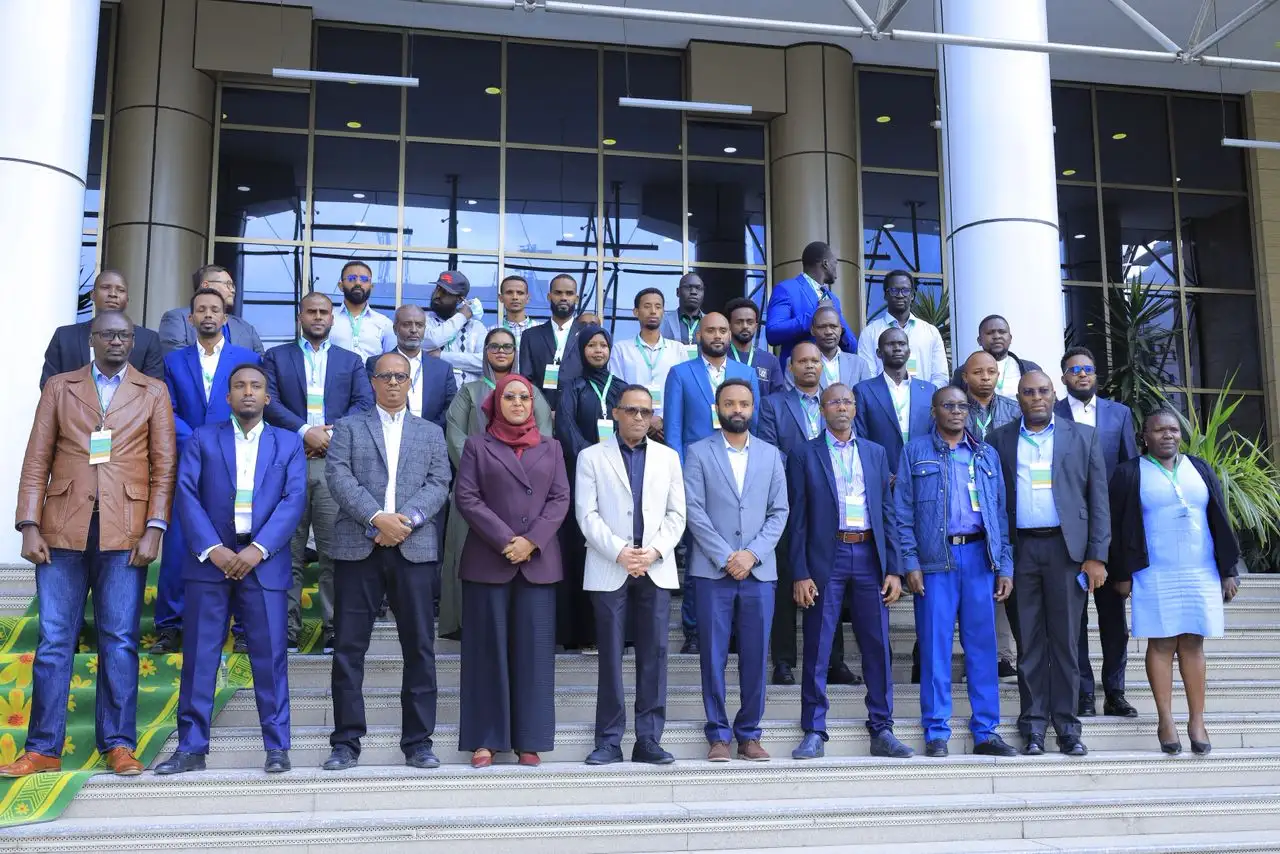
IGAD, the Intergovernmental Authority on Development, in partnership with Ethiopia’s Information Network Security Agency (INSA) and the World Bank Group, opened a five‑day consultative cyber drill at INSA headquarters in Addis Ababa today to test regional incident response, deepen digital integration under the Eastern Africa Regional Digital Integration Project (EARDIP), and bolster cross‑border coordination against sophisticated cyber threats. INSA Director General Tigist Hamid and IGAD Head of Mission to Ethiopia Abebaw Bihonegn emphasised the exercise’s focus on live simulations, capacity building, and information sharing, urging governments, private-sector actors, academia, and development partners to sustain collective vigilance and interoperability.
INSA Director General Tigist Hamid told participants the regional exercise was convened because cybersecurity is now central to national security, economic development and regional stability.
Director General Tigist urged immediate practical cooperation, saying the drill will “test coordination, decision‑making under pressure and mechanisms for timely information exchange,” and recommended that member states institutionalise joint protocols, invest in incident‑response capacity, and expand public‑private collaboration.
She called for broad stakeholder engagement — from universities to businesses — to build resilient digital infrastructure and shared situational awareness across the IGAD subregion.
For his part, Abebaw Bihonegn, IGAD’s Head of Mission to Ethiopia, framed the live simulation as an opportunity to forge trust and professional networks among cybersecurity practitioners, noting that “threats do not respect borders.”
He reported that the exercise will replicate cross‑border attack scenarios to evaluate response chains, identify gaps in governance and strengthen mutual assistance mechanisms. Abebaw thanked technical partners, including the International Telecommunication Union and private firms supporting the simulation, and appealed for continued financial and technical support to institutionalise the lessons learned across member states.
Organisers said the exercise combines tabletop sessions, real‑time simulations and technical workshops aimed at improving early warning, coordinated mitigation and recovery.
The program will cover critical infrastructure protection, secure financial systems, incident forensics and legal‑policy harmonisation.
A World Bank Group representative highlighted EARDIP’s role in financing regional digital integration projects and urged donors to prioritise investments in cyber resilience as part of broader digital economy strategies.
They underscored the strategic link between digital economics and regional integration, warning that unchecked cyber risk could undermine cross‑border trade, financial stability and public trust in e‑services.
On this occasion, Tigist recommended establishing a regional cyber information‑sharing platform, standardised incident classification, and joint rapid‑response teams to reduce response times and prevent escalation. Meanwhile, IGAD Head of Mission to Ethiopia, Abebaw encouraged the creation of sustained training exchanges and secondment programs so small states can build local expertise quickly.
Participants — drawn from IGAD member states’ CERTs, national security agencies, regulators, banks and academic institutions — welcomed the practical orientation of the drills.
Senior officials said the exercise will culminate in a consolidated regional action plan and a set of operational recommendations for harmonised legal frameworks, shared intelligence protocols and public‑private coordination mechanisms.
The IGAD regional cyber drill is part of a broader regional push, supported through EARDIP and development partners, to accelerate safe digital transformation in Eastern Africa. Organisers said the five‑day meeting will produce concrete tools — playbooks, checklists and a proposed regional memorandum of understanding — to be reviewed by national authorities.
Director General Tigist Hamid concluded by urging participants to treat the exercise as the start of an ongoing collaboration: “Resilience requires sustained practice, shared resources and above all, mutual trust,” she said, recommending immediate follow‑up workshops and donor engagement to scale successful pilot measures across the region.