
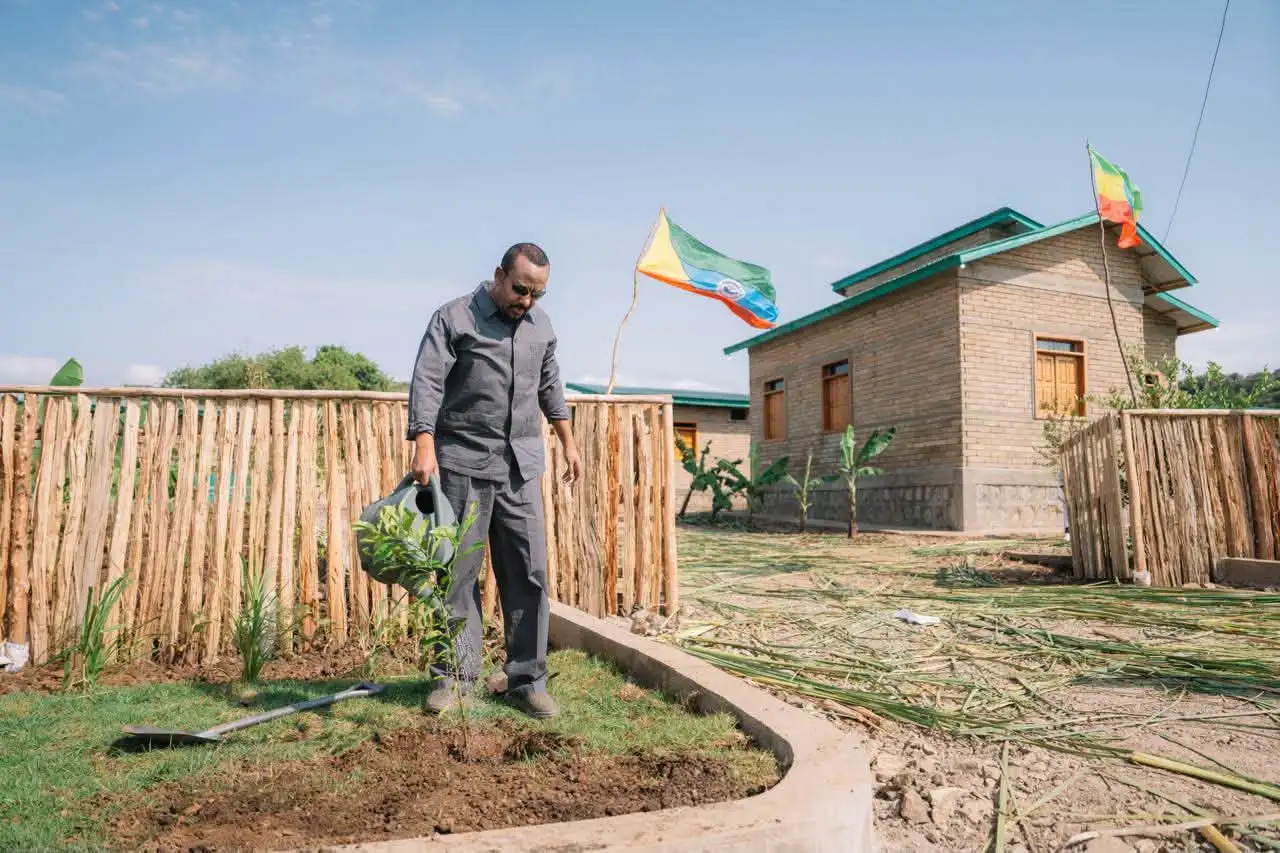
Transforming their banana harvests into fully equipped $10,000 homes, farmers in southern Ethiopia are leading a grassroots rural development movement that Prime Minister Abiy Ahmed (PhD) declares is the blueprint for the nation's future prosperity.
During a visit to the West Abaya Woreda in the Gamo Zone, Prime Minister Abiy highlighted that these high-ceilinged modern houses were constructed entirely by the farmers themselves, independent of government financial aid. Noting that the state's role was limited to providing training and brick-making machinery, he called on the Ethiopian diaspora to support this self-reliance movement by sending the 1.5 million Birr needed for their own families to build similar homes equipped with electricity, televisions, and communication services.
Prime Minister Abiy highly praised the farmers for achieving self-sufficiency by producing a diverse range of backyard products under Ye Lemat Tirufat (Bounty of the Basket) initiative, which includes poultry, fish, honey, fruits, goats, and cows. He emphasized that where there is cleanliness and food, there is health, and where there is an orderly system, peace prevails, asserting that this comprehensive way of life will structurally transform the lives of citizens and elevate the entire country.
Turning to industrial progress, the Prime Minister announced that Ethiopia has successfully substituted its coal imports, which previously cost the nation up to 300 million dollars annually. With the recent inauguration of a fourth domestic production facility, he noted that the country is now meeting local industrial demand and opening up pathways for the export market. He directly criticized past importers who owned factories in South Africa for intentionally undermining the reputation of Ethiopian coal just to sustain foreign imports and prioritize personal enrichment over national benefits.
Prime Minister Abiy stated that domestic manufacturing creates vital employment for thousands of citizens, noting that through aggressive import substitution across sectors like ceramics, porcelain, and cement, Ethiopian industries have produced around 5 billion dollars’ worth of goods this year alone. He concluded by highlighting that newly initiated fruit, yogurt, and milk processing plants around Arba Minch will soon allow the region to export value-added processed products rather than just raw materials, showcasing a highly promising transition toward industrial agro-processing.