
By: Goshu Melisew
Ethiopia should harness modern biotechnology while protecting biodiversity, empowering communities, strengthening indigenous knowledge and ensuring farmers’ participation, ESFSAC says.
Speaking at a consultative forum on biosafety and modern biotechnology, ESFSAC Executive Director Bayush Tsegaye (PhD) said Ethiopia’s technological development should be guided by local realities, scientific evidence and the time-tested knowledge accumulated by farming/pastoral communities over generations.
Bayush emphasized that agrarian communities have long contributed to the food system by selecting, adapting, conserving and exchanging indigenous crops seed diversity.
She called for agricultural research and innovation to recognize and build on this homegrown knowledge, saying farmers should be regarded as knowledge holders and contributors to research, rather than simple beneficiaries of new technologies.
She also stressed the need to strengthen Ethiopia’s national capacity including technical skills, human resources, research facilities, financing and governance before adopting technologies from external sources, not to fall into dependency.
At the same time, she acknowledged that modern biotechnology can offer opportunities to increase agricultural productivity, address pests and diseases, improve nutrition and strengthen resilience to climate change.
She said such innovation, however, must go hand in hand with responsible governance, biosafety safeguards and protection of biodiversity, seed diversity, farmers’ rights and food sovereignty.
On biosafety, Bayush stressed the importance of evidence-based risk assessment, monitoring, transparency and accountability.
She said biosafety should be regarded as an essential component of responsible innovation rather than a barrier to technological progress.
Founder and CEO of Homegrown Vision, Tsedeke Abate (PhD), meanwhile, highlighted the contribution of the Green Legacy Initiative to national efforts to conserve and expand indigenous tree species.
He said the national initiative is contributing to ecosystem restoration while also supporting agricultural productivity and enhancing ecosystem services.
Tsedeke further highlighted efforts to expand the production of resilient food cops (for example enset seedlings), saying this could contribute to strengthening Ethiopia’s food system.
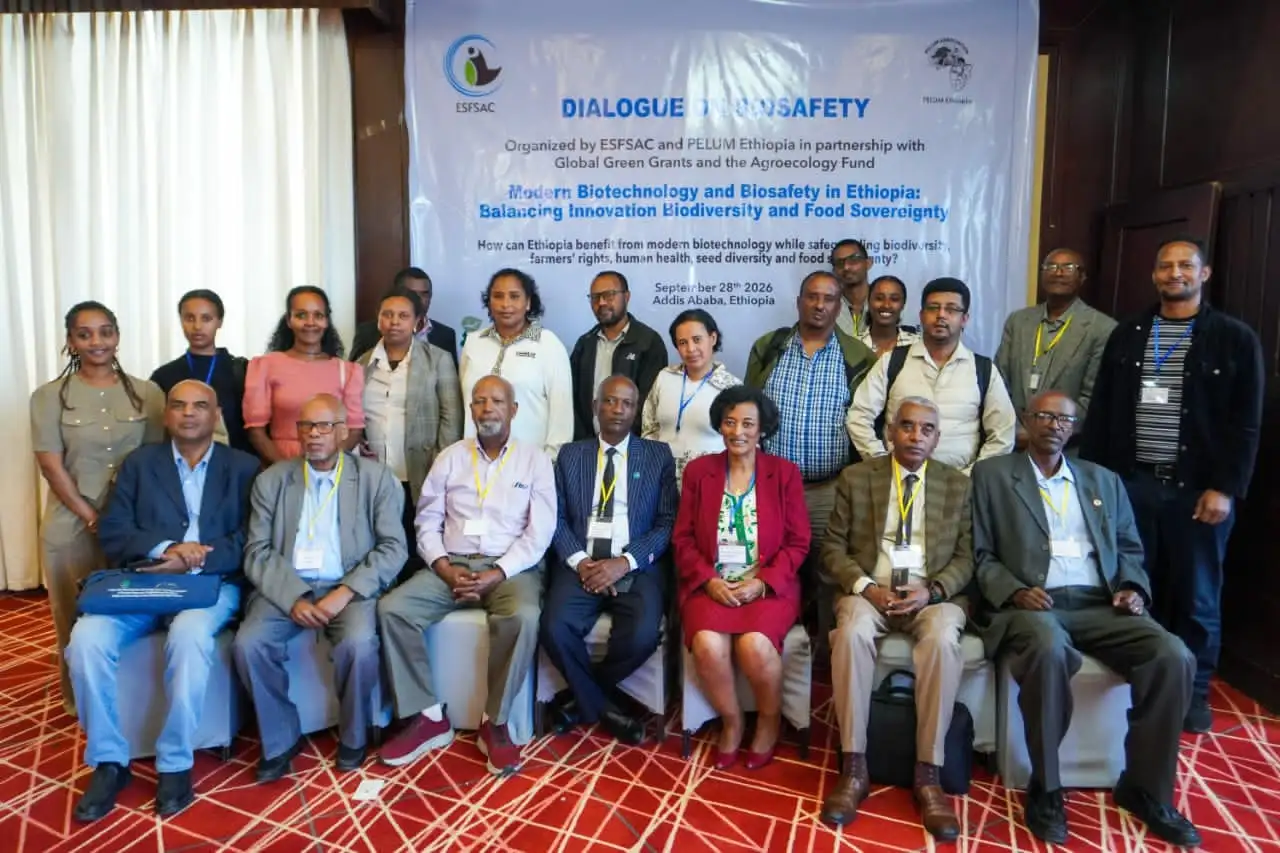
The dialogue, jointly organized by ESFSAC and PELUM Ethiopia, brought together government representatives, researchers, academics, civil society organizations, development partners and other stakeholders.
The discussions examined the opportunities and challenges associated with modern biotechnology, Ethiopia’s biosafety governance and international commitments, as well as practical experiences in using biotechnology, enset processing and value addition.
Bayush said the debate should go beyond positions for or against biotechnology as such, stressing the need for responsible innovation aligned with Ethiopia’s social, environmental and agricultural priorities.
The executive Director called for stronger collaboration among government, researchers, regulators, farmers, communities, civil society and the private sector, alongside continued research and sharing of scientific and farmers’ evidence to strengthen local capacity and support inclusive, evidence-based decisions for sustainable and resilient food systems.