By:Goshu Melisew
The Global Environment Facility (GEF) has called for stronger regional action to tackle climate change and environmental challenges across Eastern Africa.
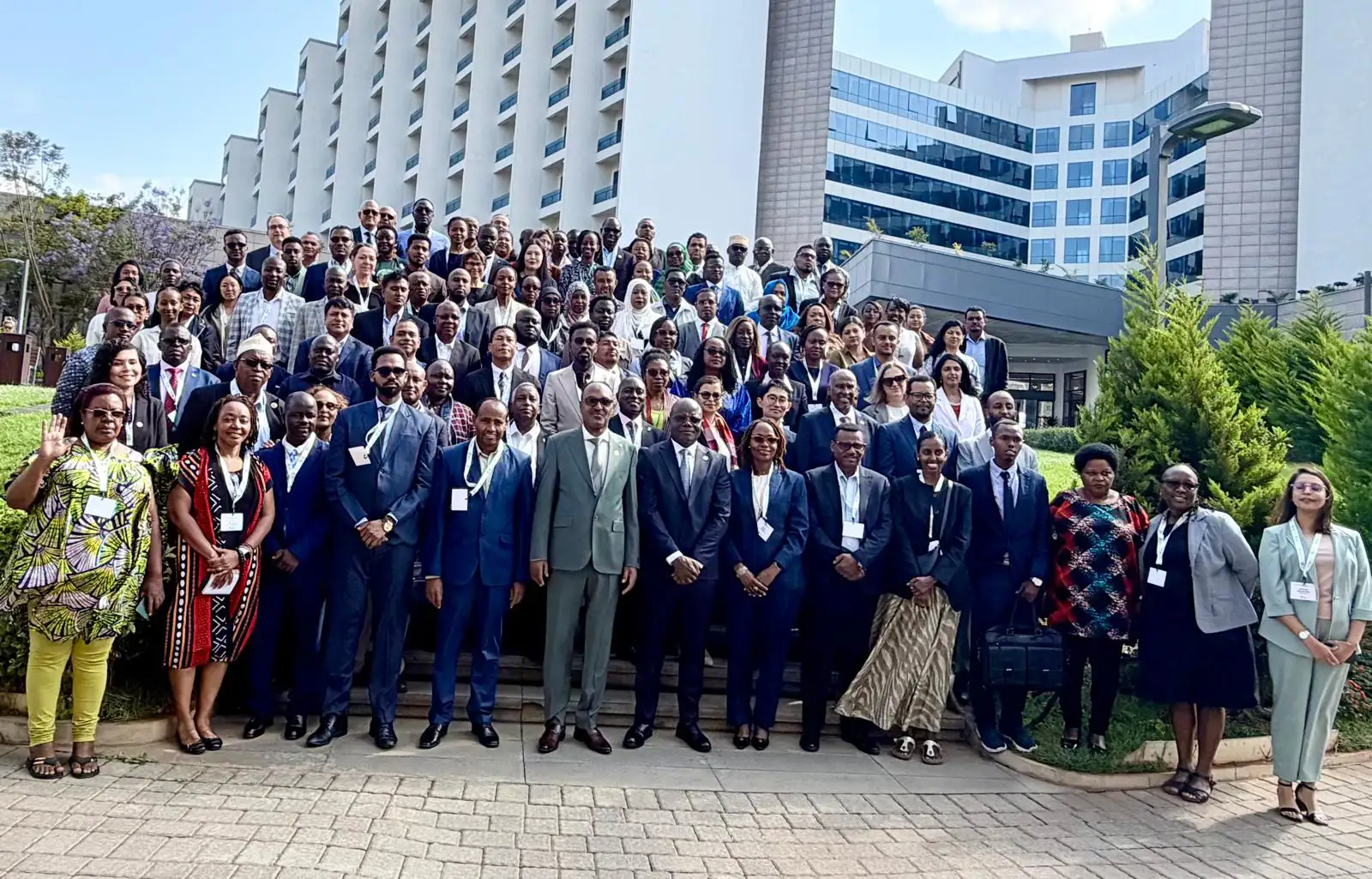
The statement came during the East Africa Expanded Constituency Workshop (ECW), held in Addis Ababa and organized by GEF in collaboration with Ethiopia’s Ministry of Planning and Development. The workshop brought together delegates from 14 countries, including government representatives, regional institutions, civil society actors, and development partners, to promote coordinated environmental action in the region.
State Minister of Planning and Development, Seyoum Mekonen, highlighted that Eastern Africa is facing the full force of the “triple planetary crisis” climate change, biodiversity loss, and pollution manifesting in erratic rainfall, prolonged droughts, and ecosystem degradation that threaten food security and livelihoods.
“The protection of the environment must be central to development planning, not treated as a secondary concern,” Seyoum said.
He noted that while GEF remains a critical financing mechanism, the funding reaching Eastern Africa is still insufficient to meet the region’s mounting climate pressures. He called for faster approval processes and increased financial flows to ensure country-driven, results-oriented projects capable of delivering measurable impact.
Pointing to Ethiopia’s climate initiatives, Seyoum cited large-scale reforestation under the Green Legacy Initiative, expansion of renewable energy including the Grand Ethiopian Renaissance Dam, and policy shifts toward electric mobility as examples of aligning growth with sustainability.
Jonk Tenou, GEF’s Africa Coordinator, emphasized the urgent need for stronger action on climate and environmental challenges in Eastern Africa. Speaking at the workshop, he described the gathering as a cornerstone of GEF’s engagement strategy in the region.
“Eastern Africa is a region of immense environmental value and resilience. Yet it faces interconnected, rapidly intensifying challenges including climate vulnerability, biodiversity loss, land degradation, and pollution many of which cross national borders and require coordinated solutions,” Tenou said.
The workshop aims to help countries engage more effectively and coherently on environmental issues. Tenou stressed that lasting results in the region depend on cross-sectoral and transboundary solutions reflecting shared ecosystems and shared risks. He reaffirmed GEF’s commitment to supporting such collaborative approaches in close partnership with member countries.
“We look forward to working together over the coming days to turn knowledge into action and partnership into measurable results for people, planet, and prosperity across Eastern Africa,” Tenou said.
The workshop runs from March 2 to 5 and is expected to conclude with recommendations aimed at strengthening Eastern Africa’s collective engagement with global environmental financing mechanisms.