
By: Fistum Getachew
When Ethiopia celebrated the 130th anniversary of the Victory of Adwa what came out distinctly in all the speeches of the high government officials in attendance including President Taye Atske Selassie was the focus and emphasis of Ethiopia’s relentless efforts to secure its right to sea access. As much as the epic victory of Adwa was a game changer in the history of Ethiopia, it is now time to record another Adwa beginning by securing sea access, it was underscored.
It was remarked that Ethiopia has always recorded victories when it acted in unison with all its nationals as it did on the occasions of the invasion of its territory by alien forces. Without such concerted efforts Adwa would never have materialized. Adwa hence can be described as the result of strong unity, cohesion and resolve, a result of unrelenting commitment, courage and bravery. Historical documents show that this has been a constant of Ethiopian history. Across centuries Ethiopia had to foil so many invasions and aggressions against its territorial integrity and sovereignty. It managed to repel them with the unity of action by its nationals paying all the sacrifices the circumstances have dictated.
Many observers say Ethiopia’s right to sea access is not only a geographical imperative but also a natural right that Ethiopia was deprived under hardly justifiable geopolitical circumstances. It happened when Eritrea seceded from Ethiopia becoming a new reality. It was then decided to grant it the port of Assab without any deliberations around such very crucial and consequential move by all concerned parties. It was a speedy and unjustifiable, unilateral act of a provisional government that did not even enjoy full and legitimate representation and hence authority to decide on the fate of a country which just came out of challenging and protracted intestinal battles.
It is worth pointing out the well-known historical fact since days immemorial that Ethiopia and the Red Sea are hand and glove and cannot be dissolved arbitrarily by the whim and caprice of any force. It would be a huge blunder for Ethiopia to renounce to its legitimate and historical right to sea access just because certain forces wanted it realized in collaboration with its historical enemies.
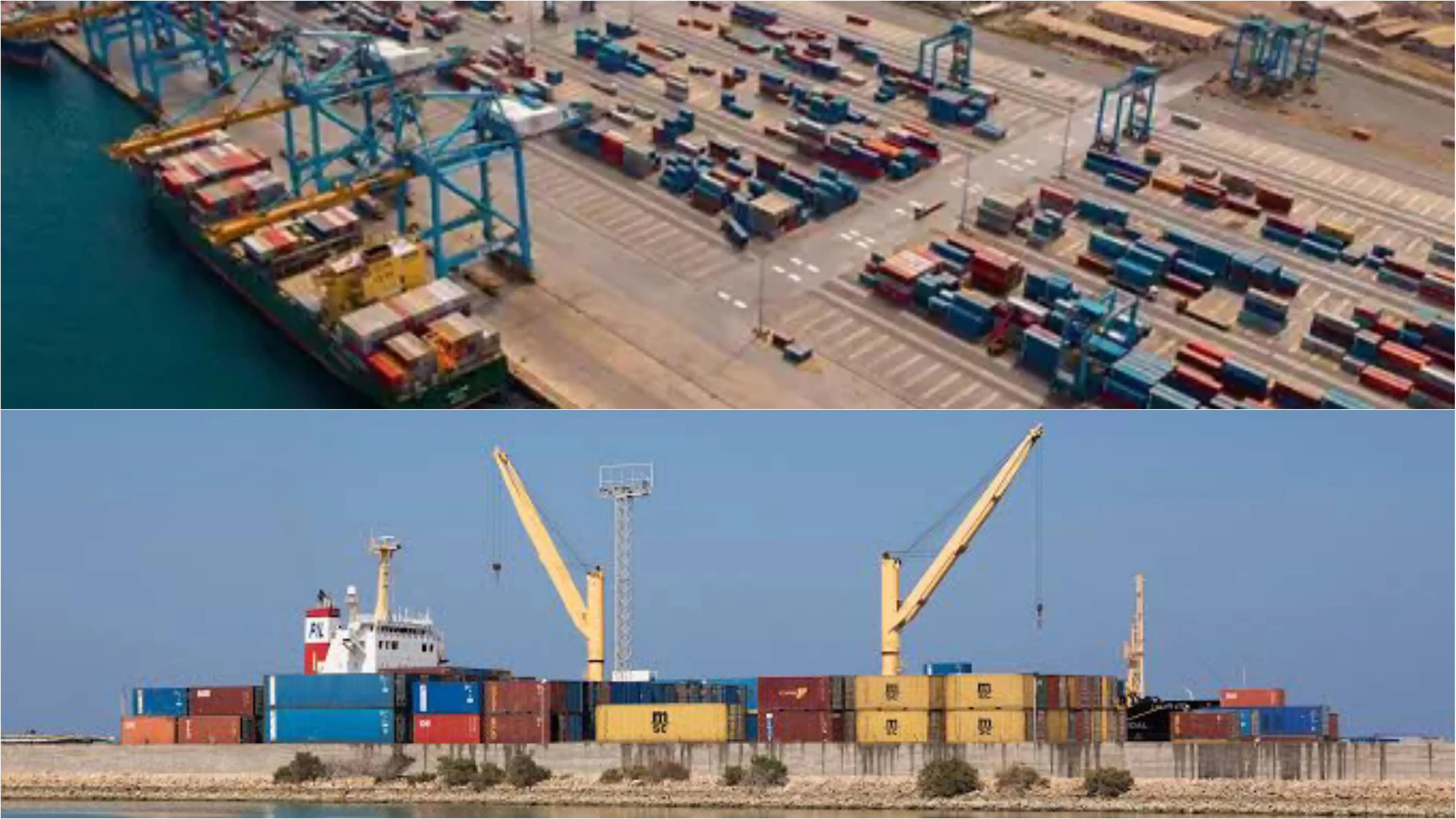
It is both inconceivable and unconscionable to imprison more than 130 million people in to a landlocked situation when it is just a few kilometers away from the sea. What is more, the International Law of the Sea provides that all landlocked countries have the right to sea access with the necessary arrangements made between the landlocked country and the one which borders the sea and the landlocked state. There are more than 40 landlocked countries in the world but most of them have managed to arrange for access to sea based on the International Law of the Sea and diplomatic arrangements. For a country such as Ethiopia it should be relatively easy to come to a certain arrangement with its neighbours based on the principle of give and take.
It is clear that Ethiopia could not sustain the momentum of its growth and adequately provide for its 130 million people in constant expansion if it is underperforming economically because of the major hurdle of lack of sea access. Its contacts with all its clients in the international sphere are forced to be limited due to such status. It would also lose so much in terms of investment advantages because investors want easy access to transport their products freely across continents. Evidently Ethiopia cannot be expected to rely on the ‘charity or generosity’ of other states which may grant it the service of a port. But inevitably this is not a scenario where there are no limits to its liberty of importing or exporting the desired products and material. For instance those who grant access to a port service on a rental arrangement may impose restrictions on the import of armaments or any other material the port owner may deem too sensitive to let go.
Under similar circumstances Ethiopia may be required to ‘declare’ whatever it trades with any client and this can constitute a serious security issue. Any sovereign state would hardly feel comfortable to live under similar circumstances. That is why Ethiopia, living in a highly volatile geopolitical surrounding, cannot afford to expose itself to huge security problems which are easily susceptible of grave repercussions on its freedom, independence and even survival as a free state!
Hence, Ethiopia needs access to sea not only for economic reasons but also for its vital national security purposes. When we see that so many countries which are far away from our sub-region desire to have access to the Red Sea area, why should it be considered a scandal if Ethiopia claims a right to the same area? Given the recorded historical attachment between the Red Sea and Ethiopia, it is natural to want to recover the right to access it. Since time immemorial Ethiopia has used access to Red Sea just as part of its sovereign territory and only under dubious and unjust circumstances did it lose this right about three decades ago!
For the last thirty years Ethiopia has been landlocked and this has cost it tremendous amount of money in foreign currency with a huge impact on its economy. This has resulted in a massive burden to the economy of the country felt even by citizens. That is why Ethiopia should demand the realization of a situation in which it will be entitled to its own right to sea access on the Red Sea.
During the celebration of the 130th anniversary of Adwa, one of the principal points that had attracted the attention of Ethiopians was the way President Taye Atske-Sellasie gave utmost emphasis on the country’s quest for access to sea and that it was making good progress in the endeavour. After admiring the huge historical significance of the Victory of Adwa as a result of the heroism and patriotism of Ethiopians who united under one banner, so should it now work incessantly to secure the right to sea access in a diplomatic and peaceful manner. Ethiopia should make its case vehemently and argue that sea access for it is not a privilege or a luxury but a matter of necessity which is linked even to its existence and the current situation cannot let it gamble on it. The president said Ethiopia has been undertaking several diplomatic moves for quite a long time and there are encouraging developments. The president added that securing access to sea for Ethiopia would be considered as another modern day Adwa.
President Taye also underlined that Ethiopia will and should do all that it takes to reach a situation in which it will have sea access. This will be a guarantee for the country to proceed with its trajectory of growth and development. Studies have shown that being landlocked affects the economy of a country in the negative by up to 20% which is enormous. President Taye said that for Ethiopia securing access to sea is currently the principal agenda and priority number one. For this to succeed Ethiopians need to come together and show full unity and resolve just as has happened on the occasions of any sort of alien aggression and record another Adwa.
President Taye further stressed that commemorating Adwa goes beyond recalling the sacrifices made to defend sovereignty. It also requires embracing the broader vision that followed victory.
Citing historical records, Taye noted that after Adwa, a key diplomatic priority was securing ownership and reliable access to a sea outlet as a gateway to global engagement.
He said, “What we seek today is not a new or foreign agenda, it is a continuation of that historical path and trajectory.” He emphasized that sustainable and reliable sea access is inseparable from the sovereign trust handed down by the martyrs of Adwa, describing it as an enduring national reality that cannot be erased even if neglected. “At moments when we failed to see tomorrow, we handed over strategic interests under political illusions,” he said.
Adwa, he added, teaches that decisions on vital national matters must align with the right side of history and serve long term national goals. The military victory secured at Adwa, he continued, must now be matched by economic and geopolitical achievements.
The president reaffirmed Ethiopia’s pursuit of sea access and underlined that the quest is grounded in national interest and framed by peaceful and cooperative engagement. He said, “Our path, our aspiration and the backdrop of our journey are peace and mutual growth. Our sea access question must be understood as a matter of history and justice, not merely a demand of this era, but an existential issue for this generation.”
Ethiopia needs sea access more than ever before in order to sustain its rapid economic growth and provide adequately for its rapidly increasing population. It is evident that Ethiopia is undergoing fast transformation and to keep up with this trend the issue of access to sea should be unequivocally settled once and for all. This is not to be neglected nor postponed for another day. It is now Ethiopia’s prime agenda that needs to be addressed sooner than later.
Access to sea for Ethiopia will have several positive repercussions not only for Ethiopia but also for the one that grants the access. There will be clear economic benefits for both parties. Ethiopia’s growth will positively affect the neighbouring countries through more sustained exchange of goods and services. This will be a further stimulus for the economies of the countries in the region. This is also in conformity with the Agenda 2063 of the AU and the African Continental Free Trade Area (AfCFTA) which aims to eliminate tariffs on 90% of goods and reduce non-tariff barriers to boost intra-African trade, foster industrialization, and enhance economic integration.
Ethiopia’s role in the quest for the unity and peace of Africa has always been remarked and commended. Access to sea for Ethiopia is a positive step towards the expansion of economic integration and hence another step towards full integration.
By any parameter or standard there are no plausible justifications for Ethiopia to be permanently deprived of access to Red Sea. All international conventions, pacts and treaties support its stance. Various countries have openly argued in Ethiopia’s favour in its bid to secure such access in a diplomatic and peaceful manner. They say Ethiopia has the right to sea access because it does not inflict any damage to its neighbours and there are no indications that Ethiopia’s access to sea will have negative repercussions on its neighbours. On the contrary, it rather strengthens the relations between the two adjacent parties and the people to people ties to a higher level.
According to President Taye, Ethiopia is now on the right track to reach its goal of securing sea access through diplomatic and peaceful means. Negotiations are underway and there could be a breakthrough soon. This will eventually be ‘another Adwa’ for Ethiopia. It has been repeatedly argued that Ethiopia should not continue to live without replicating Adwa with other victories in the economic and diplomatic spheres. Many have described the success in the realization of the massive hydro dam project on the Abbay River, the Grand Ethiopian Renaissance Dam, GERD, as another Adwa because it became reality only after toiling and overcoming repeated diplomatic and economic hardships and obstacles, against attempts to sabotage it from multiple fronts in a voyage that lasted 14 long years. Similarly, regaining access to sea for Ethiopia could be considered as another exploit of similar magnitude. Adwa should not be confined to history books only, but be an incentive to record more successes and glories for Ethiopians. The spirit of Adwa should continue to record further achievements and successes.