
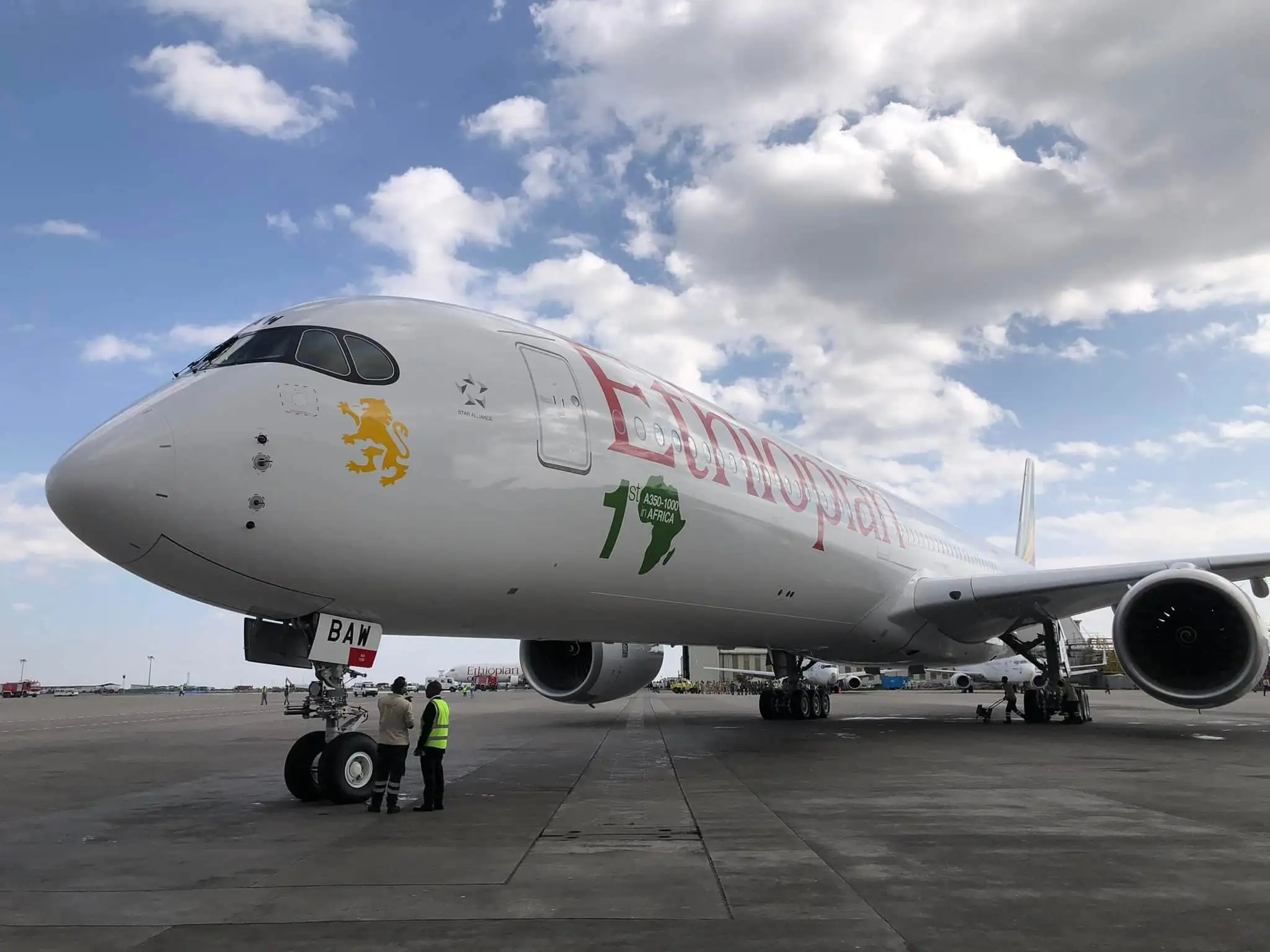
Ethiopian Airlines celebrated its 80th anniversary yesterday, marking eight decades of a transformative journey that evolved from a small commercial operation into a global aviation powerhouse. Since its inaugural flight on April 8, 1946 (Megabit 30, 1938 E.C.), the carrier has become a symbol of African resilience and a pioneer in the continent's aviation history.
A Legacy of Expansion
The airline’s operations began with a single DC-3 aircraft flying from Addis Ababa to Cairo via Asmara. Today, the carrier has expanded its reach across five continents, serving 135 international destinations and establishing itself as the largest and most reputable airline in Africa.
Historically, the airline was a leader in continental connectivity, linking East and West Africa in the 1960s and becoming a pioneer by connecting Africa to China (Shanghai) in 1973. By the 1990s, the airline successfully expanded into the Americas, including New York and Washington D.C., while strengthening its presence in Europe, Asia, the Middle East, and Latin America.
Pioneering Modern Aviation
Ethiopian Airlines has consistently led the continent in fleet modernization. Its record of "African firsts" includes:
The 1960s: Introduction of the Boeing 720, the first jet service in Africa.
1984: Introduction of the Boeing 767, bringing digital aviation to the continent.
2012: Delivery of the Boeing 787 Dreamliner, making it the second airline in the world to operate the aircraft.
2016: Becoming the first African operator of the Airbus A350.
The airline currently manages a fleet of over 150 modern aircraft, with a strategic plan to take delivery of 117 additional planes over the next seven years.
Building National Capacity
A key driver of the airline’s success has been its commitment to self-sufficiency. The Aviation Academy, established in the 1950s and transitioned to full Ethiopian leadership by 1971, has evolved into a comprehensive Aviation University. It remains the backbone of the institution, training the next generation of pilots, technicians, and leaders.
Furthermore, the airline’s Maintenance, Repair, and Overhaul (MRO) facility has achieved full technical independence, capable of maintaining its modern fleet using internal expertise and technology.
Global Competition and Strategic Vision
The airline’s global stature was further solidified in 2011 by joining Star Alliance, the world’s largest airline network. Following its merger with the Ethiopian Airports Enterprise nine years ago, the carrier has overseen major infrastructure expansions at Bole International Airport and various domestic hubs.
Driven by the "Vision 2025" strategic roadmap, the airline has achieved rapid, profitable growth, positioning itself as a fierce global competitor. As Ethiopian Airlines celebrates 80 years of service, it remains a model of institutional excellence and prosperity, committed to maintaining its leadership in African aviation and flying the Ethiopian flag high across the global skies.