
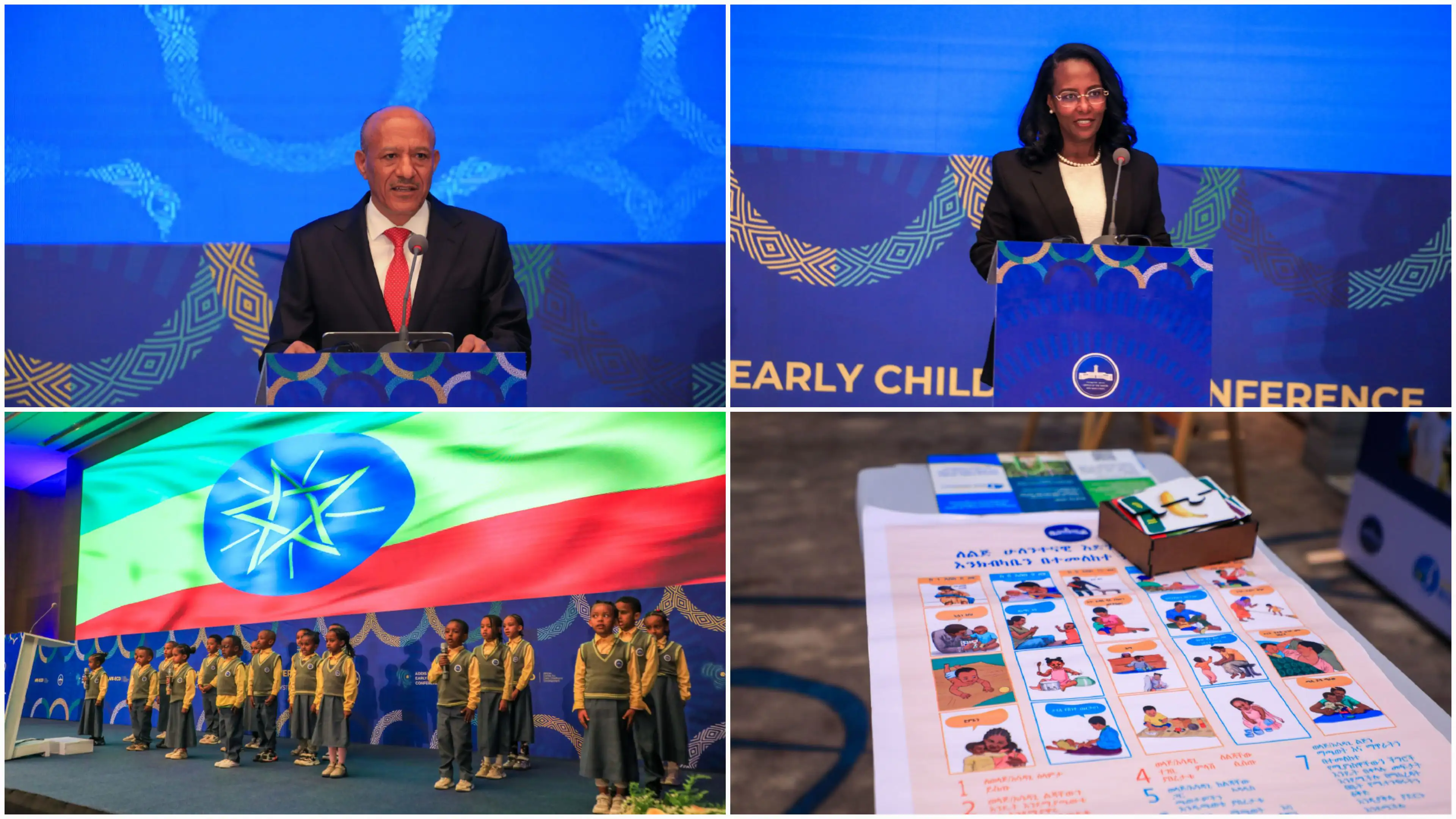
Addis Ababa has expanded its childcare infrastructure from 11 to 1,100 centers in just three years, signaling a multi-billion birr shift in Ethiopian policy to prioritize its youngest citizens as the engine of national growth. Speaking at the International Early Childhood Development Conference, Mayor Adanech Abiebie and Deputy Prime Minister Temesgen Tiruneh revealed that the "Hopes of Tomorrow" initiative now supports 1.3 million children under the age of six, boosting primary school readiness from 49% to 90%. This transformation supports the city’s vision to become the "Best African Capital for Raising Children," a mission backed by the creation of 5,000 new playgrounds and the employment of 5,000 professionals who provide door-to-door counseling for 330,000 vulnerable families.
The program’s reach extends into the healthcare and education sectors, with integrated childcare services now available in all government hospitals, while pre-primary students receive school feeding twice daily alongside free uniforms and educational materials. This massive expansion has simultaneously created over 7,700 jobs for caregivers. Deputy Prime Minister Temesgen confirmed that this metropolitan model is now the blueprint for a national rollout, with a formal system established to scale these strategies across all regions.
To anchor this national vision, the newly established Africa Early Childhood Development Center in Addis Ababa will act as a hub for the technical and scientific data required for policy-making. Nationally, the government has operationalized 35,000 pre-primary schools and amended the Education Proclamation to make early education both free and compulsory. These milestones are paired with the "Sekota Declaration", a roadmap aiming for zero stunting in children under two by 2030 and "Corridor Development" projects that build village-level sports and green spaces. By embedding childcare into the fabric of urban renewal, Ethiopia is proving the principle that a city fit for children is fit for everyone.