By: Fistum Getachew
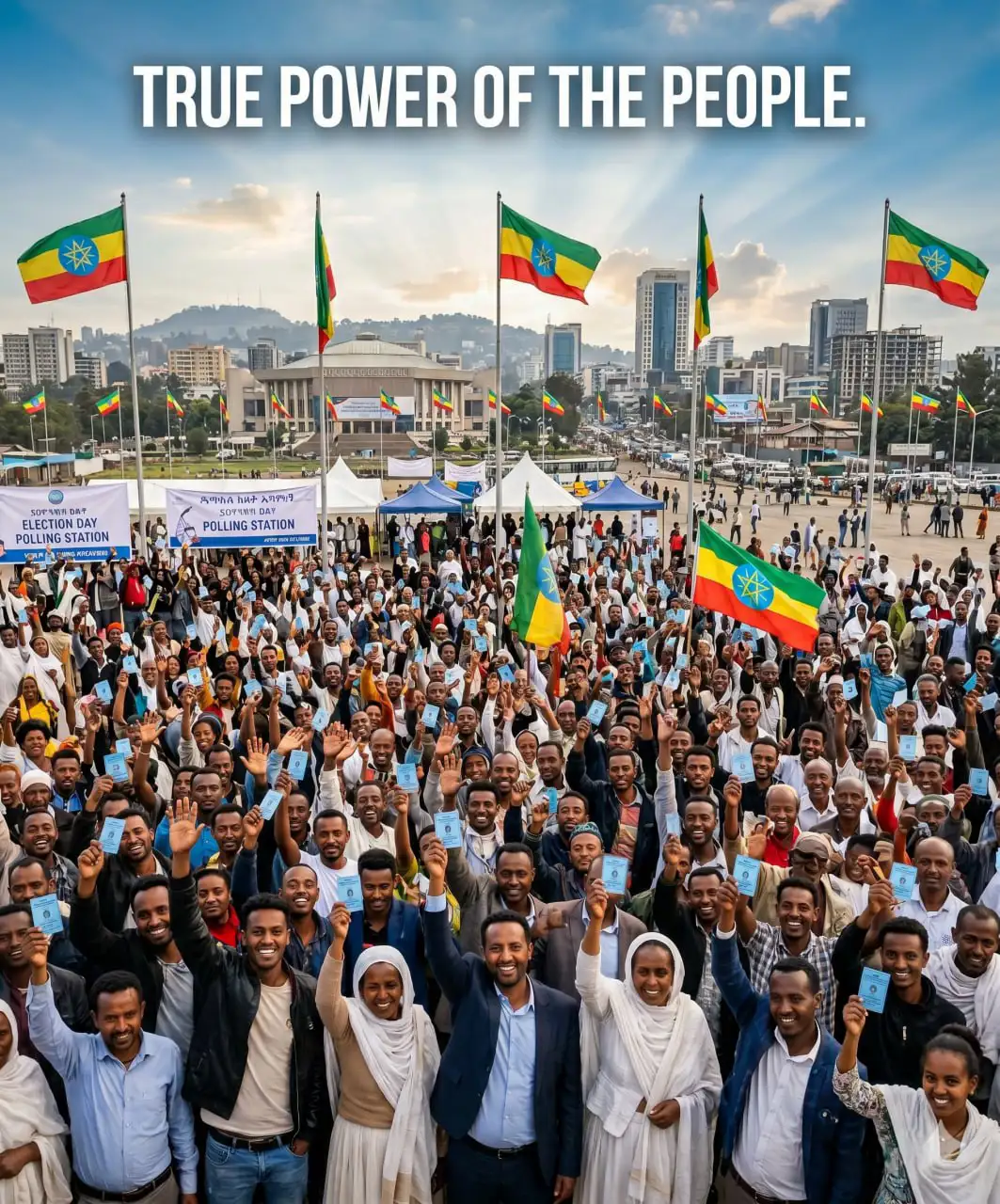
Ethiopians have been waiting for the 7th General Elections for months, and on June 1, 2026, they came out in droves to elect their new legislators for the coming five significant years. They showed the realization that these elections will give answers to so many of their questions regarding the immediate and long-term destiny of their country and did not miss this opportunity of casting their vote for whom they believe will better represent them in government.
These elections have special significance because they will also decide the kind of image foreign countries have of Ethiopia and the level of popularity and acceptance of the reformist government that took office eight years ago among Ethiopians. It is also an opportunity for the government to show how much the election is carried out in a fair, free, and transparent manner in front of scores of international observers such as the AU and IGAD as well as scores of Ethiopian civil society organizations.
Clearly, there are many forces both at home and beyond who would like to see that the democratic process in our country is not what the government has been sustaining it to be. We have seen that tendency also during the last general election four years ago. There were few international media that had many positive things to say about the election and the way it was conducted while millions cast their votes in an atmosphere of peace and stability despite the fact that we and the world at large were not yet out of the COVID pandemic crisis.
We remember that the election was allowed to be carried out after the situation was thoroughly assessed by the Ethiopian Ministry of Health and that it had determined that the polls could be held without any dangers. Presumably there are indications that there could be some forces who would like to see the current government fail the test in the elections so that they can have an easier way or the pretext to interfere in the internal affairs of Ethiopia! As things stand now on the international scene, these are very tense years where there are conflicts around the Middle East and the geopolitical fever is very high. Naturally, Ethiopia cannot be indifferent to these fast-evolving situations because, in a way, its peaceful existence could be jeopardized by deep and long-lasting adverse economic situations because, without dependable peace, the sea routes around the Red Sea and the Horn of Africa could submit to the fallouts of the crisis. The fact that Ethiopia still does not own its own ‘free space’ around its coast in the Red Sea area makes it even more vulnerable to the potential negative consequences of the crisis in the Middle East. We have noted that, unfortunately, international trade has been hampered by the US-Iran confrontation.
A government that has a full and unequivocal mandate from the people through this election could discourage all the negative propaganda spread by certain forces that the incumbent is not supported by the people. In this sense the outcome of this general election will be very significant and consequential. The government is, of course, confident that it will have the full support of those who have gone to the polls and receive the necessary endorsement of its works. In fact, there were very long queues of electors who were engaged in casting their votes, and this was a demonstration that the people realize the importance of the elections and do not take things for granted. The enthusiasm for the election was amazing!
People do realize that there are several challenges not only internally but also externally, as they do have a good image of what is going on in our neighborhood in terms of the geopolitics of the times. But a strong endorsement, a strong backing to the incumbent to continue to face and overcome all the challenges of the times, is crucial, and Ethiopians do know this reality.
Ethiopia’s status at the international scene, Ethiopia’s image among African nations has been rising up steadily in the past years since the advent to power of the reformist government led by Prime Minister Abiy Ahmed (PhD) and company. The change of leadership has changed many things in the eyes of the international community with all the reforms and progress that the country has been achieving, and the hope of millions is that this trajectory should continue unabated despite all the challenges that we could face in the process.
The diplomatic status that Ethiopia has achieved during the past few years has helped it create a new and fresh status that has been risking to fade because of many questionable moves the previous governments used to take.
We can easily observe that no one can deny the kind of prestige that Ethiopia has managed to attain when, for instance, the completion of the flagship project of the Grand Ethiopian Renaissance Dam—GERD—was announced to the world. The dam was inaugurated with all the pomp and fanfare that was worth it in the presence of heads of state of neighboring countries, the leaders of friendly countries, and allies of Ethiopia who admired this historical exploit that a developing country such as Ethiopia has managed to achieve. The completion of this massive project that many countries had thought would never see the light of day may have created disappointment among those who would not like to see Ethiopia change and become a force to be reckoned with in the African geopolitical reality and context.
A vast country with more than 130 million people and immense still undiscovered and unused potential in terms of natural resources is definitely destined to have a strong say in international affairs if it develops its economy to the extent that it acquires self-reliance and does not rely on foreign aid, as the efforts of this government are directed to that objective. We have heard several times from the prime minister that a country or a people who are not self-sufficient and continue to ask for foreign aid for their survival cannot call themselves 'sovereign.' They are prone to continuous interferences and conditioning, and that cannot be accepted by Ethiopians.
A nation like Ethiopia, which has a glorious history of independence and freedom from foreign submission, cannot all of a sudden surrender its sovereignty to any external force or influence, and everything it is now engaged in is to reassert its independence by not depending on others’ wishes and desires at the expense of its sovereignty. Understandably, this effort needs to be exerted for years to come, but there is hope that this objective could be attained if we have the strong will of the people to support the incumbent in its programs and projects.
There are many who would like to condition Ethiopia so that it does not feel completely sovereign and independent and have its say in international affairs. The GERD project gave light to Ethiopians and to neighboring countries that have requested cheap and clean energy. Such a state of affairs has shown to the world that Ethiopia was not to be tampered with easily and discouraged from trying to achieve its development objectives as if it were an ‘insignificant’ country in the international sphere.
The old image of Ethiopia, depicted as one with continuous internal fights, conflicts, drought, and people suffering from famine, etc., was somehow erased with the brush of the GERD and other recent developments in Ethiopia. We all know the path of completion of the GERD was not only one of financial shortcomings but also diplomatic brawls with downstream countries and those allied with them following the wrong image that opponents of the dam disseminated. It was a matter of sovereignty as well. There were even uncalled-for intimidations and menaces against Ethiopia if, indeed, it went ahead with the project without allowing downstream countries to be ‘co-owners or co-managers’ of the dam once it is finished!
Many were observed arguing that Ethiopia would never be able to complete such a huge project on its own given that there were no countries or international financial institutions that were willing to facilitate or support the project. The fierce opposition to the construction of the dam by downstream countries had its decisive role. Certain forces had tried to put their negative influence by helping and arming certain so-called opposition groups in Ethiopia that were dissatisfied with the incumbent. Evidently their interests were affected by the measures the government took to lead the country to another level following the adoption of widespread and radical economic and political reforms.
Another prestigious moment for Ethiopia was the triumph that Prime Minister Abiy Ahmed (PhD) attained in 2019 when he was crowned with the Nobel Peace Prize that somehow galvanized the image of the country as a peacemaker and peace guardian involved in many diplomatic ventures in search of peaceful moves such as ending the more than two-decade stalemate of ‘no peace no war’ with Eritrea and the efforts of the Ethiopian premier exerted to contribute to stopping the violent conflict in South Sudan. This award conferred on the premier at the international level has brought a new light to Ethiopia’s status among nations of the world, a glorious moment cherished by Ethiopians and friends of Ethiopia.
What is more, the country has been carrying out certain huge game-changing ventures, such as the Green Legacy Initiative, during which more than 50 billion tree seedlings were planted, and this exploit has helped it acquire the right and privilege to host the upcoming COP32 in Addis Ababa, which will put the country in the eyes of the storm once again in a positive way. Besides, Ethiopia’s continuous successes in economic reform have awarded it the recognition and confidence of the IMF and other international financial bodies, helping it in the move to continue carrying them successfully.
It is clear that there have been several challenges that the current government and the country as a whole have had to cope with, including the internationally experienced huge crisis of the COVID pandemic, the various climatic conditions that had to be overcome in order to go ahead with the projects of the nation, and the attempts by internal and external hostile forces to create obstacles for the country on its economic development trajectory.
The negative campaigns and falsehoods carried out on social media to tarnish the image of the country were also another factor that can be added to this equation of challenges. However, all the same, the stride of the country towards progress has continued unabated also because there have been strong reforms in the establishment of independent institutions such as the National Electoral Board, the Ethiopian Human Rights Commission, the tremendous progress attained in the field of innovative technology, and the introduction of the country to the digital world by transforming the country towards a new level of economic transactions and other day-to-day affairs.
To sum up, the importance of the outcome of the results of this general election will also determine the path the country will adopt in its programs. One important point to note is Ethiopia’s quest to secure access to sea so that it can have its say in the Horn of Africa and be able to assert its strategic interests. In this sense, the overwhelming endorsement of Ethiopians through the election results will be crucial towards the end of negotiating with neighboring countries, in a peaceful and diplomatic manner, access to the sea for Ethiopia. It will also be another force that can convince the international community to support it in this bid for access to sea.
That is why the ‘full mandate’ of the public secured through the ballot box results will be pivotal and discourage all those forces who do not wish to see a strong and prosperous Ethiopia with the say and influence it deserves to secure in the international arena.