By: Fistum Getachew
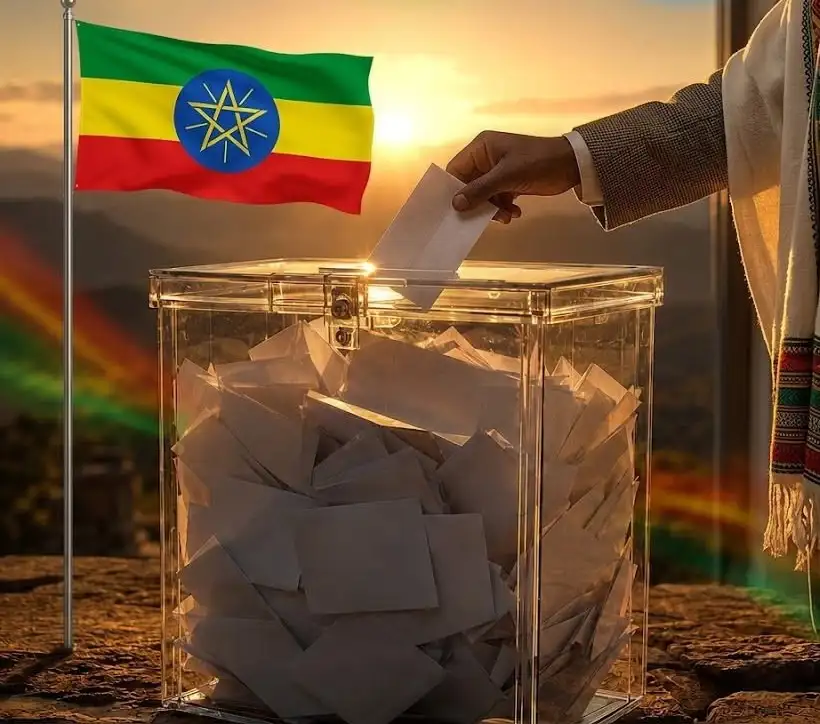
Ethiopians showed once again that they are ready to exercise and cherish their democratic rights without any hesitation and doubts. Anyone who saw what has happened on Election Day on June 1 will not have any doubts about that. Voters were lined up from the very early hours of the day up to late in the evening to be able to exercise their rights without running any risks of missing the chance due to lack of time. Monday, June 1, 2026, can hence be considered a ‘festival of democracy,' another important chapter in the modern history of Ethiopia, another milestone.
It is well known that Ethiopians are not new to similar democratic practices, but being a country of more than 130 million people today, with about 70% youths under thirty years, there were this year millions of youths at their first exercise of voting in a general election. All those who did not have the chance of electing representatives during the last six elections have this time enjoyed voting for the candidates they preferred, taking into account the records of the parties and individuals in contention.
The National Electoral Board of Ethiopia has declared that more than 54 million voters have taken their registration cards, where 42 parties vied for seats in both the House of Peoples' Representatives and for the regional states as well as city administrations at more than 50,000 polling stations. The Board has stated that more than 10,000 candidates have presented themselves for the seats to be filled through the votes of the people.
At the polls for the House of Peoples Representatives, there were twelve candidates representing twelve parties or independent candidates and more than 100 candidates for the Addis Ababa City Council. Each elector or voter had the right to vote for only one candidate for the House of People's Representatives and up to a maximum of 27 individuals to select from the over 100 candidates for the city administration.
The meticulous preparation of the National Electoral Board was evident as there was all the necessary staff to facilitate the smooth undertaking of the polls. In the polling station of my constituency, where I cast my vote, I witnessed the large crowd present to vote, patiently waiting for their turn. There were many staff, presumably of the Election Board and the City Administration, who were politely engaged in guiding the voters to the area where there were three or four people, staff of the Electoral Board verifying the identity of the voter in line or conformity of the registration process and allowing them to proceed to voting. People with particular conditions, such as people with disabilities, expectant mothers and those carrying babies, people who have some sort of health issues, and the elderly, were gently given priority to vote and go back home. We have seen people who came from their beds being sick but did not want to lose their right to vote.
The photos of each of the candidates are exhibited on each voting card so that people cannot get confused for whom they cast their vote. The emblems of the parties are also clearly depicted next to each candidate, including the party for which they work. Explanations are given to the voters before they decide for whom to vote so that they understand the procedure and not commit errors in the process that could invalidate their choice. So the electors are advised to tick beside the pictures of each party or individual vying for a seat.
The operation of casting the vote for each elector did take some time, and that has caused some delay in the overall activity. But the patience of the voters was remarkable because no one abandoned the place without voting. In the end, seeing how the process was taking more time than predicted, the Election Board communicated to the public that the closing time of the polls was extended up to the time when all those who came late could cast their votes. In the meantime, there were refreshments for those who were in the queue so that they were not thirsty because there were instances of heat, and at certain moments there was some chill, especially in the early and late hours of the day.
One of the particular features of this seventh general election was the widespread use of technology. Voters could register online, and messages were communicated digitally. A picture of each voter was taken during the registration period so that there was no chance of errors in the identification of each voter. This was never practiced during the previous elections, and this has prevented any confusion in the identification of each elector.
Voters began to flock to the polling stations very early in the morning around 4 am, even knowing that the polls would not open before 6 am! Already there were long lines by the time the polls opened, and then the process began at full speed. The anticipation and the enthusiasm of voters as well as their patience can only be described as remarkable, maybe never experienced before. The authorities have said that the polls were carried out in peace and there were no incidents of violence, as also witnessed by the observers deployed by the African Union Commission Mission and the Intergovernmental Authority on Development (IGAD).
Besides, several other organizations have testified to the peaceful conduct of the election, unlike what many negative forces were trying to present as another image of the country. Their wishes did not materialize, and even those who were skeptical about the way the election would be conducted had to rectify their predictions. This has shown that Ethiopians have once again demonstrated that they believe in a democratic, free, and credible election process, and they would not tolerate any force that would like to deprive them of their rights to choose their own leaders at the ballot box and not through violent means and force. Ethiopians have had enough of the violence that has been associated with their country and have shown to the world that things are bound to change for the better.
Many international bodies have covered the seventh general election of Ethiopia in positive words, even if they remarked that there still remains something to work on regarding the inclusion of each and every part of the country where, due to certain security concerns, elections could not be held. However, the votes of about fifty million people cannot in any way be dismissed as those who did not take part in the process would like to believe.
They know and cannot deny that the process is henceforth irreversible and the only means to accede to power is the peaceful, open, transparent, and fair election. Bullets cannot substitute ballots, and what trajectory the country now takes relies on a peaceful democratic process and not interminable conflicts often favoring the alien enemies of Ethiopia. We can say that the seventh general election is a clear indication that Ethiopians cannot be told how to administer their internal affairs and what sort of diplomatic alignments they should establish with other nations. Ethiopia is a sovereign state with a long history of independence and sovereignty, never bowing to external pressure or dictation. The seventh general election is a clear message to all those who desire to destabilize the country and fish in troubled waters. What now remains is to patiently and peacefully await the results. Accepting the results would be the next big step towards a civilized and mature way of adopting the path towards the realization of the voice of the people.