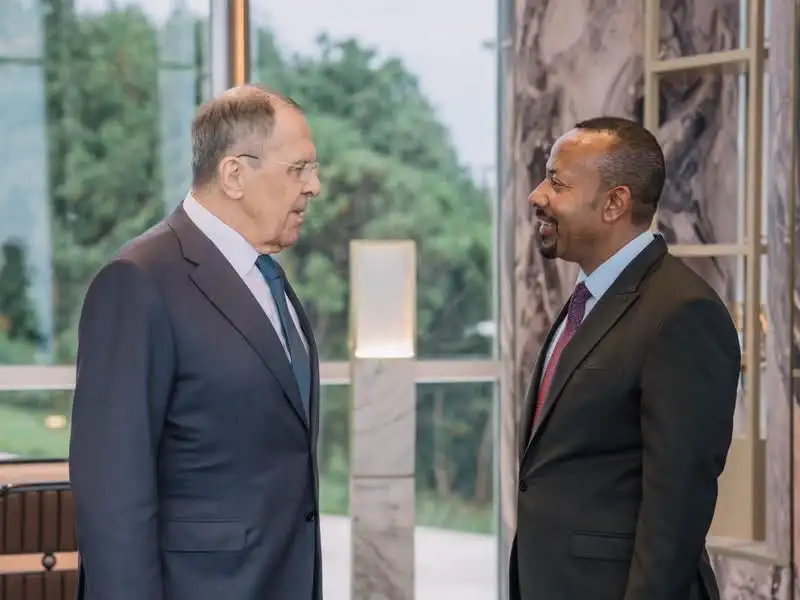
In a moment for international diplomacy, Russian Foreign Minister Sergey Lavrov has embarked on a significant working visit to Addis Ababa, Ethiopia, marking the start of a broader African tour. The visit, which commenced on Wednesday, is not merely a diplomatic exercise; it signals Russia's intent to deepen its strategic ties with Africa at a time when the global political landscape is undergoing rapid transformations.
Lavrov's arrival in Ethiopia underscores the importance of the nation as a newly minted member of BRICS, an alliance aimed at fostering a multipolar world order.
In a press briefing held shortly after he arrived at the African Union headquarters, Lavrov stated, "Ethiopia's membership in BRICS is a testament to the continent's growing influence in global affairs, and we are committed to supporting its aspirations for greater representation on the world stage."
Central to Lavrov's discussions with Ethiopian officials will be the ambitious project of constructing nuclear power plants in the country. This initiative is expected to bolster Ethiopia's energy independence, crucial for sustaining its rapid economic growth. "The agreement to build a large nuclear power plant within the next decade is a monumental step towards ensuring our energy sovereignty," said Ethiopian Prime Minister Abiy Ahmed during a joint press conference. He emphasised that this technological leap would not only provide reliable energy but also position Ethiopia as a regional leader in energy production.
Beyond energy cooperation, Lavrov's visit aims to address broader issues affecting Africa's representation in global institutions. With Africa housing over one billion people yet lacking a permanent seat on the United Nations Security Council, Lavrov reiterated Russia's support for Ethiopia's efforts to reform international financial institutions. "We will advocate for changes within the World Bank and the IMF to better reflect the realities faced by developing nations," he affirmed.
The discussions are also expected to encompass innovative trade solutions, particularly in local currencies. This would enable Ethiopia and other African nations to engage in trade without relying on traditional currencies dominated by Western powers. "We believe that utilising local currencies will enhance trade efficiency and strengthen our economic ties," Lavrov remarked.
Moreover, Lavrov highlighted the potential for collaboration in Ethiopia's rich mineral sector. Russian companies are poised to play a significant role in mining exploration and development, which could transform Ethiopia's vast mineral resources into substantial economic benefits. "This partnership will allow Ethiopia to leverage its resources independently and sustainably," Lavrov noted.
The historical ties between the Russian Federation and Ethiopia date back to 1898, and Lavrov’s current visit marks a new chapter in this long-standing relationship. As he concluded his statements, he expressed optimism about the future, stating, "Our friendship has evolved into a robust partnership that encompasses education, trade, and technology."
Ethiopia's strategic positioning within BRICS not only enhances its diplomatic clout but also empowers it to amplify Africa’s voice on global issues. As this partnership unfolds, analysts believe it could reshape the dynamics of international relations and economic cooperation in favour of developing nations.
In summary, Sergey Lavrov’s visit to Addis Ababa represents more than just a diplomatic engagement; it is a strategic manoeuvre aimed at reinforcing Russia's influence in Africa while supporting the continent's quest for equality and representation on the global stage. As both nations look forward to collaborative ventures in energy, trade, and development, the implications of this visit could resonate far beyond their borders, setting a precedent for future international relations.