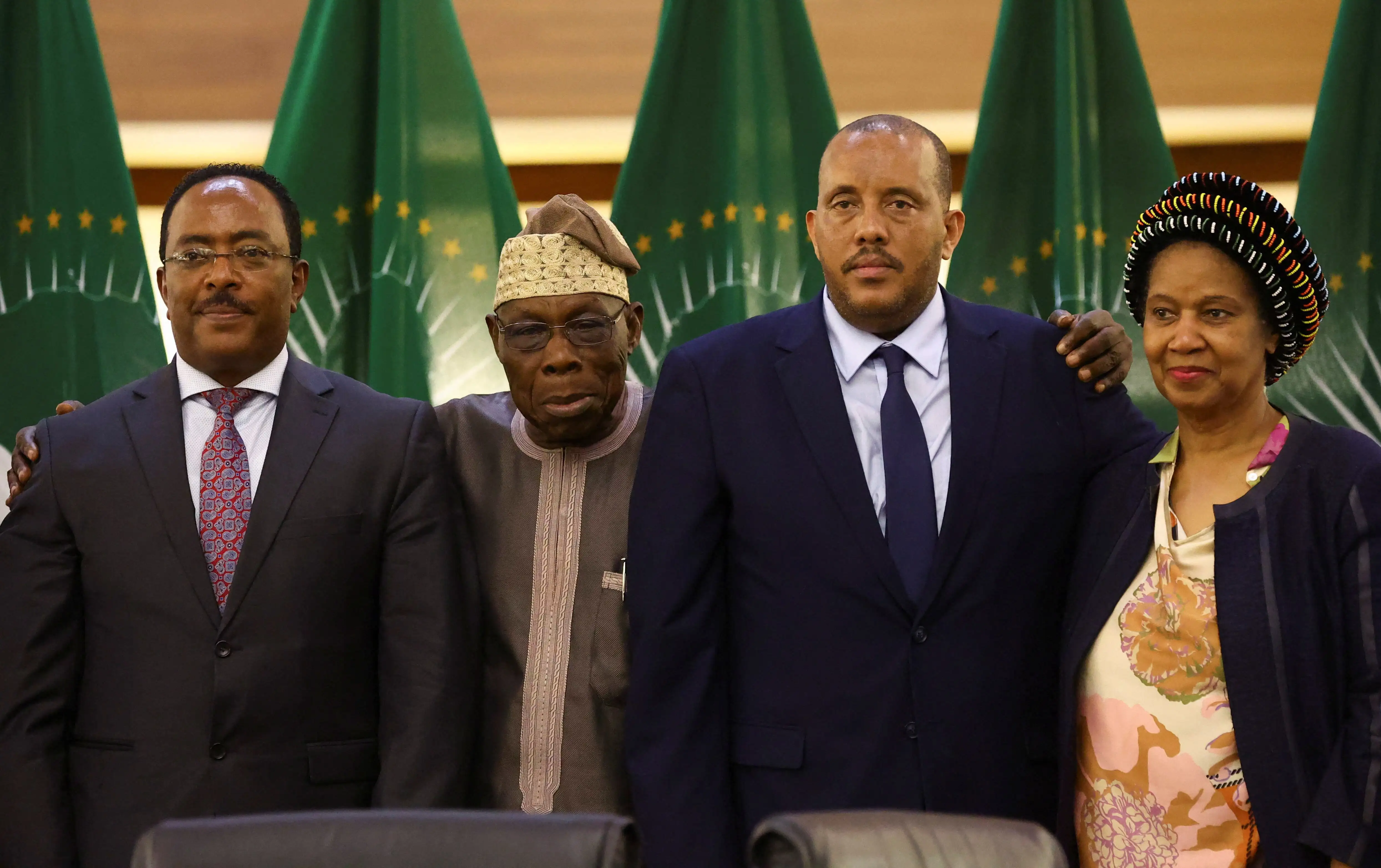
Ethiopia reaffirms its commitment to preserving peace and stability amid growing concerns over what senior officials describe as renewed war rhetoric and mobilization efforts by a hardline faction within the TPLF. At a time when the nation is intensifying socioeconomic development programs and large-scale initiatives aimed at improving livelihoods and accelerating economic transformation, officials warn that certain actors are attempting to drag the country back into conflict. Prime Minister Abiy Ahmed’s Adviser on East African Affairs, Getachew Reda, and Director General of the National Intelligence and Security Service, Ambassador Redwan Hussein, have expressed alarm over preparations by these elements seeking to undermine the peace process established under the Pretoria Peace Agreement.
The officials cautioned that any attempt to reignite conflict would threaten the hard-won gains achieved since the signing of the peace accord and jeopardize ongoing reconstruction efforts in the Tigray region. They emphasized that Ethiopia has paid an enormous price during years of armed confrontation, including the loss of countless lives, destruction of infrastructure, economic disruption, and deep social suffering. Stressing that war cannot be a solution to political disagreements, they reaffirmed that the federal government remains committed to resolving differences through peaceful dialogue and constitutional mechanisms, including the ongoing National Dialogue process. Prime Minister Abiy Ahmed has repeatedly stated that the federal government has no intention of returning to war and remains fully committed to safeguarding peace, stability, and development throughout the country.
Government officials and political analysts expressed concern over reports that civilians in Tigray, particularly the youth, are facing pressure and intimidation from hardline elements advocating for renewed confrontation. Such actions risk trapping the people of Tigray in another cycle of instability at a time when communities are demanding reconstruction, economic recovery, and improved living conditions. Critics argue that this faction promotes violence and places the interests of Tigrayans below its own political and military ambitions, claiming this is the only means by which it can sustain dictatorial power. In contrast, observers note that the Pretoria Peace Agreement created a historic opportunity to end one of the most destructive conflicts in Ethiopia's recent history, opening the door for humanitarian access, rehabilitation, and the restoration of services.
As the country moves forward, Ethiopia’s national focus is centered on development, including the Green Legacy campaign, agricultural modernization, infrastructure expansion, and job creation. Officials maintain that these initiatives require a stable environment to succeed, as any renewed instability would divert resources away from development and impose additional hardship on communities. For many citizens, the choice remains clear: building schools rather than battlefields and investing in development rather than destruction. Preserving the gains of the Pretoria Peace Agreement is viewed as essential for ensuring stability in Tigray, advancing reconstruction, and securing a better future for all Ethiopians.