
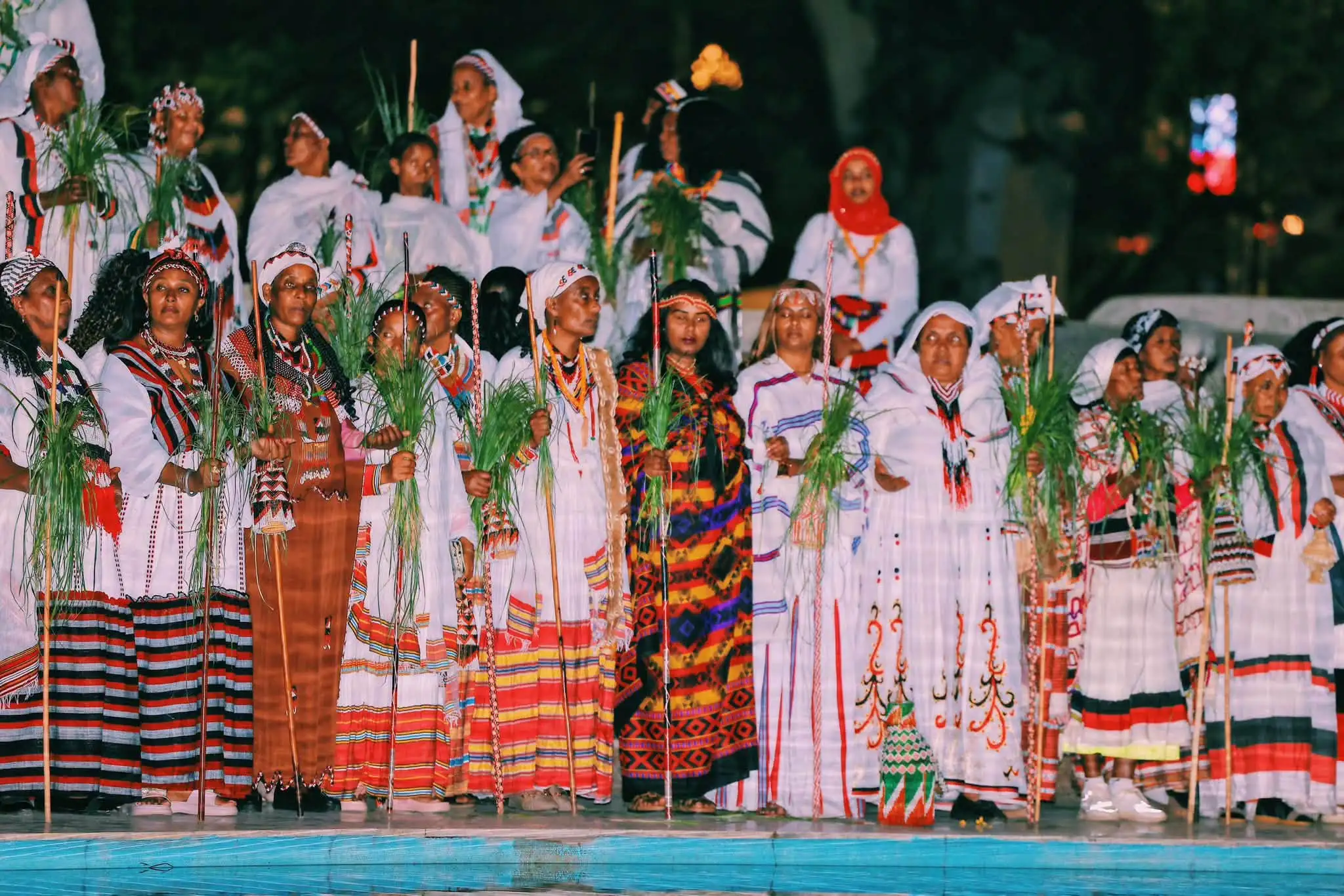
In Oromo culture, certain wooden sticks carry a meaning that reaches far deeper than their physical form, holding rich history and social value. The Siinqee stands as a prime example of this significance. Carried by the Haadha Siinqee, or mother of Siinqee, this slender stick serves as a powerful symbol highlighting women's dignity, rights, social participation, and pivotal role in fostering peace.
A woman holding the Siinqee does not stand merely for herself. Instead, she serves as a public representative embodying the collective voice of mothers, the honor of women, and the community's commitment to peace. Bestowed by a mother upon her daughter on her wedding day, the stick acts as a living covenant ensuring that as the bride enters a new phase of life, her rights remain protected, her dignity elevated, and her grace widely recognized within society.
Within the Gadaa system, the Siinqee functions as a dedicated institution for safeguarding women's rights. As the broader Gadaa framework organizes social, political, and ceremonial life, the Siinqee remains a central pillar that firmly establishes the social role of women.
When social disputes arise, tempers flare, or the threat of war looms, mothers carrying the Siinqee step directly into the conflict to demand an immediate end to hostilities under a deeply rooted tradition of peacebuilding. In these critical moments, the unique authority of the Haadha Siinqee becomes clear. She does not march with a spear or wield a firearm, yet the stick she holds proves more potent than any weapon. She steps forward not to defeat an opponent, but to protect lives, prevent bloodshed, and stop the spread of hatred.
In this role, the Haadha Siinqee acts as an impartial bridge of peace between opposing sides, connecting and reconciling two ends rather than taking sides. Refusing to counter force with force, she restores calm through maternal love and social dignity.
The principle behind the Siinqee extends from individual rights to broader societal stability. When a woman's rights are respected, the family gains stability, which in turn brings peace to the wider community and reinforces overall unity and togetherness. As a result, the Siinqee represents a golden cultural value linking women's honor directly to community security.
This honor and prestige are displayed most vividly during the Irreechaa festival, a major celebration of thanksgiving, peace, unity, and new beginnings. Seeing mothers dressed in white traditional attire holding the Siinqee adds to the beauty of the event while bringing alive the dignity of women, the voice of mothers, and an enduring culture of reconciliation.